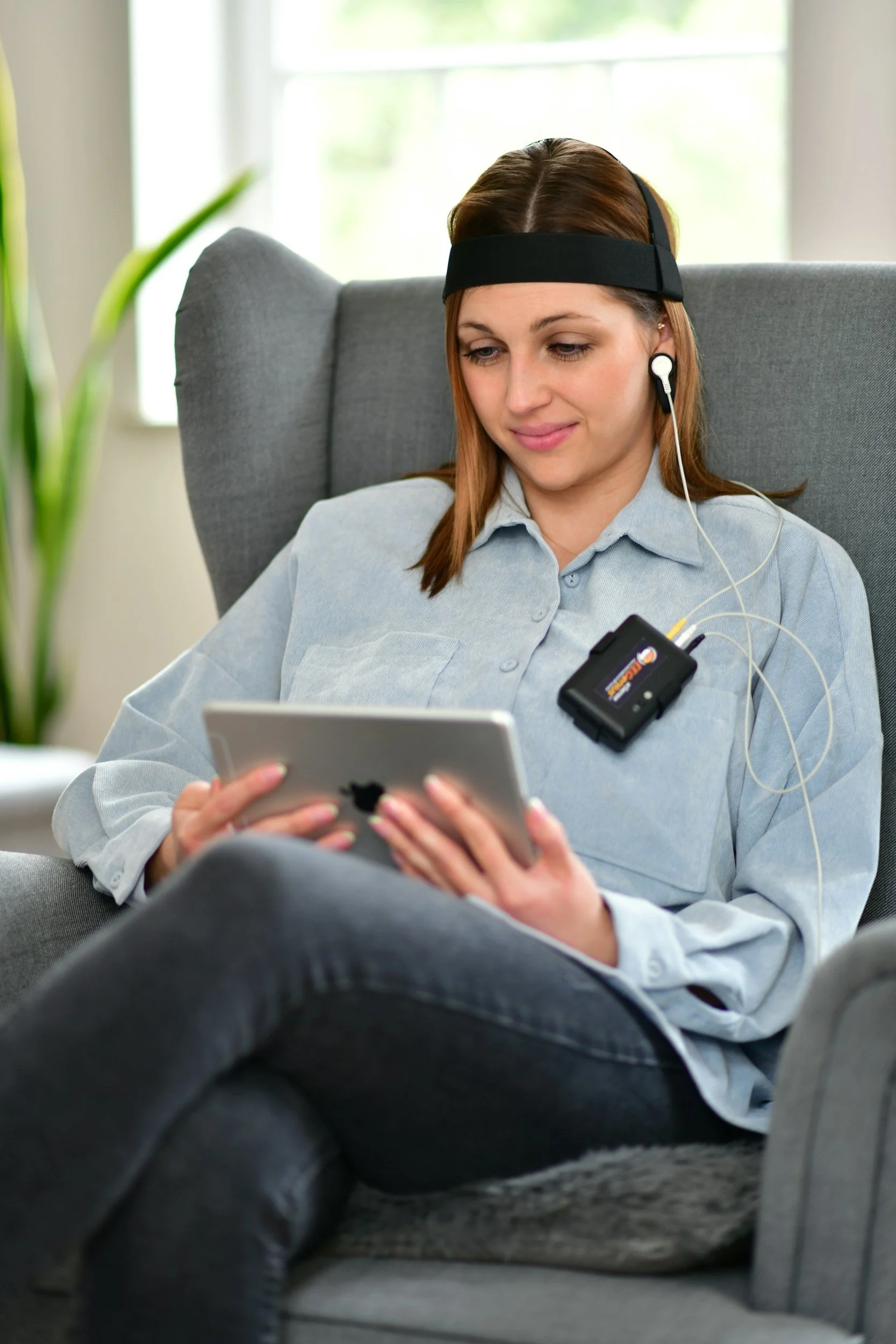
Why Anxiety Can Feel Physical: Understanding the Brain, Body, and Nervous System
/Have you ever known logically that you were okay, but your body seemed to tell a different story?
Maybe your heart was racing before a difficult conversation. Maybe your shoulders stayed tense long after a stressful day. Perhaps you found yourself feeling restless, overwhelmed, exhausted, or unable to settle down even when nothing particularly stressful was happening.
You might have tried reminding yourself that everything was fine. You might have practiced deep breathing, distracted yourself, or told yourself to stop worrying.
And yet, the feelings remained.
If this sounds familiar, you're not alone.
At Serene Mind Counseling + Evaluations, we understand that anxiety isn't always experienced as a thought. Sometimes it shows up physically, emotionally, behaviorally, or in ways that are difficult to explain.
Understanding the relationship between your brain, body, and nervous system can be one helpful step toward understanding what you're experiencing.
Why Does Anxiety Affect the Body?
Anxiety involves more than worrying about something that might happen.
When your brain perceives a possible threat or challenge, your body can activate physiological responses designed to help you respond. Your heart rate may increase, your breathing may change, your muscles may tense, and your attention may become more focused on potential danger.
These responses can be useful in situations that require quick action. However, they can also feel uncomfortable when they occur frequently or when it's difficult to settle afterward.
Anxiety can affect people differently. Some people notice racing thoughts, while others primarily experience physical sensations or a persistent sense of uneasiness.
Common experiences can include:
Muscle tension or jaw clenching
A racing heart or feeling keyed up
Restlessness or difficulty sitting still
Stomach discomfort
Difficulty concentrating
Trouble falling asleep
Irritability or feeling easily overwhelmed
Feeling exhausted after periods of stress
Difficulty transitioning from work or responsibilities into rest
These symptoms can have many possible causes. Physical symptoms shouldn't automatically be attributed to anxiety, particularly when they're new, persistent, severe, or unexplained. A healthcare professional can help determine whether medical evaluation is needed.
What Is the Connection Between the Brain and Nervous System?
Your brain and nervous system help you interpret information, respond to your surroundings, and coordinate many of your body's functions.
Stressful experiences, uncertainty, conflict, demanding schedules, and difficult life transitions can all influence how you feel and respond.
For example, imagine that you have spent the entire day managing work responsibilities, caring for your family, and making decisions.
When the day finally ends, you might expect to feel relieved.
Instead, you may find yourself replaying conversations, anticipating tomorrow's responsibilities, or feeling too restless to enjoy your evening.
This doesn't necessarily mean something is wrong with you.
It may reflect a combination of ongoing demands, learned patterns of responding to stress, difficulty transitioning between responsibilities, sleep disruption, and other factors.
The brain-body connection offers a way to become curious about these experiences rather than judging yourself for having them.
Why Can't I Just Relax?
This is a question many people ask themselves.
You might know that taking a break would be helpful. You may understand that a situation is manageable. You might even recognize that your worries aren't entirely realistic.
But knowing something intellectually doesn't always change how you feel emotionally or physically.
Stress responses can be influenced by previous experiences, current circumstances, habits, physical health, and the environment around you.
For some people, anxiety also becomes a cycle. A physical sensation feels frightening, the sensation increases worry, and the additional worry makes the sensation more noticeable.
Counseling can help you explore these patterns, understand what contributes to them, and develop strategies that fit your circumstances.
The goal isn't to blame your nervous system or force yourself to feel calm. It's to better understand your experience and learn different ways of responding.
How Can Counseling Help With Anxiety?
Anxiety counseling can provide space to explore both the thoughts and experiences contributing to distress.
Depending on your needs, therapy may involve:
Understanding anxiety patterns. Recognizing situations, thoughts, emotions, and behaviors that contribute to anxiety.
Learning practical coping skills. Developing approaches for responding to worry, uncertainty, and overwhelming emotions.
Exploring past experiences. Understanding how earlier experiences may influence current reactions when that connection is relevant.
Building awareness of body sensations. Learning to notice physical signs of stress without automatically interpreting them as danger.
Practicing new responses. Developing ways to approach situations that anxiety has made difficult.
Different therapeutic approaches may be helpful for different people. Cognitive behavioral therapy (CBT), for example, is an established treatment for many anxiety disorders. Your therapist can help you understand available approaches and consider what may fit your goals.
At Serene Mind Counseling + Evaluations, we take a compassionate, individualized approach. You don't have to arrive with a clear explanation of what you're feeling. Sometimes the first step is simply having space to talk about it.
What About Nervous System Wellness and Neurofeedback?
Some people exploring anxiety also become curious about the relationship between brain activity, stress, and nervous system wellness.
This interest may lead them to explore educational resources, body-awareness practices, or technology-based approaches such as neurofeedback.
Neurofeedback uses information about brain activity as part of a feedback process. Different neurofeedback systems use different protocols, and the evidence for one approach should not automatically be applied to another.
LENS Neurofeedback, offered by our sister company, Serene Mind Neuro + Wellness in South Tampa, is a passive, technology-based approach to brain wellness.
It is distinct from psychotherapy. It should not be presented as a proven treatment for anxiety, and the evidence does not establish that LENS treats anxiety disorders.
For individuals who are curious about this approach, learning how it works, understanding the available research, and asking questions about its limitations can help inform their decisions.
You can explore the service here: LENS Neurofeedback in Tampa, FL.
Serene Mind Neuro + Wellness also offers information about nervous system wellness, with a focus on understanding stress, recovery, body awareness, and everyday experiences.
These wellness services are not substitutes for appropriate medical or mental health care. If anxiety is affecting your daily life, counseling or a conversation with a healthcare professional may be an appropriate place to begin.
What Can You Do When You Feel Overwhelmed?
There is no single strategy that works for everyone, but a few small steps may help you become more aware of what you need.
Notice your patterns. Consider when anxiety tends to show up and what is happening around you.
Reduce unnecessary demands where possible. You may not be able to remove every stressor, but you may be able to adjust expectations or create more space between responsibilities.
Pay attention to basic needs. Sleep, nourishment, hydration, movement, and connection can influence how you feel.
Experiment with gentle grounding. Some people find it helpful to notice their surroundings, feel their feet on the floor, or take a comfortable pause. Stop if a practice makes you feel worse.
Seek support when you need it. You don't have to wait until anxiety becomes unmanageable before talking with someone.
These suggestions are not a replacement for individualized care. They are simply possible starting points for understanding yourself with more curiosity and less self-criticism.
Anxiety Counseling in Tampa and Jacksonville
If anxiety is making it difficult to sleep, concentrate, enjoy relationships, or move through daily life, you deserve support that takes your experience seriously.
Serene Mind Counseling + Evaluations offers compassionate counseling for children, teens, adults, couples, and families, with services in Tampa and Jacksonville and telehealth options where available.
You don't need to know exactly why you're feeling the way you do before reaching out.
You can start with what you've noticed, what feels difficult, and what you'd like to change.
Explore anxiety counseling at Serene Mind Counseling + Evaluations to learn more about our approach and available services.
Frequently Asked Questions
Can anxiety cause physical symptoms?
Yes. Anxiety can be associated with physical responses such as muscle tension, restlessness, changes in heart rate, and stomach discomfort. However, physical symptoms can have other causes, so persistent or concerning symptoms should be evaluated by a healthcare professional.
Why do I feel anxious even when nothing is wrong?
Anxiety can be influenced by accumulated stress, uncertainty, learned responses, sleep difficulties, and other factors. Sometimes the reason isn't immediately obvious. Exploring your experiences with a qualified professional may help you better understand your patterns.
Is nervous system regulation the same as anxiety treatment?
No. Nervous system wellness may involve learning about stress responses, body awareness, and recovery. Anxiety treatment is individualized and may involve psychotherapy, medication management when appropriate, or other evidence-based care.
Can LENS Neurofeedback treat anxiety?
LENS Neurofeedback is a passive neurofeedback approach offered as part of brain wellness services. Current evidence does not establish it as a proven treatment for anxiety disorders. Anyone considering it should understand its limitations and continue appropriate mental health care.
When should I seek counseling for anxiety?
Consider seeking support when anxiety is persistent, distressing, interfering with daily activities, or making relationships, sleep, work, or parenting more difficult. You don't need to wait until you're in crisis.
Where can I find anxiety counseling in Tampa or Jacksonville?
Serene Mind Counseling + Evaluations offers counseling services in Tampa and Jacksonville, as well as telehealth options where available. Visit our website to learn more about our services and how to get started.
A final reminder: You don't have to understand every part of your experience before you deserve support. Sometimes the first step is simply having a place to begin.