When Anxiety Feels Physical: 5 Gentle Ways to Support Yourself

Have you ever felt your heart race, your shoulders tighten, or your stomach turn when you couldn't quite explain why you were anxious?

Maybe your mind tells you that everything is fine, but your body seems to have a different message. You might feel restless when you're trying to relax, tense during an ordinary conversation, or exhausted after spending the day managing worries that no one else can see.

If this sounds familiar, you're not alone. Anxiety can affect both our thoughts and our physical experiences. And when it shows up in the body, it can be confusing—especially when you're already doing your best to keep up with everyday life.

At Serene Mind Counseling + Evaluations, we believe understanding these experiences begins with curiosity and compassion, not judgment. You don't have to blame yourself for feeling anxious or expect yourself to simply push through.

Let's explore why anxiety can feel physical and five gentle ways to support yourself when it does.

Why Can Anxiety Feel Physical?

Anxiety is more than a thought or a feeling. It involves a coordinated response between the brain and body.

When your brain perceives a possible threat or challenge, your body may prepare to respond. You might notice a faster heartbeat, changes in breathing, muscle tension, sweating, stomach discomfort, or restlessness. These responses can be useful in certain situations, but they can feel uncomfortable when they happen frequently or when the source of stress isn't obvious.

Anxiety doesn't always follow a dramatic event, either. Work responsibilities, parenting demands, relationship difficulties, health concerns, financial pressure, and ongoing uncertainty can all contribute to stress.

Sometimes, people become so accustomed to functioning under pressure that they don't recognize how much tension they are carrying until they finally have a quiet moment.

It's also important to remember that physical symptoms aren't always caused by anxiety. New, severe, persistent, or unexplained symptoms deserve appropriate medical evaluation. Chest pain, fainting, or severe difficulty breathing may require urgent medical attention rather than being assumed to be anxiety.

For a helpful overview of anxiety and available treatment options, the National Institute of Mental Health's anxiety disorders resource is a good place to start.

Five Gentle Ways to Respond When Anxiety Shows Up in Your Body

These practices aren't about forcing yourself to calm down or making every uncomfortable sensation disappear. Think of them as small opportunities to notice what you're experiencing and respond with care.

1. Notice the sensation without immediately judging it

When your heart races or your shoulders tighten, it can be tempting to think, "What's wrong with me?" or "Why can't I just relax?"

Try replacing that judgment with simple curiosity.

You might say to yourself:

"I'm noticing tension in my shoulders."

"My thoughts are moving quickly right now."

"I'm feeling unsettled, and I'm going to give myself a moment."

You don't need to explain the sensation immediately. Simply naming what you're noticing can help you pause before reacting to it.

The goal isn't to dismiss what you're feeling. It's to make room for the experience without adding another layer of self-criticism.

2. Let your breathing be comfortable, not forced

When you're anxious, you may notice that your breathing becomes shallow or quick. For some people, intentionally taking very deep breaths can feel uncomfortable or increase dizziness.

Instead, try allowing your breath to become a little slower and easier, without forcing it.

If it feels comfortable, gently breathe in and allow your exhale to last slightly longer. Repeat for a few natural breaths.

If focusing on your breathing makes you feel worse, skip this step. You can instead notice the support of your feet on the floor or the chair beneath you.

There is no perfect breathing technique you must master. The most helpful approach is one that feels manageable for your body.

3. Bring your attention back to the present moment

Anxiety can pull your attention toward what might happen next, what went wrong earlier, or what you still need to accomplish.

Try gently reconnecting with your immediate surroundings.

Look around and name three things you can see. Notice the texture of an object in your hand. Feel your feet against the floor. Listen for a familiar sound.

You might also take a moment to notice the room you're in and remind yourself of what you're doing right now.

This isn't about pretending that your concerns don't matter. It's simply a way to give your attention a break from trying to solve everything at once.

4. Ask what you need instead of what you should be doing

Many people who experience anxiety are also carrying a significant mental load. They may be caring for children, supporting a partner, managing work, navigating health challenges, or trying to meet expectations at home and elsewhere.

When your body feels tense or overwhelmed, ask yourself:

"What would feel supportive right now?"

The answer may be surprisingly ordinary. You might need a drink of water, a quieter environment, a few minutes outside, a meal, a boundary, or help with a task you've been carrying alone.

Sometimes the most supportive response isn't another coping exercise. It's recognizing that you're tired, overloaded, or in need of practical support.

You are allowed to have needs, even when other people are counting on you.

5. Look for patterns with compassion

If anxiety keeps showing up physically, consider gently noticing when it tends to happen.

Does tension increase before a difficult conversation? Do you feel restless after a long day of managing everyone else's needs? Does your body seem to remain on alert even when you finally have time to rest?

You could jot down a few observations without turning them into another assignment to complete perfectly.

Over time, noticing patterns may help you identify stressors, unmet needs, or situations worth exploring with a professional.

Try to approach this as gathering information rather than searching for something to blame. You are learning about your experience, not grading yourself on how well you manage it.

What If These Strategies Aren't Enough?

Simple coping practices can be helpful, but they aren't a replacement for professional support when anxiety is persistent, overwhelming, or interfering with daily life.

You may benefit from additional support if you regularly avoid activities because of anxiety, struggle to sleep or concentrate, feel constantly on edge, or find it difficult to recover after stressful experiences.

Therapy can provide a space to understand your anxiety, explore patterns that may be contributing to it, and develop approaches that fit your individual needs.

Depending on your circumstances, treatment may include cognitive behavioral therapy (CBT), which explores connections between thoughts, feelings, and behaviors, or somatic approaches that help you notice and work with bodily experiences. Other approaches may be appropriate depending on your history, preferences, and goals.

You can also explore the National Institute of Mental Health's information about anxiety disorders to learn more about symptoms and treatment options.

At Serene Mind Counseling + Evaluations, we provide counseling for children, teens, and adults, with a compassionate approach to anxiety, stress, trauma, and the challenges that can make everyday life feel heavier.

We serve clients in Tampa and Jacksonville, Florida, and offer virtual services in the states where our clinicians are authorized to practice.

You don't have to wait until you're at your breaking point to ask for help.

A Gentle Reminder

If anxiety has been showing up in your body, try to meet that experience with curiosity instead of frustration.

You don't have to master every coping strategy. You don't have to feel calm all the time. And you don't have to navigate everything on your own.

Start with one small question: "What would help me feel a little more supported today?"

Sometimes, that's a meaningful place to begin.

Looking for support with anxiety? Learn more about our counseling services at Serene Mind Counseling + Evaluations or reach out to our team to explore your options.


When Anxiety Feels Physical: 5 Gentle Ways to Support Yourself

When Your Child Struggles With Focus: Understanding Attention, Stress, and Emotional Overwhelm

If your child struggles to focus, becomes overwhelmed easily, has difficulty transitioning between activities, or seems to have big reactions to everyday situations, you may have found yourself wondering what is going on beneath the surface.

Perhaps you've tried different routines, reminders, reward systems, or strategies to make the day feel a little easier.

Some things may help temporarily. Other things may seem to make no difference at all.

And sometimes, despite your best efforts, you may still feel unsure about what your child needs.

At Serene Mind Counseling + Evaluations, we believe it is important to look at the whole child—not just the behavior that is bringing a family to counseling.

Attention, emotions, stress, sleep, development, learning, relationships, and the environment can all be relevant when trying to understand a child's experience.

There isn't one explanation for every child, but approaching concerns with curiosity can be a helpful place to start.

Why Does My Child Have Trouble Focusing?

Children can have difficulty focusing for many reasons.

Sometimes attention difficulties are related to ADHD. In other cases, sleep problems, anxiety, learning differences, stress, developmental factors, environmental distractions, or other health concerns may contribute.

Children can also have more difficulty concentrating when they are tired, worried, overstimulated, or trying to manage something that feels challenging.

For example, a child who has spent the day working hard to keep up with school demands may have little patience left for homework in the evening.

Another child may become restless when an assignment feels confusing or overwhelming.

A child who seems distracted during a stressful period may be responding to worries that are difficult to explain.

These possibilities don't mean every focus problem is caused by stress. They mean that understanding the context matters.

When attention difficulties persist or affect school, relationships, or daily functioning, it can be helpful to speak with your child's pediatrician, teacher, or a qualified mental health professional.

What Can Emotional Overwhelm Look Like in Children?

Children don't always have the words to describe what they're experiencing.

Instead, their feelings may show up through behavior.

You might notice:

  • Becoming frustrated quickly

  • Difficulty transitioning between activities

  • Frequent emotional outbursts

  • Withdrawing or avoiding difficult tasks

  • Restlessness or difficulty sitting still

  • Trouble completing homework

  • Becoming upset by changes in routine

  • Difficulty settling after an exciting or stressful day

  • Increased sensitivity to noise or busy environments

  • Difficulty explaining what is wrong

These behaviors can have many explanations, and no single behavior proves that a child has anxiety, ADHD, or a nervous system problem.

Instead of immediately asking how to stop a behavior, it may be useful to consider what happened before it, what demands your child was facing, and what support might help.

That shift doesn't mean removing all expectations or ignoring difficult behavior. It means combining appropriate boundaries with an effort to understand the child behind the behavior.

How Are Attention and Stress Connected?

Attention and emotional responses can influence each other.

When a child feels worried, frustrated, or overwhelmed, it may be harder to concentrate on a task. When a child repeatedly struggles with an activity, frustration and worry can increase.

This can create a difficult cycle.

Imagine a child who finds reading challenging. Homework takes longer than expected. The child becomes frustrated, the parent tries to encourage them to keep going, and both begin to feel overwhelmed.

By the end of the evening, the problem may appear to be about cooperation or behavior.

But the bigger picture may also involve a learning difficulty, fatigue, anxiety about making mistakes, or a task that requires more support than the child currently has.

Understanding the underlying difficulty can help families respond more effectively.

This is why persistent attention concerns deserve thoughtful evaluation rather than assumptions about motivation or effort.

Does My Child Have ADHD, Anxiety, or Something Else?

It can be difficult to tell the difference based on behavior alone.

ADHD can involve ongoing patterns of inattention, hyperactivity, and/or impulsivity that interfere with functioning. Anxiety can affect concentration when a child is worried, anticipating something difficult, or feeling overwhelmed.

Both can occur together, and other factors can contribute to similar difficulties.

A comprehensive assessment may consider your child's developmental history, behavior across settings, school experiences, sleep, emotional wellbeing, and input from caregivers and teachers.

When appropriate, a healthcare professional may also consider medical or learning-related factors.

The goal is not to assign a label as quickly as possible. It is to better understand your child's needs and identify support that fits.

If you're concerned about your child's focus, emotional regulation, or behavior, a qualified child therapist or pediatric healthcare professional can help you determine appropriate next steps.

How Can Counseling Help Children and Families?

Counseling can provide a space for children and parents to understand difficult experiences and develop practical ways of responding.

Depending on the child's age, needs, and circumstances, therapy may involve:

Emotional awareness. Helping children recognize and communicate feelings in developmentally appropriate ways.

Coping skills. Practicing ways to respond to frustration, worry, transitions, and difficult situations.

Parent support. Helping caregivers understand patterns, adjust expectations when appropriate, and respond consistently.

Problem-solving. Exploring what makes particular activities or situations challenging and identifying realistic changes.

Confidence and self-understanding. Helping children understand that struggling with something does not mean there is something wrong with who they are.

Family communication. Creating opportunities for family members to understand each other's experiences and work together.

The approach should be tailored to the child. Younger children may benefit from play-based approaches, while older children and teens may be able to participate more directly in conversations and skill-building.

What About Neurofeedback for Children?

Some parents researching attention or emotional overwhelm come across neurofeedback and wonder whether it might be worth exploring.

Neurofeedback uses information about brain activity as part of a feedback process. There are different types of neurofeedback, and research findings for one system or protocol should not automatically be applied to another.

Our sister company, Serene Mind Neuro + Wellness, offers LENS Neurofeedback in South Tampa. LENS is a passive, technology-based approach to brain wellness.

Parents who are curious about LENS can learn about the process, ask questions about what is known and not known, and consider whether it aligns with their family's goals.

It is important to keep expectations realistic. Research on neurofeedback for ADHD has produced mixed findings, and current evidence does not establish LENS Neurofeedback as a proven treatment for ADHD, anxiety, learning differences, or emotional regulation difficulties in children.

Neurofeedback should not replace a needed evaluation, evidence-based treatment, school support, or medical care.

You can learn more about the approach here: LENS Neurofeedback in Tampa, FL.

Families can also explore brain wellness resources and nervous system wellness to learn more about the broader brain-body perspective offered by Serene Mind Neuro + Wellness.

What Can Parents Try at Home?

You don't need to solve everything at once. A few thoughtful adjustments may help you understand what supports your child.

Notice patterns rather than focusing only on difficult moments

When does your child seem to have the hardest time? Is it after school, during transitions, when tasks are difficult, or in busy environments?

Patterns can offer useful information to discuss with teachers, therapists, or healthcare professionals.

Make expectations clear and manageable

Some children benefit from breaking a large task into smaller steps, using visual reminders, or allowing brief breaks between activities.

These strategies aren't a substitute for addressing an underlying learning, developmental, or emotional concern, but they may make daily routines more manageable.

Consider the environment

Noise, distractions, fatigue, time pressure, and competing demands can affect how a child manages a task.

If a particular environment consistently makes things harder, consider whether an adjustment might help.

Make room for connection

A child who is struggling may already feel frustrated or embarrassed.

A calm conversation, curiosity about what feels difficult, and reassurance that you want to understand can help create an opportunity to work through the problem together.

You can maintain appropriate boundaries while also communicating that your child is not a problem to be fixed.

Seek help when concerns persist

If attention difficulties, emotional overwhelm, or behavior concerns are affecting school, friendships, family life, or your child's wellbeing, professional support may help clarify what is happening.

You do not have to wait until things become unmanageable.

Child and Teen Counseling in Tampa and Jacksonville

Parenting can be difficult when you're trying to understand what your child needs and the strategies that used to work no longer seem helpful.

At Serene Mind Counseling + Evaluations, we provide support for children, teens, and families, with services in Tampa and Jacksonville and telehealth options where available.

We approach children as individuals with their own strengths, experiences, and needs.

If you're looking for help understanding your child's emotions, behavior, anxiety, or attention concerns, we invite you to learn more about our counseling services.

And if you're also curious about brain wellness approaches beyond traditional counseling, our sister company, Serene Mind Neuro + Wellness, offers educational information about LENS Neurofeedback and nervous system wellness in South Tampa.

These are distinct services with different purposes. Our goal is to help families understand their options so they can make informed decisions about appropriate support.

Frequently Asked Questions

Does difficulty focusing always mean a child has ADHD?

No. Attention difficulties can be associated with ADHD, but sleep problems, anxiety, learning differences, stress, developmental factors, and other concerns can also affect concentration. Persistent difficulties deserve individualized assessment.

Can anxiety make it harder for a child to concentrate?

Yes. Worry and distress can interfere with attention. However, concentration problems have multiple possible causes, so it's important not to assume anxiety is the only explanation.

How can I tell if my child is overwhelmed?

You may notice changes in behavior, frustration, withdrawal, restlessness, or difficulty managing everyday demands. These signs are not specific to one condition. Looking at patterns and context can help you decide whether additional support is needed.

Does neurofeedback help children with ADHD?

Research on neurofeedback for ADHD can show improvement, findings vary by method and outcome. Parents should discuss evidence-based options with qualified healthcare professionals.

Is counseling appropriate for children who struggle with emotions or behavior?

Counseling may help children develop emotional awareness, coping skills, communication, and problem-solving strategies. The most appropriate approach depends on the child's individual needs.

Where can I find child counseling in Tampa or Jacksonville?

Serene Mind Counseling + Evaluations offers counseling for children, teens, and families in Tampa and Jacksonville, with telehealth options where available. Visit our website to learn more about our services.

Your child doesn't have to navigate every challenge perfectly. And you don't have to figure everything out alone. Understanding what your child is experiencing can be a meaningful first step toward finding the right support.

LENS Neurofeedbakc for Children in Tampa

Why Anxiety Can Feel Physical: Understanding the Brain, Body, and Nervous System

Have you ever known logically that you were okay, but your body seemed to tell a different story?

Maybe your heart was racing before a difficult conversation. Maybe your shoulders stayed tense long after a stressful day. Perhaps you found yourself feeling restless, overwhelmed, exhausted, or unable to settle down even when nothing particularly stressful was happening.

You might have tried reminding yourself that everything was fine. You might have practiced deep breathing, distracted yourself, or told yourself to stop worrying.

And yet, the feelings remained.

If this sounds familiar, you're not alone.

At Serene Mind Counseling + Evaluations, we understand that anxiety isn't always experienced as a thought. Sometimes it shows up physically, emotionally, behaviorally, or in ways that are difficult to explain.

Understanding the relationship between your brain, body, and nervous system can be one helpful step toward understanding what you're experiencing.

Why Does Anxiety Affect the Body?

Anxiety involves more than worrying about something that might happen.

When your brain perceives a possible threat or challenge, your body can activate physiological responses designed to help you respond. Your heart rate may increase, your breathing may change, your muscles may tense, and your attention may become more focused on potential danger.

These responses can be useful in situations that require quick action. However, they can also feel uncomfortable when they occur frequently or when it's difficult to settle afterward.

Anxiety can affect people differently. Some people notice racing thoughts, while others primarily experience physical sensations or a persistent sense of uneasiness.

Common experiences can include:

  • Muscle tension or jaw clenching

  • A racing heart or feeling keyed up

  • Restlessness or difficulty sitting still

  • Stomach discomfort

  • Difficulty concentrating

  • Trouble falling asleep

  • Irritability or feeling easily overwhelmed

  • Feeling exhausted after periods of stress

  • Difficulty transitioning from work or responsibilities into rest

These symptoms can have many possible causes. Physical symptoms shouldn't automatically be attributed to anxiety, particularly when they're new, persistent, severe, or unexplained. A healthcare professional can help determine whether medical evaluation is needed.

What Is the Connection Between the Brain and Nervous System?

Your brain and nervous system help you interpret information, respond to your surroundings, and coordinate many of your body's functions.

Stressful experiences, uncertainty, conflict, demanding schedules, and difficult life transitions can all influence how you feel and respond.

For example, imagine that you have spent the entire day managing work responsibilities, caring for your family, and making decisions.

When the day finally ends, you might expect to feel relieved.

Instead, you may find yourself replaying conversations, anticipating tomorrow's responsibilities, or feeling too restless to enjoy your evening.

This doesn't necessarily mean something is wrong with you.

It may reflect a combination of ongoing demands, learned patterns of responding to stress, difficulty transitioning between responsibilities, sleep disruption, and other factors.

The brain-body connection offers a way to become curious about these experiences rather than judging yourself for having them.

Why Can't I Just Relax?

This is a question many people ask themselves.

You might know that taking a break would be helpful. You may understand that a situation is manageable. You might even recognize that your worries aren't entirely realistic.

But knowing something intellectually doesn't always change how you feel emotionally or physically.

Stress responses can be influenced by previous experiences, current circumstances, habits, physical health, and the environment around you.

For some people, anxiety also becomes a cycle. A physical sensation feels frightening, the sensation increases worry, and the additional worry makes the sensation more noticeable.

Counseling can help you explore these patterns, understand what contributes to them, and develop strategies that fit your circumstances.

The goal isn't to blame your nervous system or force yourself to feel calm. It's to better understand your experience and learn different ways of responding.

How Can Counseling Help With Anxiety?

Anxiety counseling can provide space to explore both the thoughts and experiences contributing to distress.

Depending on your needs, therapy may involve:

Understanding anxiety patterns. Recognizing situations, thoughts, emotions, and behaviors that contribute to anxiety.

Learning practical coping skills. Developing approaches for responding to worry, uncertainty, and overwhelming emotions.

Exploring past experiences. Understanding how earlier experiences may influence current reactions when that connection is relevant.

Building awareness of body sensations. Learning to notice physical signs of stress without automatically interpreting them as danger.

Practicing new responses. Developing ways to approach situations that anxiety has made difficult.

Different therapeutic approaches may be helpful for different people. Cognitive behavioral therapy (CBT), for example, is an established treatment for many anxiety disorders. Your therapist can help you understand available approaches and consider what may fit your goals.

At Serene Mind Counseling + Evaluations, we take a compassionate, individualized approach. You don't have to arrive with a clear explanation of what you're feeling. Sometimes the first step is simply having space to talk about it.

What About Nervous System Wellness and Neurofeedback?

Some people exploring anxiety also become curious about the relationship between brain activity, stress, and nervous system wellness.

This interest may lead them to explore educational resources, body-awareness practices, or technology-based approaches such as neurofeedback.

Neurofeedback uses information about brain activity as part of a feedback process. Different neurofeedback systems use different protocols, and the evidence for one approach should not automatically be applied to another.

LENS Neurofeedback, offered by our sister company, Serene Mind Neuro + Wellness in South Tampa, is a passive, technology-based approach to brain wellness.

It is distinct from psychotherapy. It should not be presented as a proven treatment for anxiety, and the evidence does not establish that LENS treats anxiety disorders.

For individuals who are curious about this approach, learning how it works, understanding the available research, and asking questions about its limitations can help inform their decisions.

You can explore the service here: LENS Neurofeedback in Tampa, FL.

Serene Mind Neuro + Wellness also offers information about nervous system wellness, with a focus on understanding stress, recovery, body awareness, and everyday experiences.

These wellness services are not substitutes for appropriate medical or mental health care. If anxiety is affecting your daily life, counseling or a conversation with a healthcare professional may be an appropriate place to begin.

What Can You Do When You Feel Overwhelmed?

There is no single strategy that works for everyone, but a few small steps may help you become more aware of what you need.

  • Notice your patterns. Consider when anxiety tends to show up and what is happening around you.

  • Reduce unnecessary demands where possible. You may not be able to remove every stressor, but you may be able to adjust expectations or create more space between responsibilities.

  • Pay attention to basic needs. Sleep, nourishment, hydration, movement, and connection can influence how you feel.

  • Experiment with gentle grounding. Some people find it helpful to notice their surroundings, feel their feet on the floor, or take a comfortable pause. Stop if a practice makes you feel worse.

  • Seek support when you need it. You don't have to wait until anxiety becomes unmanageable before talking with someone.

These suggestions are not a replacement for individualized care. They are simply possible starting points for understanding yourself with more curiosity and less self-criticism.

Anxiety Counseling in Tampa and Jacksonville

If anxiety is making it difficult to sleep, concentrate, enjoy relationships, or move through daily life, you deserve support that takes your experience seriously.

Serene Mind Counseling + Evaluations offers compassionate counseling for children, teens, adults, couples, and families, with services in Tampa and Jacksonville and telehealth options where available.

You don't need to know exactly why you're feeling the way you do before reaching out.

You can start with what you've noticed, what feels difficult, and what you'd like to change.

Explore anxiety counseling at Serene Mind Counseling + Evaluations to learn more about our approach and available services.

Frequently Asked Questions

Can anxiety cause physical symptoms?

Yes. Anxiety can be associated with physical responses such as muscle tension, restlessness, changes in heart rate, and stomach discomfort. However, physical symptoms can have other causes, so persistent or concerning symptoms should be evaluated by a healthcare professional.

Why do I feel anxious even when nothing is wrong?

Anxiety can be influenced by accumulated stress, uncertainty, learned responses, sleep difficulties, and other factors. Sometimes the reason isn't immediately obvious. Exploring your experiences with a qualified professional may help you better understand your patterns.

Is nervous system regulation the same as anxiety treatment?

No. Nervous system wellness may involve learning about stress responses, body awareness, and recovery. Anxiety treatment is individualized and may involve psychotherapy, medication management when appropriate, or other evidence-based care.

Can LENS Neurofeedback treat anxiety?

LENS Neurofeedback is a passive neurofeedback approach offered as part of brain wellness services. Current evidence does not establish it as a proven treatment for anxiety disorders. Anyone considering it should understand its limitations and continue appropriate mental health care.

When should I seek counseling for anxiety?

Consider seeking support when anxiety is persistent, distressing, interfering with daily activities, or making relationships, sleep, work, or parenting more difficult. You don't need to wait until you're in crisis.

Where can I find anxiety counseling in Tampa or Jacksonville?

Serene Mind Counseling + Evaluations offers counseling services in Tampa and Jacksonville, as well as telehealth options where available. Visit our website to learn more about our services and how to get started.

A final reminder: You don't have to understand every part of your experience before you deserve support. Sometimes the first step is simply having a place to begin.

LENS Neurofeedback Tampa FL

When Talking Isn't the Only Way to Support Your Nervous System

Therapy can be a powerful place to talk through what you're experiencing.

Sometimes putting words to your feelings, understanding your patterns, processing difficult experiences, and having someone truly listen can create meaningful change. For many people, having a safe relationship with a therapist is an important part of feeling supported and beginning to understand themselves in a new way.

But there are also times when you understand what you're feeling and still don't feel any different.

You may know why you're anxious.
You may understand where your stress comes from.
You may have learned coping skills.
You may even be able to explain your patterns perfectly.

And yet, your body may still feel tense. Your mind may still feel busy. You may still feel overwhelmed, overstimulated, exhausted, or like you're constantly “on.”

If you've ever experienced this, you're not alone.

This is one reason we believe it can be helpful to look at wellness from more than one perspective.

Therapy Is About More Than Just Talking

At Serene Mind Counseling + Evaluations, we believe therapy is about seeing the whole person.

Our therapists work with children, teens, adults, couples, and families who may be navigating anxiety, stress, trauma, grief, relationships, life transitions, burnout, parenting challenges, and many other experiences.

Depending on the individual and their goals, therapy may incorporate approaches such as Cognitive Behavioral Therapy (CBT), EMDR, Accelerated Resolution Therapy (ART), DBT, and somatic-informed techniques.

Each approach offers a different way of understanding what you're experiencing.

Some approaches may focus on thoughts and behaviors. Others may provide opportunities to process difficult experiences or explore emotions and relationships. Somatic-informed approaches can bring greater awareness to the connection between emotional experiences and what you notice in your body.

There isn't one approach that works exactly the same way for everyone.

And sometimes, as people learn more about themselves through therapy, they become curious about another piece of the picture:

What is happening within the brain and nervous system?

Your Brain, Body, and Nervous System Are Connected

We often talk about mental health as though the mind and body are completely separate.

But your everyday experience doesn't necessarily work that way.

Your thoughts, emotions, physical sensations, attention, stress responses, sleep, energy, and nervous system activity can all influence how you experience your day.

Think about what happens when you're under pressure.

You might notice that your thoughts speed up.

Your shoulders may become tense.

Your breathing may change.

You might have difficulty concentrating.

You may feel restless, irritable, exhausted, or unable to settle down.

These experiences don't necessarily mean something is wrong with you. They can be ways your body and nervous system respond to what you're experiencing.

Becoming curious about these connections can give you another way to understand yourself.

Instead of asking only, “Why am I feeling this way?”

You might also begin asking:

“What am I noticing in my body?”

“What happens when I feel overwhelmed?”

“What helps me feel more grounded?”

“What does stress look like for me?”

“What happens when I've been ‘on’ for too long?”

These questions can become part of a broader understanding of your well-being.

What Happens When You Understand Your Patterns but Still Feel Stuck?

This is something we hear in different forms from people in therapy.

Someone may understand their anxiety but still feel anxious.

Someone may recognize their people-pleasing patterns but have difficulty changing them.

Someone may understand that they need to rest but feel like their body doesn't know how to slow down.

Someone may have processed difficult experiences and still want additional ways to support their overall sense of well-being.

Understanding is important.

But understanding isn't always the only piece.

Human beings don't experience life solely through thoughts and words. We experience the world through our bodies, our senses, our relationships, our environment, and our nervous systems as well.

That doesn't mean you need to constantly monitor or “fix” your nervous system.

In fact, we don't believe wellness should become another thing you have to get right.

Instead, it can be an invitation to become more curious about yourself.

Where Does Neurofeedback Fit In?

Neurofeedback is one approach that people may explore when they're interested in learning more about brain wellness.

Rather than relying solely on conversation, neurofeedback uses technology to provide information related to brain activity and allows the brain to respond to that information.

One form of neurofeedback offered through our sister company, Serene Mind Neuro + Wellness, is LENS Neurofeedback.

LENS stands for Low Energy Neurofeedback System. It is a passive, technology-based approach that is used as part of a brain and nervous-system wellness experience.

One reason people may be interested in LENS is that the experience does not require the same type of active concentration involved in some traditional neurofeedback approaches.

Instead, the person can get comfortable while the technology is used according to an individualized protocol.

The goal isn't to make someone work harder.

It's not about forcing the brain to perform.

And it isn't about replacing the human connection that can be so important in counseling.

Rather, LENS can be explored as a different way of supporting brain and nervous-system wellness.

Neurofeedback and Therapy Can Be Complementary

One of the things we appreciate about having both Serene Mind Counseling + Evaluations and Serene Mind Neuro + Wellness is that people don't have to put themselves into one category.

Therapy and neurofeedback serve different purposes.

Counseling provides a relationship-based space to explore emotions, thoughts, behaviors, relationships, experiences, and personal goals.

Neurofeedback is a technology-based approach that focuses on brain activity and brain wellness.

Somatic approaches can bring greater awareness to the relationship between the body, emotions, thoughts, and nervous system.

These approaches don't have to be viewed as competing ideas.

For some people, therapy may be the primary support they are looking for.

For others, exploring brain or nervous-system wellness may be something they're curious about.

Some people may be interested in complementary approaches alongside their existing mental health or medical care.

The appropriate approach depends on the individual, their goals, and their circumstances.

What Does a Whole-Person Approach Look Like?

A whole-person approach doesn't mean doing everything.

It doesn't mean adding ten new wellness practices to your morning routine.

It doesn't mean constantly tracking your nervous system or trying to optimize every part of yourself.

Sometimes whole-person wellness means simply recognizing that you are more than one system.

Your emotional experiences matter.

Your relationships matter.

Your body matters.

Your brain matters.

Your environment matters.

Your sense of safety and connection matters.

And the way all of these pieces interact can be worth exploring.

This is the philosophy behind the connection between Serene Mind Counseling + Evaluations and Serene Mind Neuro + Wellness.

Our counseling practice focuses on mental health counseling and psychological evaluations, while our sister company offers complementary wellness services focused on brain wellness, nervous system wellness, somatic wellness, LENS Neurofeedback, and whole-person wellness.

The businesses are separate, but they share a similar belief:

You are more than a symptom, a diagnosis, or a problem to solve.

You Don't Have to Try Harder

There is so much pressure in modern wellness to constantly improve ourselves.

Sleep better.

Think differently.

Exercise more.

Meditate.

Track everything.

Optimize your brain.

Regulate your nervous system.

Be more productive.

Sometimes even wellness can begin to feel like another list of things you're failing to accomplish.

We see things differently.

You don't have to optimize every part of yourself.

You don't have to have everything figured out before you seek support.

And you don't have to force yourself into an approach simply because it worked for someone else.

Sometimes the most helpful place to begin is with curiosity.

What do I need?

What am I noticing?

What feels supportive?

What approach makes sense for me right now?

Those questions can create space for a more individualized understanding of wellness.

Exploring Brain and Nervous System Wellness in Tampa

If you're interested in learning more about the relationship between your brain, body, and nervous system, our sister company, Serene Mind Neuro + Wellness, offers a different space to explore those ideas.

Located in South Tampa, Serene Mind Neuro + Wellness offers LENS Neurofeedback, brain wellness, nervous system wellness, somatic wellness, and whole-person wellness.

The focus is not on telling you that you need to fix yourself.

It's about creating space to explore another perspective on wellness and the connection between the brain, body, and nervous system.

You can learn more about LENS Neurofeedback and the other wellness offerings at:

serenemindwellness.com

Sometimes Support Looks Different

There isn't one right way to take care of yourself.

Sometimes support looks like sitting across from a therapist and finally saying something you've been carrying for years.

Sometimes it looks like learning to recognize a pattern you've never noticed before.

Sometimes it means becoming more aware of what your body is communicating.

And sometimes, you may become curious about approaches such as neurofeedback that offer another way to explore brain and nervous-system wellness.

At Serene Mind, we believe there is room for all of these conversations.

Because you are not just your thoughts.

You are not just your body.

You are not just your nervous system.

You are a whole person.

And sometimes understanding the connections between all of these pieces can be a meaningful place to begin.

When Talking Isn't the Only Way to Support Your Nervous System

What If You Don’t Need to Fix Yourself? Learning to Return to Within

Have you ever wondered why you can understand something logically and still feel completely overwhelmed by it?

You know you need to slow down, but you can't seem to stop.

You know you should set the boundary, but you feel guilty.

You tell yourself you're safe, yet your body still feels anxious.

You finally get a moment to rest, but instead of feeling peaceful, you feel restless, uncomfortable, or like you should be doing something.

Maybe you've tried mindfulness, breathing exercises, therapy, journaling, meditation, or other nervous system regulation techniques. Some things help—at least temporarily—but you still find yourself returning to the same patterns.

If this sounds familiar, there may be something important to understand:

You may not need to fix yourself. You may need to learn how to return to yourself.

When Your Nervous System Is Always "On"

Our nervous systems are constantly taking in information from our bodies, our environments, our relationships, and our experiences.

When we experience ongoing stress, trauma, uncertainty, burnout, conflict, major life changes, or simply too much for too long, our bodies can begin responding as though they are continually preparing for something.

This can show up in many different ways.

You might feel anxious or restless. You might become easily irritated or overwhelmed. You may find yourself overthinking everything, having difficulty sleeping, struggling to concentrate, or feeling like your brain never really shuts off.

For someone else, nervous system dysregulation might look completely different.

It might look like exhaustion.

Numbness.

Disconnection.

Difficulty making decisions.

Feeling emotionally "flat."

Wanting to withdraw from everyone.

Neither response means you are broken.

Your nervous system is designed to protect you.

The challenge is that sometimes our protective patterns continue long after the original stressor has passed.

The Problem With Trying to "Fix" Yourself

When we're struggling, it's incredibly easy to turn inward with criticism.

"Why am I still like this?"

"Why can't I just calm down?"

"Other people seem to handle this better."

"I should be further along by now."

For many people, this becomes another layer of stress on an already overwhelmed nervous system.

We try harder.

We become more disciplined.

We add another wellness routine.

Another supplement.

Another meditation.

Another productivity system.

Another thing we're supposed to do correctly.

But nervous system regulation isn't about becoming perfectly calm all the time.

Regulation is about developing a different relationship with what is happening inside of you.

It's learning to notice.

To become curious.

To listen.

To respond.

And, over time, to recognize what helps you feel more connected to yourself.

This Is Where "Returning Within" Begins

The idea behind the RETURN Within Method™ is simple:

Sometimes healing isn't about becoming someone different.

It's about reconnecting with the person who is already there underneath the survival patterns, expectations, fear, perfectionism, people-pleasing, and constant pressure to hold everything together.

Returning within means learning to recognize what your body is communicating rather than immediately judging it.

It means becoming curious about your patterns instead of criticizing them.

It means asking:

What is happening inside me right now?

What might my nervous system be responding to?

What do I actually need?

What would help me feel a little safer, more supported, or more connected?

These questions can begin creating space between the experience you're having and the automatic response that follows.

And that space matters.

Who Might Benefit From Nervous System Work?

Nervous system education can be especially meaningful for people who feel like they are constantly operating in survival mode.

You might relate if you:

  • Feel overwhelmed by everyday responsibilities

  • Experience chronic stress or burnout

  • Struggle with anxiety or racing thoughts

  • Find yourself constantly people-pleasing

  • Have difficulty setting boundaries without guilt

  • Feel responsible for everyone else's emotions

  • Are a perfectionist who has difficulty slowing down

  • Feel disconnected from your body or emotions

  • Notice that stress affects your sleep, energy, mood, or relationships

  • Understand your patterns intellectually but still struggle to change them

  • Feel exhausted from constantly "holding it all together"

You don't have to identify with every one of these experiences.

And nervous system work isn't about finding another label for yourself.

It's about developing a deeper understanding of your own patterns.

From Awareness to Practice

Understanding your nervous system is one piece of the process.

The next piece is learning what to do with that awareness.

This is where somatic approaches can be helpful.

Somatic work brings attention to the relationship between the mind and body. Rather than focusing only on what you're thinking, you begin noticing sensations, impulses, emotions, breathing, movement, tension, and other signals your body may be communicating.

There isn't one magical nervous system regulation technique that works for everyone.

For one person, grounding may help.

For another, gentle movement.

For someone else, connection with a trusted person.

Sometimes the most regulating thing you can do is recognize that you're overwhelmed and give yourself permission to stop pushing.

The goal isn't to control every nervous system response.

It's to develop a growing toolbox—and, more importantly, to learn how to listen to yourself.

Introducing the RETURN Within Method™

The RETURN Within Method™ was created around this idea of coming back to yourself.

It provides a framework for exploring nervous system patterns with curiosity and compassion:

Recognize what is happening.

Explore the patterns underneath it.

Tend to yourself with compassion.

Understand your unique nervous system.

Regulate through personalized practices.

Navigate real-life situations with greater awareness.

And then...

Return Within.

Not because life will suddenly become stress-free.

Not because you'll never become overwhelmed again.

But because you can begin developing the skills to notice when you've moved away from yourself—and find your way back.

A Different Kind of Nervous System Reset

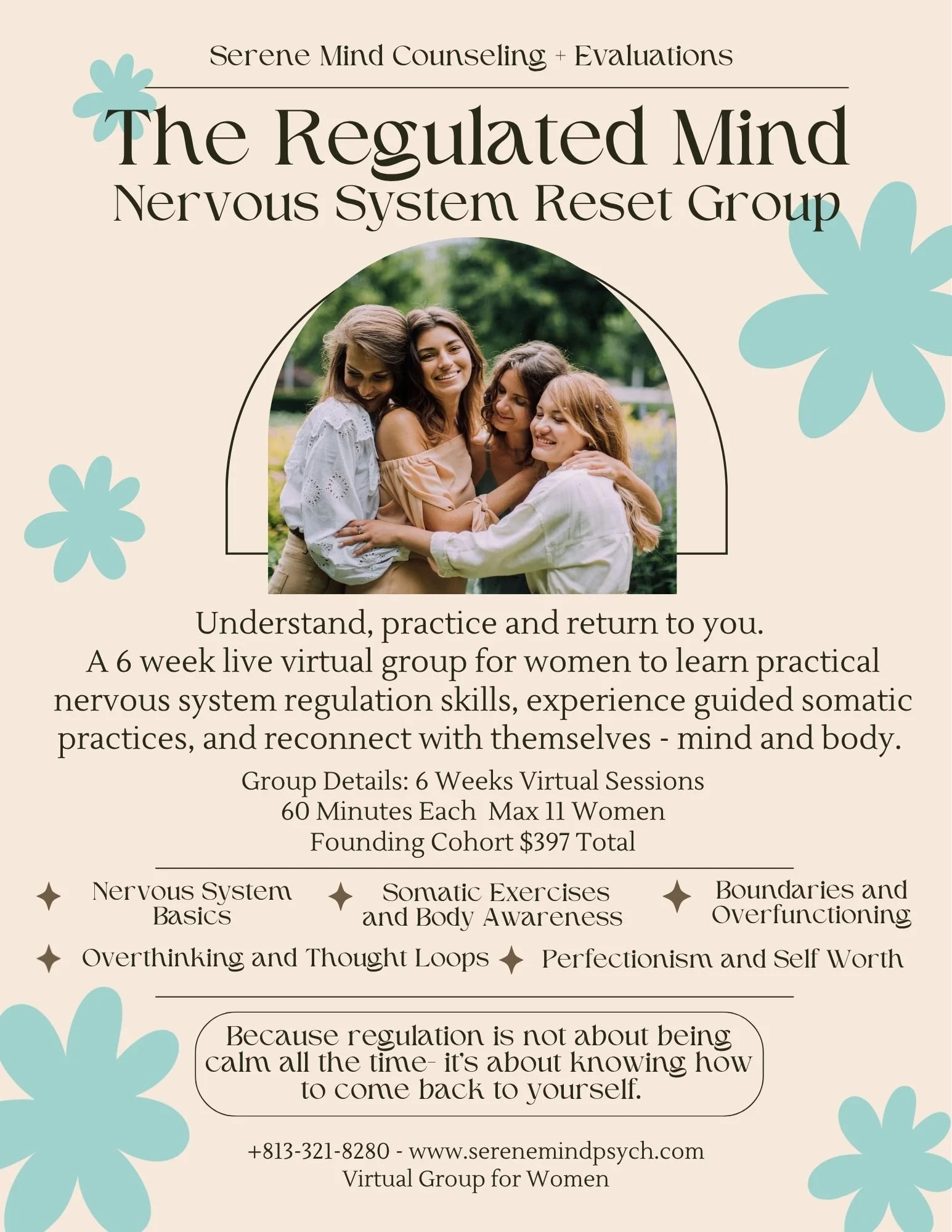
Our upcoming Nervous System Reset Group is rooted in this philosophy.

Rather than promising a quick fix or asking you to become perfectly regulated, the intention is to create a space for learning, practicing, reflecting, and developing a deeper relationship with your own nervous system.

Because sometimes the reset we need isn't another thing to accomplish.

Sometimes it's permission to pause long enough to hear ourselves again.

To notice what we've been carrying.

To understand why certain situations feel so activating.

To practice responding differently.

And to remember that underneath all the coping, protecting, performing, and surviving...

you are still there.

Maybe the work isn't about becoming a new version of yourself.

Maybe it's about finding your way back to the one who was there all along.

That is the heart of RETURN Within.

What If You Don’t Need to Fix Yourself? Learning to Return to Within

When You’re Doing Everything but Still Feel Overwhelmed: Understanding Your Nervous System

You’re getting things done.

You’re answering the texts. Getting the kids where they need to go. Showing up for work. Making the appointments. Taking care of everyone else. Somehow, you’re keeping everything moving.

But inside, you’re exhausted.

You may feel like you’re constantly “on.” Your mind keeps running even when you finally sit down. Small things bother you more than they used to. You’re more irritable, anxious, emotional, or easily overwhelmed. Maybe you have trouble relaxing because there is always something else to think about.

And when someone asks, “What’s wrong?” you may not even know what to say.

You’re functioning. But you don’t feel okay.

This is something many parents and adults experience, particularly during seasons of high stress, major life changes, postpartum, caregiving, or simply after spending a long time putting everyone else first.

Sometimes the problem isn't that you need to become better at managing your life.

Sometimes your nervous system is tired.

What does your nervous system have to do with it?

Your nervous system is constantly taking in information and deciding whether you are safe, threatened, overwhelmed, or able to relax.

When you've been under stress for a long time, your body can become accustomed to being on alert.

You might notice:

  • Racing thoughts

  • Trouble sleeping

  • Feeling restless or “wired”

  • Irritability or a shorter fuse

  • Feeling overwhelmed by normal tasks

  • Difficulty slowing down

  • Feeling disconnected or numb

  • Constantly anticipating what could go wrong

  • Feeling exhausted but unable to relax

This doesn't mean something is wrong with you.

It may mean your body has gotten very good at protecting you.

The goal isn't to force yourself to “calm down” or tell yourself that everything is fine.

The goal is to help your brain and body learn that they don't have to stay in survival mode all the time.

Sometimes you need more than coping skills

Breathing exercises and mindfulness can be helpful, but sometimes there is more underneath the overwhelm.

Past experiences, trauma, chronic stress, difficult relationships, major transitions, parenting stress, postpartum changes, or years of putting your own needs last can all contribute to patterns that are difficult to change on your own.

This is where a nervous-system-informed approach to therapy can be helpful.

Therapy may incorporate somatic-informed techniques, grounding and regulation skills, trauma-informed approaches, and Accelerated Resolution Therapy (ART) when appropriate.

ART, for example, can help people process difficult experiences and emotional responses without requiring them to repeatedly talk through every detail of what happened.

The goal isn't to erase your experiences.

It's to help you feel less controlled by them.

And importantly, therapy doesn't have to be reserved for a crisis.

You can seek support because you're tired.

Because you're overwhelmed.

Because you don't recognize yourself lately.

Because you want to respond differently to your children.

Because you're ready to stop living in constant “go mode.”

Signs you may benefit from this kind of support

You might consider nervous-system-informed therapy if:

1. You can't seem to turn your brain off.
Even when nothing is happening, you're thinking, planning, worrying, or preparing for the next thing.

2. Small things feel BIG.
You find yourself becoming frustrated, angry, tearful, or overwhelmed by things that normally wouldn't affect you as much.

3. You're always taking care of everyone else.
You know how to show up for other people, but you're not sure how to make space for yourself.

4. You feel disconnected from yourself.
You may feel like you're going through the motions rather than actually enjoying your life.

5. Your body feels like it's constantly “on.”
You may notice tension, restlessness, difficulty sleeping, or a constant sense that something needs your attention.

6. You understand your patterns but can't seem to change them.
You know where some of your reactions come from, but knowing isn't always enough to make your body respond differently.

Four things you can try on your own

1. Slow down before you solve.

When something stressful happens, give yourself 30 seconds before immediately jumping into problem-solving.

Take a slow breath. Feel your feet on the floor. Look around the room.

Tell yourself:

“I can respond to this. I don't have to solve everything right now.”

2. Notice what your body is telling you.

Instead of asking only, “What's wrong with me?” try asking:

“What is my body experiencing right now?”

Are your shoulders tight? Is your jaw clenched? Is your heart racing? Are you holding your breath?

Simply noticing can be the beginning of changing the pattern.

3. Create tiny moments of safety.

You don't need an hour of meditation.

Try sitting outside for five minutes, listening to calming music, taking a warm shower, stretching, drinking something slowly, or stepping away from your phone.

Think small and consistent, not perfect.

4. Practice repair instead of perfection.

You will lose your patience.

You will have hard days.

You may yell at your child, cancel plans, or realize you have been running on empty.

Instead of deciding you've failed, practice repair.

“I was overwhelmed. I'm sorry. I'm going to try that differently next time.”

Repair teaches your nervous system—and the people around you—that a difficult moment doesn't have to become a permanent pattern.

You don't have to do this perfectly

Learning to regulate your nervous system isn't about becoming calm all the time.

It's about noticing when you're overwhelmed, understanding what your body is communicating, and having more choices in how you respond.

Sometimes you can do that with simple tools at home.

Sometimes you need someone to walk alongside you.

And sometimes having a compassionate therapist who understands both the emotional and physical experience can make the process feel much less overwhelming.

If you're in Jacksonville, Nikki Tucker, LMHC offers a warm, nervous-system-informed approach that may incorporate somatic techniques, regulation strategies, trauma-informed therapy, and ART when appropriate. She works with adults, parents, teens, and children and offers daytime appointments in Jacksonville as well as virtual therapy throughout Florida.

You don't have to wait until you're falling apart to ask for support.

Sometimes you just need a place to exhale. 🤍

When You’re Doing Everything but Still Feel Overwhelmed: Understanding Your Nervous System

When Everyone Flips Their Lid: Nervous System Regulation for Burned-Out Parents and Big Feelings

If you have ever had a toddler melt down in the grocery store, a teenager slam a door, or a partner become completely overwhelmed during an argument, you probably know the feeling of thinking, “How do I get them to calm down?”

But there is another question that can be just as important:

“What is happening in their nervous system right now—and what is happening in mine?”

We often talk about emotional regulation as if it is simply a matter of choosing to calm down. But when someone is overwhelmed, angry, panicked, crying, shutting down, or completely losing their ability to communicate, their nervous system may be responding to stress before their thinking brain has a chance to catch up.

This is especially important for burned-out parents and caregivers. When you are already exhausted, overstimulated, touched out, worried about work, managing schedules, answering endless questions, and trying to meet everyone's needs, your own nervous system may already be operating close to its limit.

Then your child has a meltdown.

And suddenly, everyone is dysregulated.

What Does “Flipping Your Lid” Actually Mean?

The phrase “flipping your lid” is often used to describe what happens when our emotional response becomes so intense that it becomes difficult to think clearly, communicate, problem-solve, or respond calmly.

This can happen to children, teenagers, and adults.

A toddler may scream, throw themselves on the floor, hit, cry, or refuse to cooperate. A teenager may yell, isolate, slam a door, or say things they don't really mean. An adult may become defensive, raise their voice, shut down, or feel like they need to escape the conversation.

These behaviors can look very different, but underneath them may be a nervous system that is overwhelmed.

And here's something important for parents:

A dysregulated child does not need a lecture about regulation. They need help experiencing regulation.

Young children especially learn regulation through repeated experiences with safe, responsive adults. This doesn't mean allowing unsafe behavior or giving in to every demand. It means recognizing that connection and regulation often need to come before correction.

The Parent's Nervous System Matters Too

One of the hardest parts of parenting is that children don't always become calmer simply because we tell them to calm down.

In fact, when a parent is yelling, rushing, threatening, or visibly overwhelmed, the child's nervous system may interpret that as additional stress.

This doesn't mean you have to be perfectly calm all the time.

You are human.

Parents get frustrated. Parents lose patience. Parents have bad days. Parents sometimes need to step away and take a breath before responding.

The goal isn't perfect regulation.

The goal is repair, awareness, and practicing a different response over time.

Sometimes the most powerful thing a parent can do during a child's meltdown is regulate themselves first.

Take a breath.

Lower your voice.

Slow your movements.

Unclench your jaw.

Drop your shoulders.

Remind yourself:

“My child is having a hard time. I don't have to have a hard time in exactly the same way.”

What Can You Do When Someone Is Dysregulated?

When someone's nervous system is highly activated, trying to reason with them may not be very effective in that moment.

Instead, think about safety, connection, and reducing stimulation.

1. Slow Yourself Down

Before responding, pause for a moment.

Take one slower breath than usual. Put both feet on the floor. Relax your shoulders. Notice whether you are speaking quickly or raising your voice.

You don't have to become completely calm.

You just need to become a little more regulated than the moment before.

That small shift can change the tone of the interaction.

2. Use Fewer Words

When someone is overwhelmed, long explanations can feel like more stimulation.

Instead of:

"We've already talked about this five times and I told you that you can't do that, and now you're making this situation worse..."

Try:

"You're really upset. I'm here. We're going to figure this out."

Short. Calm. Clear.

There will be plenty of time for teaching and problem-solving later.

3. Don't Confuse Regulation With Permissiveness

Helping someone regulate does not mean allowing unsafe or disrespectful behavior.

You can be compassionate and hold a boundary at the same time.

For example:

"I know you're angry. It's okay to be angry. I won't let you hit me. I'm going to give you some space, and we'll talk when we're both calmer."

The message becomes:

Your feelings are allowed. Unsafe behavior is not. I am still here.

That is a powerful combination.

4. Reduce Stimulation

Sometimes the simplest intervention is changing the environment.

Turn off the television. Move away from a crowded room. Lower your voice. Dim the lights. Give the person physical space. Stop asking multiple questions.

For some people, regulation begins when there is simply less coming at them.

5. Try Connection Before Correction

When a child is completely overwhelmed, correcting the behavior immediately may not accomplish much.

First, help them feel safe enough to come back into a more regulated state.

You might say:

"That was really disappointing."

"You really wanted that toy."

"You're having a big feeling right now."

This doesn't mean agreeing with inappropriate behavior. It means showing the child that their emotional experience is being noticed.

Once the nervous system settles, you can teach.

Regulate. Relate. Then reason.

What About When It's You Who Is Flipping Your Lid?

This is where nervous system regulation becomes especially important for burned-out moms, caregivers, partners, and anyone who feels like they are constantly carrying too much.

Sometimes the problem isn't that you don't know enough coping skills.

Sometimes you're simply overloaded.

You may need rest.

You may need fewer demands.

You may need help.

You may need boundaries.

You may need ten minutes alone without someone asking you a question.

You may need to stop expecting yourself to function at 100% when your body and mind are telling you that you're running on empty.

Regulation isn't just about what you do during a crisis.

It is also about what you do before the crisis happens.

Regular movement, adequate sleep when possible, nourishing meals, time outside, supportive relationships, enjoyable activities, breathing exercises, mindfulness, and moments of quiet can all become part of creating a nervous system that has more capacity to handle stress.

And sometimes, professional support can help you understand why your nervous system reacts so strongly in certain situations and how to develop healthier patterns.

You Don't Have to Be the Calm Parent All the Time

There is so much pressure on parents to get everything right.

The perfect response.

The perfect bedtime routine.

The perfect emotional regulation strategy.

The perfect consequence.

But children don't need perfect parents.

They need safe enough, responsive, loving humans who are willing to keep learning.

If you lose your patience, you can repair.

"I was really frustrated, and I raised my voice. I'm sorry. You didn't deserve to be yelled at. I'm going to work on slowing down when I'm overwhelmed."

That moment matters.

Repair teaches children something incredibly important:

Relationships can survive hard moments.

We can make mistakes and reconnect.

We can have big feelings without being defined by them.

We can learn how to pause.

We can try again.

And perhaps most importantly, we can stop thinking about nervous system regulation as another thing we have to be perfect at.

Instead, we can see it as a practice.

A breath.

A pause.

A softer voice.

A little more space.

A boundary held with compassion.

A moment of connection.

A repair after a difficult interaction.

These small moments add up.

And when we learn to notice our own nervous system while helping our children, partners, and loved ones navigate theirs, we create more opportunities for everyone to feel safe, connected, and understood.

You don't have to calm the entire world around you. Start with one nervous system at a time—including your own.

When Everyone Flips Their Lid: Nervous System Regulation for Burned-Out Parents and Big Feelings

Nervous System Dysregulation, Anxiety & Trauma: Why Stress Can Feel Physical

Have you ever felt anxious even when you know you're safe?

Maybe your heart starts racing before you have even identified what you're worried about. Your stomach tightens. Your shoulders tense. You feel shaky, restless, dizzy, exhausted, or unable to take a satisfying breath. You may find yourself thinking, "I know I'm okay, so why doesn't my body feel okay?"

For many people, anxiety is not only a mental experience. It can be a very physical one.

Stress, trauma, chronic worry, and difficult life experiences can all affect the way the brain and body respond to perceived threat. When these responses become frequent or difficult to shift, people may describe the experience as nervous system dysregulation.

Understanding the relationship between anxiety, trauma, the nervous system, and the body can provide a different way of understanding symptoms that may otherwise feel confusing or frightening.

What Is Nervous System Dysregulation?

The nervous system is constantly processing information from both inside and outside the body. It helps us respond to changes in our environment, physical sensations, emotions, relationships, and experiences.

When the brain perceives danger or significant stress, the body can activate protective responses designed to help us respond.

These responses are often described as fight, flight, freeze, or shutdown.

During a state of nervous-system activation, you might experience:

  • Increased heart rate

  • Faster or shallower breathing

  • Muscle tension

  • Sweating

  • Trembling or shaking

  • Gastrointestinal changes

  • Difficulty concentrating

  • Increased alertness

  • Restlessness

  • Irritability

  • Feeling overwhelmed

  • An urge to escape or avoid something

These responses are not inherently abnormal. They are part of the body's protective systems.

The difficulty may arise when the nervous system becomes highly reactive, remains activated for extended periods, or has difficulty returning to a more settled state after stress.

"Nervous system dysregulation" is not itself a psychiatric diagnosis. In mental health treatment, the term is often used to describe patterns in which a person's physiological and emotional responses to stress feel difficult to manage or shift.

Why Does Anxiety Feel So Physical?

Anxiety is often associated with worrying thoughts, but the body can become involved very quickly.

Imagine that you notice your heart beating faster.

You might immediately think:

"Why is my heart racing?"

That thought can increase fear.

The increased fear can produce additional physiological activation, which may make your heart beat even faster or cause your breathing to change.

You notice those sensations and become even more concerned.

This can create a cycle:

Physical sensation → interpretation → anxiety → increased physical activation → more physical sensation

This does not mean the symptoms are imaginary.

Physical symptoms of anxiety are real experiences.

The brain and body continuously communicate with one another, and changes in one can influence the other.

This is one reason someone can intellectually understand that they are safe while still experiencing a strong physical stress response.

Signs That Anxiety May Be Affecting Your Body

Anxiety can look different from person to person.

Some people primarily experience racing thoughts and excessive worry. Others notice physical symptoms first.

Common physical and emotional experiences may include:

  • Racing heart

  • Chest tightness

  • Muscle tension

  • Headaches

  • Stomach discomfort

  • Nausea

  • Changes in appetite

  • Shaking or trembling

  • Sweating

  • Restlessness

  • Fatigue

  • Difficulty sleeping

  • Difficulty concentrating

  • Feeling constantly "on edge"

  • Increased sensitivity to noise or stimulation

  • Panic or fear

  • Feeling overwhelmed by everyday responsibilities

For some people, symptoms are occasional and connected to specific stressful situations.

For others, anxiety and chronic stress can become a persistent part of daily life.

Stress Versus Chronic Stress

Everyone experiences stress.

A difficult conversation, work deadline, exam, relationship conflict, unexpected change, or frightening experience can temporarily activate the body's stress response.

After the situation passes, the body can begin returning toward its usual state.

Chronic stress can be different.

When stressful circumstances continue for weeks, months, or years, there may be fewer opportunities for recovery.

Work demands, relationship difficulties, caregiving responsibilities, financial concerns, academic pressure, chronic illness, trauma, sleep disruption, and ongoing uncertainty can all contribute to prolonged stress.

A person experiencing chronic stress may begin to feel as though they are always preparing for the next problem.

They may feel exhausted but unable to rest.

They may become increasingly irritable or overwhelmed.

They may have difficulty concentrating or sleeping.

They may find themselves reacting strongly to situations that previously would not have bothered them.

These experiences do not necessarily mean that something is "wrong" with the person.

They may be signs that the person has been carrying a significant amount of stress for a long time.

How Trauma Can Affect the Nervous System

Trauma can influence how a person experiences safety.

After a traumatic experience, reminders of the event may trigger emotional or physical responses even when the original danger is no longer present.

Trauma-related symptoms can include:

  • Hypervigilance

  • Increased startle response

  • Panic

  • Intrusive memories

  • Nightmares

  • Avoidance

  • Difficulty trusting others

  • Emotional numbness

  • Dissociation

  • Sleep problems

  • Muscle tension

  • Persistent anxiety

A person may consciously understand that the traumatic event is over while still experiencing an automatic response when something reminds them of it.

For example, a particular sound, smell, location, relationship dynamic, physical sensation, or conversation may activate a response connected to an earlier experience.

This is one reason trauma treatment can involve more than simply talking about what happened.

Trauma can involve memories, emotions, beliefs, physical sensations, behaviors, and automatic responses.

What Is Somatic Therapy?

Somatic therapy refers broadly to therapeutic approaches that incorporate awareness of bodily sensations and physiological responses into psychotherapy.

Traditional talk therapy may focus heavily on questions such as:

"What are you thinking?"

Somatic work may also ask:

"What are you noticing in your body right now?"

A client discussing a stressful experience might notice tightness in the chest, clenching in the jaw, a sinking sensation in the stomach, increased heart rate, or an urge to pull away.

Rather than immediately ignoring or judging the sensation, therapy may involve slowing down and developing awareness of what is happening in the body.

Somatic approaches may incorporate grounding, body awareness, breathing, movement, attention to physical sensations, and other strategies depending on the therapist's training and the client's needs.

The goal is not to force the body to become calm.

Instead, somatic therapy may help a person become more aware of the relationship between physical sensations, emotions, thoughts, memories, and behavior.

Research into somatic approaches for trauma continues to develop. Some studies have found promising results, while researchers continue to call for additional high-quality research across different somatic interventions and populations.

EMDR Therapy for Trauma

Another approach used in trauma treatment is EMDR, or Eye Movement Desensitization and Reprocessing.

EMDR is a structured trauma-focused psychotherapy approach that was developed to help people process distressing memories. It has been extensively studied, particularly in relation to PTSD.

EMDR does not simply involve talking about a traumatic event.

Treatment typically includes preparation and stabilization before beginning trauma processing. The therapist and client may identify a distressing memory along with associated thoughts, emotions, physical sensations, and beliefs.

During processing, the therapist uses bilateral stimulation, which commonly involves guided eye movements, while the client attends to aspects of the memory according to the EMDR protocol.

The purpose is not to erase the memory.

The traumatic event remains part of the person's history.

Instead, trauma processing aims to help the memory become less distressing and less disruptive to present-day functioning.

EMDR may be appropriate for some individuals with PTSD or trauma-related symptoms, but treatment should always be individualized based on a person's history, symptoms, stability, and treatment goals.

Accelerated Resolution Therapy (ART)

Accelerated Resolution Therapy, commonly called ART, is another trauma-focused approach that incorporates eye movements and imagery-based techniques.

ART may involve recalling a distressing experience while working with a therapist to modify aspects of how the memory is experienced. Depending on the protocol and treatment plan, this can involve visualization, imagery, and techniques designed to reduce the emotional intensity associated with distressing memories.

Some clients are drawn to ART because of its focus on changing the experience of distressing memories rather than repeatedly discussing every detail of an event.

ART and EMDR have similarities, but they are not the same therapy and have different protocols and training requirements.

Research into ART continues to develop. It is important for clients to ask about a clinician's specific training and experience with the modality they are considering.

EMDR, ART, and Somatic Therapy: What's the Difference?

Although these approaches can all be used in trauma-focused treatment, they are not interchangeable.

Somatic therapy places greater emphasis on present-moment bodily experience, physical sensations, emotional responses, and patterns of nervous-system activation.

EMDR uses a structured trauma-processing protocol incorporating bilateral stimulation while working with distressing memories and associated thoughts, emotions, and physical sensations.

ART incorporates eye movements and imagery-based techniques to address distressing memories and the emotional responses connected to them.

A therapist may use one approach or integrate elements of different approaches when appropriate and within their training.

Not every person needs every modality.

The most appropriate treatment depends on factors such as the person's symptoms, trauma history, current level of stability, treatment goals, ability to tolerate trauma processing, and preferences.

Trauma Processing Should Be Appropriately Paced

Someone can be very motivated to work through trauma and still benefit from beginning slowly.

Trauma processing can be emotionally and physically demanding.

For some clients, early treatment may focus on:

  • Establishing safety

  • Developing grounding skills

  • Learning emotional regulation strategies

  • Understanding triggers

  • Increasing awareness of physical responses

  • Building trust within the therapeutic relationship

  • Developing coping strategies

Once a person has developed sufficient stability, the therapist may determine whether trauma processing is appropriate.

This is particularly important for individuals experiencing significant anxiety, dissociation, chronic illness, dysautonomia, or a highly reactive stress response.

Trauma therapy should not be about forcing someone to revisit painful memories before they are ready.

The goal is to create enough safety and stability to approach difficult experiences in a way that is manageable and clinically appropriate.

Nervous System Dysregulation and Chronic Illness

The relationship between the nervous system and mental health can become especially complicated for people living with chronic illness.

Individuals with conditions involving the autonomic nervous system may experience symptoms such as dizziness, fatigue, changes in heart rate, gastrointestinal symptoms, exercise intolerance, or difficulty regulating body temperature.

These symptoms can sometimes overlap with symptoms associated with anxiety.

That overlap can be confusing.

It is important not to assume that physical symptoms are caused by anxiety.

A medical condition is not "all in your head," and chronic illness should not automatically be attributed to psychological distress.

At the same time, living with chronic symptoms can create significant emotional stress.

People may worry about when symptoms will appear, whether they will be able to complete an activity, whether others will understand what they are experiencing, or whether their symptoms will interfere with work, school, relationships, or daily responsibilities.

For someone living with dysautonomia, POTS, autoimmune illness, chronic fatigue, or another complex medical condition, therapy may provide a place to address the emotional and nervous-system aspects of living with an unpredictable body while continuing appropriate medical care.

What Does Nervous System Regulation Actually Mean?

"Nervous system regulation" has become a popular term online, but regulation does not mean being calm all the time.

Healthy emotional functioning does not require eliminating anxiety, sadness, anger, excitement, or stress.

Instead, nervous-system regulation can involve developing greater flexibility in how you respond to stressful experiences.

This may include learning to:

  • Recognize early signs of activation

  • Identify triggers

  • Notice physical sensations

  • Understand emotional patterns

  • Use grounding strategies

  • Develop coping skills

  • Tolerate uncomfortable emotions

  • Recover after stressful experiences

  • Establish healthy boundaries

  • Improve sleep and recovery

  • Build supportive relationships

The goal is not perfection.

It is greater awareness, flexibility, and choice.

When Should You Seek Support?

Consider speaking with a mental health professional if anxiety, trauma symptoms, or chronic stress are interfering with your:

  • Sleep

  • Work

  • School

  • Relationships

  • Social life

  • Concentration

  • Physical well-being

  • Ability to complete everyday activities

You do not have to wait until symptoms become overwhelming before seeking support.

Therapy can be useful for people who want to better understand their reactions, develop coping strategies, process difficult experiences, or build a healthier relationship with their emotions and body.

When Physical Symptoms Need Medical Attention

Because anxiety can produce physical symptoms, it is important not to assume that every physical sensation is psychological.

New, severe, persistent, or concerning symptoms should be appropriately evaluated by a medical professional.

This is particularly important when someone has a known or suspected medical condition.

Psychotherapy can complement medical treatment, but it should not replace appropriate medical evaluation or care.

Your Body's Response Is Not a Character Flaw

One of the most helpful shifts can be learning to separate who you are from the way your nervous system responds.

You are not weak because you feel overwhelmed.

You are not "too sensitive" because your body reacts strongly to stress.

You are not failing because you cannot simply think your way out of anxiety.

Your responses may have developed through your experiences, environment, relationships, stress, and circumstances.

Understanding those patterns can be the beginning of changing how you respond to them.

Instead of asking only:

"How do I stop feeling anxious?"

you might begin asking:

"What is my body responding to?"

"What happens when I feel unsafe?"

"What helps me feel grounded?"

"How can I respond differently when stress appears?"

Those questions can create space for greater awareness and self-compassion.

For some people, nervous-system-focused therapy, somatic therapy, EMDR, ART, cognitive behavioral therapy, or another evidence-informed approach may become part of that process.

The right approach is individual.

There is no single therapy that works for everyone, and meaningful change often involves finding an approach that matches your symptoms, history, goals, and current capacity.

Nervous System and Trauma Therapy in Tampa and Jacksonville

Serene Mind Counseling + Evaluations provides mental health services for children, teens, young adults, and adults experiencing anxiety, trauma, chronic stress, emotional difficulties, and other mental health concerns.

Our clinicians use individualized, trauma-informed approaches that may include cognitive, somatic, nervous-system-focused, and trauma-processing interventions based on each client's needs and the clinician's training.

For individuals living with dysautonomia and chronic illness, treatment may also address the emotional and psychological challenges associated with chronic symptoms and medical experiences while remaining complementary to appropriate medical care.

If you are experiencing persistent anxiety, trauma-related symptoms, or chronic stress, a mental health professional can help you explore what may be contributing to your symptoms and determine what type of treatment may be appropriate.

This article is for educational purposes only and is not a substitute for medical diagnosis, mental health diagnosis, or individualized treatment.

Nervous System Dysregulation, Anxiety & Trauma: Why Stress Can Feel Physical

More Than Social Skills: Helping Teens Build Confidence, Connection, and Belonging

Being a teenager can feel complicated—even when everything looks fine from the outside.

Friendships change. Social expectations become more complicated. Teens are navigating independence, identity, school pressures, emotions, and the constant question of “Where do I fit in?”

For some teens, connecting with others comes naturally. For others, social situations can feel confusing, exhausting, overwhelming, or even anxiety-provoking. They may want friends but struggle to know how to enter a conversation, keep one going, understand social cues, handle conflict, or recover when something goes wrong.

And sometimes, a teen may simply need a little more practice in a supportive environment.

Social skills aren't about changing who your teen is

A social skills group should never be about teaching a teen to “act normal” or become someone they are not.

Instead, the goal is to help teens develop practical tools that allow them to communicate more comfortably, understand themselves and others, navigate relationships, and build meaningful connections while still being themselves.

Research supports the value of structured social skills interventions for adolescents. A systematic review of 16 studies found that group social skills interventions improved social skills, social knowledge, and social responsiveness among adolescents with developmental disabilities, with the strongest evidence currently available for teens with autism.

But social skills are only one piece of the puzzle.

Connection starts with feeling safe

It is difficult to learn a new social skill when your nervous system is already in a state of stress.

A teen who becomes overwhelmed in groups may have difficulty thinking flexibly, finding the right words, reading another person's expression, or knowing what to do next. That doesn't necessarily mean they don't know the skill. Sometimes their brain and body are simply having difficulty accessing it in the moment.

This is where a nervous-system-informed approach can be helpful.

In our teen social skills group, we incorporate opportunities to notice body signals, practice regulation, slow down reactions, and build awareness of what happens internally during social interactions. Teens can learn to recognize, “I'm getting overwhelmed,” before they reach the point of shutting down, withdrawing, becoming reactive, or wanting to leave.

The teenage brain is still learning

Adolescence is a particularly important developmental period for social learning. The adolescent brain continues undergoing significant changes involving neural connections, myelination, and reorganization. Research also shows that adolescents are particularly responsive to social information and learning from their social environments.

That means social experiences can become opportunities for learning.

With repetition, feedback, reflection, and supportive practice, teens can strengthen new patterns of responding. This is one reason we incorporate neuro-retraining principles into social-emotional work: rather than simply telling a teen what they should do, we create opportunities to practice noticing, regulating, choosing, communicating, and trying again.

The goal isn't perfection.

It's creating more options.

Instead of:

“I don't know what to say.”

A teen can learn:

“I can ask a question.”

Instead of:

“Everyone thinks I'm weird.”

They can learn:

“Maybe I don't know what they're thinking. I can check the situation before assuming.”

Instead of:

“I messed up, so I'm done.”

They can learn:

“That interaction didn't go how I wanted. I can try again.”

What teens can practice in a social skills group

Our group provides a supportive environment where teens can practice skills such as:

  • Starting and maintaining conversations

  • Reading social cues and body language

  • Understanding perspective and different points of view

  • Joining a group or entering a conversation

  • Handling disagreements and misunderstandings

  • Setting boundaries and respecting others' boundaries

  • Managing social anxiety and overwhelm

  • Developing confidence and self-advocacy

  • Recognizing thoughts, emotions, and body signals

  • Building and maintaining friendships

  • Recovering from awkward or uncomfortable social moments

Most importantly, teens get the opportunity to practice these skills with other teens.

That matters.

Research on adolescent connectedness has found that supportive relationships and a sense of belonging are important protective factors for youth. Studies of interventions designed to increase social connectedness have also found improvements in social connectedness, with some additional positive effects on self-esteem and depressive symptoms.

Your teen doesn't have to figure it out alone

Sometimes the teen who appears quiet doesn't know how to join in.

Sometimes the teen who talks constantly is trying desperately to connect.

Sometimes the teen who says, “I don't care,” cares very deeply.

And sometimes a teen simply hasn't found their people yet.

A social skills group can provide more than skills. It can provide a place to practice, make mistakes without judgment, learn from peers, discover strengths, and experience what it feels like to be understood.

At Serene Mind Counseling + Evaluations, we believe that social growth isn't about forcing connection. It's about helping teens develop the confidence, awareness, flexibility, and regulation skills that make connection feel more possible.

Your teen doesn't need to become someone else to belong.

They may simply need the right environment, the right tools, and opportunities to practice.

Ready to help your teen feel more confident and connected?

Our Teen Social Skills Group is designed to give adolescents a supportive space to practice real-life social and emotional skills while building confidence and connection with peers.

Serene Mind Counseling + Evaluations
Tampa, Florida
813-321-8280
hello@serenemindpsych.com

Learn more about our Teen Social Skills Group and reach out to see whether it may be a good fit for your teen.

More Than Social Skills: Helping Teens Build Confidence, Connection, and Belonging

The Nervous System of Connection: How Regulation Helps Children Build Confidence, Social Skills, and Meaningful Relationships

When we think about helping children develop social skills, we often focus on what they say or do: making eye contact, taking turns, joining a conversation, sharing toys, or knowing how to respond to a friend. While these skills are important, there is another piece that often gets overlooked: the nervous system.

A child’s ability to connect with others is deeply influenced by how safe, regulated, and supported they feel in their body.

Social connection is not just a learned skill. It is also a biological experience. Before children can comfortably navigate friendships, teamwork, or group settings, their nervous system needs to feel safe enough to engage.

This is why a child who knows the “right answer” but freezes during conversations, becomes overwhelmed in groups, avoids playdates, or struggles with flexibility may not simply need more practice. They may need support learning how to regulate their nervous system first.

Understanding the Nervous System and Social Connection

The nervous system is constantly scanning the environment and asking:

“Am I safe?”

When children feel safe and regulated, they are more available for learning, curiosity, play, communication, and connection. Their brains have more access to problem-solving, empathy, creativity, and emotional flexibility.

However, when a child’s nervous system becomes overwhelmed, the brain shifts into protection mode. This can look like:

  • Meltdowns

  • Shutting down

  • Avoiding social situations

  • Becoming controlling or rigid

  • Difficulty listening

  • Emotional outbursts

  • Trouble transitioning between activities

These behaviors are often misunderstood as defiance, immaturity, or a lack of motivation. But many times, they are signs that a child’s nervous system is communicating:

“This feels too much right now.”

Why Social Situations Can Feel Overwhelming for Children

For many children, social environments require a tremendous amount of nervous system work.

Think about everything a child has to process when entering a group:

  • Reading facial expressions

  • Understanding tone of voice

  • Taking turns

  • Managing emotions

  • Staying flexible when plans change

  • Remembering social rules

  • Coping with uncertainty

  • Figuring out where they belong

For some children, especially those who are sensitive, neurodivergent, anxious, or have experienced stress or trauma, these demands can quickly exceed their nervous system capacity.

A child may desperately want friendships but still struggle with the skills needed to maintain them. They may crave connection while also feeling overwhelmed by the very situations that create connection.

This is where nervous system regulation becomes a bridge.

Regulation Comes Before Connection

Children do not learn emotional regulation by being told to “calm down.” They learn through repeated experiences of feeling safe, understood, and supported.

Connection itself is regulating.

A child’s nervous system is shaped through relationships. When a child experiences a caring adult who notices their emotions, helps them recover after stress, and models calm responses, their brain learns:

“I can handle big feelings.”

“I am safe with others.”

“Relationships can feel supportive.”

Over time, these experiences build confidence and resilience.

Social Skills Are Built Through Safe Practice

Many children struggle socially not because they do not care about friendships, but because they have not had enough opportunities to practice these skills in a supportive environment.

Social skills groups can provide a unique space where children can learn and grow alongside peers while being guided by trained professionals.

A supportive social skills environment allows children to practice:

  • Starting conversations

  • Recognizing emotions

  • Understanding different perspectives

  • Problem-solving with peers

  • Managing frustration

  • Building confidence

  • Experiencing successful connection

The goal is not to make children fit into a specific mold. The goal is to help them understand themselves, understand others, and develop tools that allow relationships to feel more accessible and enjoyable.

The Importance of Play and Belonging

For children, play is one of the most powerful pathways to connection.

Through play, children practice:

  • Cooperation

  • Creativity

  • Communication

  • Negotiation

  • Emotional expression

  • Repairing misunderstandings

Play allows children to explore relationships in a way that feels natural and developmentally appropriate.

When children experience belonging, something powerful happens: they begin to feel more confident in who they are.

A child who feels accepted is more likely to take social risks, try new things, and develop meaningful friendships.

Supporting Your Child’s Nervous System at Home

Parents can support nervous system regulation by focusing less on correcting behavior and more on understanding what the behavior is communicating.

Some helpful strategies include:

1. Notice Before You Redirect

Before correcting a behavior, pause and ask:

“What might my child’s nervous system be experiencing right now?”

A child who is melting down may need connection before correction.

2. Create Predictability

Transitions and uncertainty can be challenging for many children. Visual schedules, preparation, and consistent routines can help the nervous system feel safer.

3. Practice Regulation Together

Children learn regulation through co-regulation. Deep breathing, movement, sensory activities, and calming routines are most effective when practiced together during calm moments.

4. Prioritize Connection

Small moments of connection matter: playing together, laughing, listening, and showing curiosity about your child’s world.

Connection is not something children earn after behaving well. Connection is what helps them develop the capacity to navigate the world.

Helping Children Feel Confident in Their Relationships

Every child deserves to experience friendship, belonging, and acceptance.

When we understand the connection between the nervous system and social development, we can begin to see children’s struggles differently. Instead of asking, “Why can’t they just do this?” we can ask:

“What support does their nervous system need to feel safe enough to connect?”

At Serene Mind Counseling + Evaluations, our Child Social Skills Group focuses on helping children build meaningful relationships while strengthening emotional regulation, communication, confidence, and social awareness.

Through guided activities, connection-focused play, and supportive peer interactions, children have the opportunity to practice important skills in a safe and encouraging environment.

Because connection is not just something children learn.

Connection is something children are wired for.

The Nervous System of Connection: How Regulation Helps Children Build Confidence, Social Skills, and Meaningful Relationships

Is It Really Attitude...Or an Overloaded Nervous System?

If you've ever found yourself saying, "I don't even recognize my teenager anymore," you're certainly not alone.

One moment they're laughing at dinner, and the next they're slamming a bedroom door. They withdraw from family, spend hours alone, become irritable over seemingly small things, or react intensely to situations that don't seem like a big deal.

It's easy to assume they're simply being dramatic or difficult.

But what if much of this behavior isn't a character problem at all?

What if it's biology?

The teenage brain and nervous system are undergoing one of the most significant periods of development since infancy. During adolescence, the emotional centers of the brain become highly active while the parts responsible for planning, reasoning, and impulse control are still under construction. At the same time, teens are navigating academic demands, friendships, extracurricular activities, social media, changing bodies, and figuring out who they are.

That's a tremendous amount for any nervous system to process.

The Nervous System Is Always Asking One Question

At its core, the nervous system is constantly scanning the environment for one thing:

Am I safe?

This process happens automatically, long before conscious thought.

When the nervous system perceives safety, teens are able to learn, problem solve, connect with others, and regulate emotions more effectively.

When it detects stress, overwhelm, or perceived danger—even if there isn't an actual threat—it shifts into survival mode.

This isn't a choice.

It's an automatic protective response.

Instead of thinking clearly, the body prepares to fight, flee, freeze, or shut down.

Many common teen behaviors begin to make much more sense through this lens.

The teen who lashes out may be stuck in a fight response.

The teen who constantly avoids responsibilities may be operating from a flight response.

The teen who seems emotionally numb or disconnected may actually be in a freeze response.

These behaviors aren't signs of a "bad kid." They're signs of a nervous system working overtime to stay protected.

Stress Looks Different Today

Today's teenagers face challenges that previous generations simply didn't.

Their brains rarely get true downtime.

Notifications, constant comparison through social media, academic competition, world events, sports schedules, and pressure to succeed keep many nervous systems in a near-constant state of activation.

Even positive experiences—new friendships, dating, driving, sports, or preparing for college—can create significant stress because change itself requires adaptation.

For some teens, earlier experiences such as bullying, family conflict, chronic illness, learning differences, anxiety, or trauma further increase nervous system sensitivity.

Over time, the body begins expecting stress even during everyday situations.

Behavior Is Communication

One of the biggest shifts parents and caregivers can make is viewing behavior as communication rather than defiance.

Instead of asking,

"What's wrong with my teen?"

try asking,

"What is their nervous system trying to tell me?"

A teenager who refuses school may not simply be avoiding responsibility.

Their nervous system may genuinely experience school as overwhelming.

The teen who spends hours alone in their room may not be rejecting family.

They may be attempting to recover from a day of constant sensory and emotional input.

The teen who explodes over something small may have been carrying stress long before that moment.

The small event was simply the tipping point.

When adults become curious instead of reactive, conversations often become safer—and healing begins.

Connection Before Correction

When teens are dysregulated, lectures rarely work.

Neither does logic.

This is because the thinking part of the brain temporarily goes offline during stress.

Before teaching, correcting, or solving the problem, the nervous system first needs to feel safe.

That doesn't mean eliminating boundaries.

Healthy limits remain important.

But how we deliver those limits matters.

A calm adult nervous system helps regulate a dysregulated teen nervous system.

Your steady presence often communicates safety more effectively than the perfect words ever could.

Small Moments Matter

Many parents worry they're not doing enough.

Fortunately, nervous system regulation isn't about creating perfect families.

It's about creating repeated moments of safety.

These moments can be surprisingly simple:

Sitting together during a car ride.

Taking the dog for a walk.

Cooking dinner together.

Watching a favorite show.

Laughing.

Playing a game.

Listening without immediately offering solutions.

These seemingly ordinary experiences tell the nervous system:

"I am safe."

"I belong."

"I don't have to handle everything alone."

Over time, these moments build resilience.

Supporting Regulation Isn't About Fixing

As parents, it's natural to want to solve problems quickly.

But nervous system healing is less about fixing and more about creating conditions where regulation becomes possible.

Sometimes that means helping teens identify what they're feeling.

Sometimes it means encouraging movement after a stressful school day.

Sometimes it means protecting downtime instead of overscheduling every hour.

Sometimes it simply means sitting beside them in silence.

Every regulated interaction becomes another opportunity for the brain and body to learn that connection is safe.

The Takeaway

Teen behavior often makes much more sense when we look beneath the surface.

While accountability and healthy expectations are still important, understanding the nervous system reminds us that behavior is often rooted in biology rather than willful disobedience.

The goal isn't raising a teenager who never struggles.

The goal is raising one who learns how to recognize stress, understand their body's signals, and return to regulation with the support of caring adults.

When we stop asking, "How do I stop this behavior?" and begin asking, "What does my teen need to feel safe enough to thrive?" we create space for stronger relationships, healthier communication, and lasting emotional resilience.

Because underneath every overwhelmed nervous system is a young person who isn't giving us a hard time—they're often having a hard time.

Is It Really Attitude...Or an Overloaded Nervous System?

Human by Nature: Understanding the Nervous System and the Wisdom of the Body

Have you ever had a moment where your mind knew you were safe, but your body felt anything but safe?

Maybe your heart raced during a simple conversation. Maybe you felt overwhelmed by something that seemed small. Maybe you found yourself exhausted, disconnected, anxious, or stuck in patterns you couldn’t explain.

These experiences are not signs that something is wrong with you. They are signs that your body is communicating.

At the core of our human experience is a powerful system designed to protect us: the nervous system.

Your Nervous System Is Always Listening

Your nervous system is constantly scanning your environment and your experiences, asking one important question:

“Am I safe?”

Long before we consciously think through a situation, our nervous system is gathering information. It notices facial expressions, tone of voice, body language, memories, sensations, and changes in our environment.

This process helps us respond quickly when we need protection. It allows us to move away from danger, connect with others, focus on important tasks, and adapt to life’s challenges.

The nervous system is not designed to make life difficult—it is designed to help us survive.

However, when we experience ongoing stress, trauma, illness, uncertainty, or overwhelming circumstances, our nervous system can become stuck in patterns of protection.

When Protection Becomes Exhausting

Many people live with a nervous system that has been working overtime.

This may look like:

  • Feeling constantly “on edge”

  • Difficulty relaxing even when things are calm

  • Feeling overwhelmed by everyday demands

  • Trouble sleeping or feeling rested

  • Increased sensitivity to stress, emotions, or physical sensations

  • Feeling disconnected from yourself or others

  • Experiencing anxiety, shutdown, or emotional exhaustion

Often, people judge themselves for these experiences.

They may think:
“Why can’t I just calm down?”
“Why am I reacting this way?”
“Why can’t I get back to who I used to be?”

But the body is not betraying you. It is trying to protect you using the information it has collected over time.

Healing Begins With Understanding

One of the most powerful shifts we can make is moving from judgment to curiosity.

Instead of asking:
“What is wrong with me?”

We can begin asking:
“What is my nervous system trying to tell me?”

This simple change creates space for compassion.

Healing is not about forcing yourself to “get over” your experiences or ignoring what your body is communicating. It is about learning how to listen, regulate, and build a deeper relationship with yourself.

The nervous system can learn new patterns. Through supportive relationships, therapeutic work, mindfulness, body-based approaches, and intentional practices, we can help our bodies experience more safety and flexibility.

Human by Nature

Being human means having a nervous system.

It means having emotions, memories, instincts, needs, and protective responses. It means that our bodies carry wisdom from everything we have experienced.

Our nervous system is not separate from who we are—it is a fundamental part of our story.

At Serene Mind Counseling, we believe healing begins when we understand ourselves more deeply. When we recognize the connection between our thoughts, emotions, bodies, and experiences, we can begin creating meaningful change from the inside out.

Human by Nature is an invitation to explore what makes us human: our capacity to adapt, connect, heal, and grow.

Your body has been communicating with you all along.

The question is: are we ready to listen?

Human by Nature: Understanding the Nervous System and the Wisdom of the Body

High-Functioning Anxiety and Hidden Trauma: A Growing Concern in Tampa and Jacksonville, FL

High-functioning anxiety and hidden trauma are becoming increasingly recognized mental health concerns, especially in fast-growing regions like Tampa and Jacksonville. While many people associate anxiety with visible distress or dysfunction, high-functioning anxiety often hides behind success, productivity, and outward stability. Similarly, hidden trauma can quietly shape a person’s thoughts, behaviors, and emotional responses without ever being fully acknowledged.

As awareness of mental health expands across Florida, more individuals are beginning to recognize that just because they are “doing well” on the surface doesn’t mean they are truly well internally.

What Is High-Functioning Anxiety?

High-functioning anxiety is not a formal diagnosis, but it is a widely used term to describe individuals who experience persistent anxiety while still maintaining their daily responsibilities. In cities like Tampa and Jacksonville—where professional growth, entrepreneurship, and busy lifestyles are common—this type of anxiety can easily go unnoticed.

People with high-functioning anxiety are often:

* Highly organized and detail-oriented

* Reliable and driven at work or school

* Perceived as successful or “put together”

* Constantly overthinking or worrying internally

Despite these outward strengths, they may struggle with chronic stress, fear of failure, and an inability to relax. Many residents in Tampa’s fast-paced business districts or Jacksonville’s expanding job market may find themselves stuck in this cycle—achieving more, but feeling less at ease.

Understanding Hidden Trauma

Hidden trauma refers to unresolved emotional pain that isn’t immediately visible or recognized. Unlike acute trauma caused by a single major event, hidden trauma often develops over time. It can stem from experiences such as:

* Emotional neglect during childhood

* Chronic stress or instability

* Toxic relationships

* Long-term pressure to perform or succeed

In both Tampa and Jacksonville, where populations are diverse and lifestyles vary widely, hidden trauma can affect people from all backgrounds. Because it doesn’t always present in obvious ways, individuals may not even realize that their current struggles are rooted in past experiences.

The Link Between High-Functioning Anxiety and Hidden Trauma

There is a strong connection between high-functioning anxiety and hidden trauma. Many individuals develop anxiety-driven behaviors as coping mechanisms. For example, someone who grew up in an unpredictable environment may become highly controlling or perfectionistic as an adult.

In places like Tampa and Jacksonville, where competition and growth are part of everyday life, these patterns can even be rewarded. Working long hours, striving for perfection, and constantly staying busy are often praised—but they can also mask deeper emotional struggles.

Common signs of this connection include:

* Perfectionism driven by fear rather than passion

* Difficulty relaxing or feeling “on edge” constantly

* People-pleasing tendencies

* Emotional suppression or avoidance

* Physical symptoms like fatigue, tension, or insomnia

Why It Often Goes Unnoticed

One of the biggest challenges with high-functioning anxiety and hidden trauma is that they are easy to overlook. In thriving urban areas like Tampa and Jacksonville, success is often measured by external achievements—career advancement, financial stability, or social status.

Because individuals with high-functioning anxiety typically meet or exceed these expectations, their internal struggles may be dismissed or minimized. They might even tell themselves:

* “I’m doing fine compared to others.”

* “I don’t have a real problem.”

* “I just need to push through.”

This mindset can delay seeking help and allow stress to build over time.

The Impact on Daily Life

Even though high-functioning anxiety may not immediately disrupt daily responsibilities, it can have long-term effects on mental and physical health. Many individuals in Tampa and Jacksonville report:

* Burnout from constant overwork

* Difficulty maintaining meaningful relationships

* Feeling emotionally disconnected or numb

* Increased risk of depression or panic attacks

Over time, what once felt like motivation can turn into exhaustion.

Seeking Support in Tampa and Jacksonville

The good news is that awareness of mental health resources in Tampa and Jacksonville is growing. From therapy practices to wellness centers, more options are becoming available for those dealing with anxiety and trauma.

Seeking help doesn’t mean something is “wrong”—it means recognizing that your well-being matters beyond productivity.

Effective approaches may include:

* Cognitive Behavioral Therapy (CBT)

* Trauma-informed therapy (ART, EMDR, Somatic and Inner Child)

* Mindfulness and stress management techniques

* Building emotional awareness and self-compassion

Local professionals in Tampa and Jacksonville are increasingly specializing in these areas, making it easier to find support tailored to individual needs.

Moving Toward Healing

Healing from high-functioning anxiety and hidden trauma doesn’t require giving up ambition or success. Instead, it involves shifting the motivation behind those behaviors—from fear and pressure to intention and balance.

This might look like:

* Setting boundaries around work and personal time

* Allowing space for rest without guilt

* Exploring the root causes of anxiety

* Learning to process emotions rather than suppress them

For many people in Tampa and Jacksonville, this shift can be life-changing. It allows them to maintain their drive while also improving their overall quality of life.

Final Thoughts

High-functioning anxiety and hidden trauma are more common than they appear, especially in growing cities like Tampa and Jacksonville, FL. While they may not always be visible, their impact is real—and worth addressing.

Recognizing the signs is the first step. From there, individuals can begin to build a healthier relationship with themselves—one that values not just achievement, but genuine well-being.

If you’re in Tampa or Jacksonville and find yourself constantly pushing forward but rarely feeling at ease, it may be worth looking beneath the surface. What you find could be the key to a more balanced, fulfilling life.

High-Functioning Anxiety and Hidden Trauma: A Growing Concern in Tampa and Jacksonville, FL

Is Online Trauma Therapy Effective? What the Research Shows

Online therapy has rapidly grown in popularity—but when it comes to trauma, many people still wonder:

“Can virtual therapy really help me heal?”

If you’re considering online trauma therapy in Florida, Massachusetts, or Utah, the research is clear:
👉 Yes, it can be highly effective.

What Is Online Trauma Therapy?

Online trauma therapy (also called telehealth therapy) allows you to meet with a licensed therapist through secure video sessions from the comfort of your home.

Common evidence-based approaches include:

  • Trauma-Focused Cognitive Behavioral Therapy (TF-CBT)

  • EMDR (Eye Movement Desensitization and Reprocessing)

  • Somatic and nervous system-based therapies

  • Mindfulness-based trauma treatment

These methods are the same ones used in traditional in-person settings—just delivered virtually.

What Research Says About Virtual Trauma Therapy

1. Online Therapy Reduces Trauma Symptoms

Research consistently shows that online therapy significantly reduces PTSD, anxiety, and trauma-related symptoms.

Clients receiving virtual trauma therapy often experience:

  • Reduced emotional reactivity

  • Improved mood and functioning

  • Better coping skills

2. Online Therapy Is as Effective as In-Person Therapy

One of the biggest concerns people have is whether virtual therapy “works as well.”

Research shows:
👉 There is little to no difference in effectiveness between online and in-person trauma therapy.

That means you can expect the same quality of care and outcomes, without needing to travel to an office.

3. Strong Therapist Connections Still Happen Online

Many clients worry that therapy might feel distant or impersonal over video.

However, studies show that:

  • Clients report similar levels of trust and connection with their therapist

  • Therapeutic relationships remain strong in virtual settings

In reality, many people feel more comfortable opening up from their own space.

4. EMDR, ART and Trauma-Focused Therapies Work Virtually

Specialized trauma treatments—including EMDR, ART—can be adapted effectively for online sessions.

Virtual trauma therapy allows for:

  • Structured trauma processing

  • Nervous system regulation

  • Safe pacing of difficult experiences

👉 Healing does not depend on being in the same room—it depends on the therapeutic process.

Benefits of Online Trauma Therapy

For many clients in Florida, Massachusetts, and Utah, virtual therapy offers unique advantages:

✔ Comfort and Safety

You can engage in trauma work from a familiar, secure environment.

✔ Access to Specialized Care

You’re not limited to therapists in your immediate area.

✔ Flexible Scheduling

Online sessions make it easier to fit therapy into your life.

✔ Consistency

Fewer missed appointments = more progress.

✔ Privacy

No waiting rooms or commuting.

Is Online Trauma Therapy Right for You?

Online therapy is a great fit if you:

  • Prefer the comfort of home

  • Have a busy schedule or limited access to local providers

  • Are seeking specialized trauma therapy

  • Want consistent, flexible care

However, higher levels of care may be needed if you are in immediate crisis or require in-person support.

Online Trauma Therapy in Florida, Massachusetts, and Utah

Our virtual therapy practice provides compassionate, evidence-based trauma therapy for clients located in:

  • Florida

  • Massachusetts

  • Utah

We specialize in helping individuals navigate:

  • PTSD and complex trauma

  • Anxiety and overwhelm

  • Nervous system dysregulation

  • Life transitions and burnout

The Bottom Line

Online trauma therapy is effective, research-supported, and accessible.

You don’t have to wait until things get worse—or until you find the “perfect” time.

👉 Healing can begin right where you are.

📞 Ready to Start Therapy?

If you're ready to begin virtual trauma therapy in Florida, Massachusetts, or Utah, we’re here to support you.

Reach out today to schedule a consultation and take the next step toward healing.

Is online trauma therapy effective? Research shows virtual therapy works for PTSD, anxiety, and trauma. Serving clients in FL, MA, and UT.

Why Trauma Is Stored in the Body (Not Just the Mind)

Trauma is not just psychological—it is stored in the body. Learn how somatic therapy and Accelerated Resolution Therapy (ART) help release trauma and restore nervous system balance.

Trauma Isn’t Just a Memory — It’s a Physical Experience

When people think about trauma, they often assume it lives only in their thoughts or memories. Many believe that if they simply talk about the past enough, they should eventually feel better. However, modern neuroscience and trauma research show something important:

Trauma is not only stored in the mind—it is also stored in the body.

Traumatic experiences can leave lasting imprints on the nervous system, muscles, and stress responses. This is why many people continue to experience symptoms long after the original event has passed.

Common signs trauma may still be stored in the body include:

  • Chronic muscle tension

  • Anxiety or panic

  • Difficulty relaxing

  • Digestive issues

  • Sleep disturbances

  • Emotional numbness

  • Hypervigilance or feeling “on edge”

These reactions are not weaknesses or personality flaws. They are the body’s survival mechanisms trying to protect you.

Understanding how trauma lives in the body is the first step toward real healing.

How the Nervous System Stores Trauma

When we experience something overwhelming or threatening, the brain activates the fight, flight, or freeze response. This is controlled by the autonomic nervous system and designed to keep us safe.

In a healthy situation, once the threat passes, the body returns to a calm, regulated state.

However, trauma can interrupt this natural reset process.

Instead of completing the stress response, the body may remain stuck in survival mode. The nervous system continues to react as if danger is still present, even when the environment is safe.

This can look like:

  • Constant tension in the shoulders, jaw, or chest

  • A racing heart or shallow breathing

  • Feeling emotionally disconnected or numb

  • Overreacting to small stressors

  • Feeling exhausted but unable to relax

The body essentially remembers what the mind may try to forget.

Why Talking About Trauma Isn’t Always Enough

Traditional talk therapy can be incredibly helpful for gaining insight and understanding our experiences. But trauma often lives deeper than thoughts or words.

Many trauma survivors notice that even after they intellectually understand their experiences, their body still reacts.

For example, someone might say:

  • “I know I’m safe, but my body doesn’t feel safe.”

  • “I understand my trauma, but I still feel anxious all the time.”

  • “I keep reacting even when I know nothing is wrong.”

This happens because trauma is stored not only as a story in the brain, but also as sensations, movement patterns, and nervous system responses.

Healing therefore requires approaches that work with both the mind and the body.

This is where somatic trauma therapy becomes powerful.

What Is Somatic Trauma Therapy?

Somatic therapy focuses on the mind-body connection and helps individuals release trauma that is stored in the nervous system.

Instead of only discussing experiences, somatic therapy helps clients become aware of physical sensations, body responses, and patterns of tension.

Through guided techniques, individuals learn how to:

  • Regulate their nervous system

  • Release stored physical stress

  • Reconnect with their bodies

  • Develop a sense of internal safety

  • Process traumatic experiences without becoming overwhelmed

Somatic therapy does not require reliving trauma in detail. Instead, it allows the body to gradually release stored survival responses in a safe and supportive environment.

Over time, many people notice profound shifts such as:

  • Reduced anxiety

  • Better sleep

  • Improved emotional regulation

  • Less physical tension

  • Greater sense of calm and control

How Accelerated Resolution Therapy (ART) Helps the Brain and Body Heal

One powerful approach for resolving trauma is Accelerated Resolution Therapy (ART).

ART is an evidence-based therapy that uses eye movements and guided imagery to help the brain process traumatic memories in a new way.

Unlike some trauma therapies that require repeatedly talking through painful experiences, ART works by helping the brain recode how the memory is stored.

This process allows the nervous system to release the distress associated with the trauma.

Benefits of ART therapy may include:

  • Rapid reduction in trauma symptoms

  • Decreased anxiety and panic

  • Relief from intrusive memories

  • Reduced physical stress responses

  • Improved emotional resilience

Many clients experience noticeable improvement within just a few sessions.

Because ART works with both neurological processing and emotional responses, it aligns well with the understanding that trauma affects both the brain and the body.

Why Trauma Intensives Can Accelerate Healing

While weekly therapy sessions can be helpful, trauma healing often benefits from focused, uninterrupted work.

This is why many people choose trauma therapy intensives.

A trauma intensive allows individuals to spend extended time working through trauma in a structured and supportive environment. Instead of stopping just as the process begins to deepen, clients have the opportunity to stay engaged in the healing work.

Somatic trauma intensives often combine multiple therapeutic approaches such as:

  • Somatic therapy techniques

  • Accelerated Resolution Therapy (ART)

  • Nervous system regulation practices

  • Trauma processing methods

  • Mind-body integration work

These longer sessions create space for deeper breakthroughs and can often accelerate progress that might otherwise take months in traditional therapy.

Clients frequently report feeling lighter, calmer, and more grounded after intensive work.

Healing Trauma Means Healing the Whole Person

Trauma does not just affect our thoughts—it impacts our bodies, our nervous systems, and our sense of safety in the world.

True healing happens when therapy addresses both the psychological and physical aspects of trauma.

By working with the body, therapies like somatic trauma work and Accelerated Resolution Therapy help the nervous system release patterns that may have been stuck for years.

When this happens, people often experience:

  • Greater emotional freedom

  • Reduced physical stress

  • Improved relationships

  • Increased resilience

  • A renewed sense of safety and connection

Healing is possible—and you do not have to stay stuck in survival mode.

Ready to Begin Your Healing Journey?

If you feel like trauma may still be living in your body, you are not alone—and effective help is available.

Our practice offers somatic trauma therapy and Accelerated Resolution Therapy (ART) through focused trauma intensives designed to help you heal deeply and efficiently.

If you are ready to move beyond survival mode and reclaim a sense of calm and balance, we invite you to learn more about how these approaches can support your healing journey.

Why Trauma Is Stored in the Body (Not Just the Mind)

Signs You May Need Trauma Therapy in Florida

Not all trauma is dramatic or obvious.

Many adults searching for trauma therapy in Florida are not reacting to one major event — they are living in chronic stress patterns that never fully resolved. Trauma can come from childhood experiences, medical events, relationship betrayal, loss, or long-term emotional stress.

If you’re wondering whether working with a trauma therapist in Florida could help, here are important signs to consider.

1. You Feel Stuck in Survival Mode

One of the most common signs you may benefit from trauma-informed therapy is feeling like your nervous system never fully relaxes.

You might experience:

  • Constant overthinking

  • Trouble sleeping

  • Muscle tension

  • Feeling “on edge”

  • Difficulty slowing down

  • Always preparing for something to go wrong

This is often called “survival mode” — a state where your body remains in fight-or-flight even when there is no immediate danger.

Trauma therapy in Tampa and throughout Florida increasingly focuses on nervous system regulation. Rather than only talking about events, somatic trauma therapy helps your body feel safe again.

2. Your Emotional Reactions Feel Bigger Than the Situation

Do small disagreements feel overwhelming?
Do you shut down or become reactive quickly?

When trauma is unresolved, the brain can interpret minor stressors as threats. You may logically know you’re safe, yet your body reacts as if you aren’t.

This is especially common in individuals seeking PTSD therapy in Florida, but it can also occur in people who don’t identify their experiences as “trauma.”

Online trauma therapy in Florida can help you learn:

  • How to identify triggers

  • How to regulate your nervous system

  • How to respond instead of react

Healing trauma is not about blaming the past — it’s about building new patterns of safety in the present.

3. You Struggle With Boundaries or People-Pleasing

Many trauma survivors learned early that connection required self-sacrifice.

You might:

  • Feel guilty saying no

  • Fear disappointing others

  • Avoid conflict at all costs

  • Take responsibility for other people’s emotions

Attachment wounds often develop in childhood and show up in adult relationships. A trauma therapist in Florida can help you understand how these patterns formed and guide you toward healthier boundaries.

In trauma-informed therapy, we explore not just behaviors — but the nervous system responses underneath them.

4. You Feel Numb, Disconnected, or Emotionally Flat

Trauma does not always look like anxiety.

Sometimes it looks like:

  • Emotional numbness

  • Feeling disconnected from your body

  • Difficulty accessing joy

  • Low motivation

  • “Going through the motions”

When the nervous system has been overwhelmed for a long time, it may shift into a freeze response. This can feel like depression, burnout, or disconnection.

Online trauma therapy in Florida allows clients to work through these patterns from the comfort of their home, which often increases feelings of safety and regulation.

5. You’ve Tried Traditional Talk Therapy but Still Feel Stuck

Many clients seeking trauma therapy in Tampa or throughout Florida say:

“I understand my patterns, but I still keep repeating them.”

Trauma is not stored only in memory — it is stored in the body and nervous system. That’s why approaches such as:

  • Somatic trauma therapy

  • Accelerated Resolution Therapy

  • EMDR

  • Attachment-focused therapy

  • Nervous system regulation

  • Trauma processing therapies

can create deeper, longer-lasting change.

If you’ve gained insight but not relief, trauma-focused therapy may be the next step.

Is Online Trauma Therapy in Florida Effective?

Yes. Research consistently shows that online trauma therapy can be just as effective as in-person treatment for PTSD, anxiety, and depression.

At Serene Mind Counseling, we provide:

  • Trauma therapy in Tampa

  • Online trauma therapy throughout Florida

  • PTSD therapy

  • Therapy for childhood trauma

  • Attachment and relationship trauma support

Because we are licensed in Florida, we can serve clients statewide via secure telehealth.

Many trauma survivors actually prefer virtual therapy because being in their own environment increases comfort and emotional safety.

When to Reach Out

If you’re experiencing ongoing stress, emotional reactivity, numbness, or relationship struggles, you do not need to wait for things to get worse before seeking support.

Trauma therapy in Florida is not only for severe PTSD. It is for anyone who feels stuck in patterns shaped by past experiences.

Healing is possible. And you don’t have to do it alone.

If you’re looking for a trauma therapist in Florida — whether in Tampa or through secure online sessions statewide — we invite you to schedule a consultation to see if we’re the right fit.

5 Signs of a Regulated Nervous System from Our Team of Therapists

Your nervous system is like your body's control center, constantly responding to stress, emotions, and your environment. When it’s dysregulated, you might feel anxious, overwhelmed, or stuck in survival mode. But when it’s regulated, you feel grounded, calm, and resilient.

So, how do you know if your nervous system is in balance? Here are five key signs of a regulated nervous system:

1. You Can Handle Stress Without Feeling Overwhelmed

✅ Life throws challenges at all of us, but if you can respond to stress instead of reacting impulsively, it’s a sign your nervous system is in balance. Instead of feeling stuck in fight-or-flight, you can process emotions and return to a calm state.

2. Your Breathing is Steady and Deep

✅ A regulated nervous system allows for slow, deep breathing instead of short, shallow breaths. If you notice yourself breathing effortlessly from your belly rather than your chest, your body is in a parasympathetic (rest-and-digest) state.

3. You Feel Safe and Connected in Relationships

✅ When your nervous system is regulated, you feel emotionally safe and comfortable connecting with others. You can maintain eye contact, listen attentively, and express yourself without fear of judgment or defensiveness.

4. Your Body Feels Relaxed, Not Tense

✅ Chronic stress can cause tight muscles, headaches, and digestive issues, but a regulated nervous system allows your body to rest and repair. If you notice loose shoulders, an unclenched jaw, and overall relaxation, your system is in a balanced state.

5. You Can Shift Between Activity and Rest with Ease

✅ A well-regulated nervous system allows you to focus and take action when needed—but also to rest and rechargewithout guilt or restlessness. If you can move between work and relaxation effortlessly, it’s a great sign of nervous system health.

How to Support Nervous System Regulation

If you’re struggling with stress, anxiety, or feeling stuck in survival mode, there are simple ways to bring your nervous system back into balance:
✨ Deep breathing exercises
✨ Grounding techniques (like walking barefoot or using weighted blankets)
✨ Gentle movement (yoga, stretching, or shaking)
✨ Co-regulation (connecting with safe, supportive people)

At Serene Mind Counseling in Tampa, we help clients understand and regulate their nervous systems to feel calmer, more resilient, and emotionally balanced. If you’re ready to explore techniques that work for you, we’re here to support you!

👉 Ready to feel more grounded? Contact us today to learn more about our therapy services.

5 Signs of a Regulated Nervous System from Our Team of Therapists