What If You Don’t Need to Fix Yourself? Learning to Return to Within
/Have you ever wondered why you can understand something logically and still feel completely overwhelmed by it?
You know you need to slow down, but you can't seem to stop.
You know you should set the boundary, but you feel guilty.
You tell yourself you're safe, yet your body still feels anxious.
You finally get a moment to rest, but instead of feeling peaceful, you feel restless, uncomfortable, or like you should be doing something.
Maybe you've tried mindfulness, breathing exercises, therapy, journaling, meditation, or other nervous system regulation techniques. Some things help—at least temporarily—but you still find yourself returning to the same patterns.
If this sounds familiar, there may be something important to understand:
You may not need to fix yourself. You may need to learn how to return to yourself.
When Your Nervous System Is Always "On"
Our nervous systems are constantly taking in information from our bodies, our environments, our relationships, and our experiences.
When we experience ongoing stress, trauma, uncertainty, burnout, conflict, major life changes, or simply too much for too long, our bodies can begin responding as though they are continually preparing for something.
This can show up in many different ways.
You might feel anxious or restless. You might become easily irritated or overwhelmed. You may find yourself overthinking everything, having difficulty sleeping, struggling to concentrate, or feeling like your brain never really shuts off.
For someone else, nervous system dysregulation might look completely different.
It might look like exhaustion.
Numbness.
Disconnection.
Difficulty making decisions.
Feeling emotionally "flat."
Wanting to withdraw from everyone.
Neither response means you are broken.
Your nervous system is designed to protect you.
The challenge is that sometimes our protective patterns continue long after the original stressor has passed.
The Problem With Trying to "Fix" Yourself
When we're struggling, it's incredibly easy to turn inward with criticism.
"Why am I still like this?"
"Why can't I just calm down?"
"Other people seem to handle this better."
"I should be further along by now."
For many people, this becomes another layer of stress on an already overwhelmed nervous system.
We try harder.
We become more disciplined.
We add another wellness routine.
Another supplement.
Another meditation.
Another productivity system.
Another thing we're supposed to do correctly.
But nervous system regulation isn't about becoming perfectly calm all the time.
Regulation is about developing a different relationship with what is happening inside of you.
It's learning to notice.
To become curious.
To listen.
To respond.
And, over time, to recognize what helps you feel more connected to yourself.
This Is Where "Returning Within" Begins
The idea behind the RETURN Within Method™ is simple:
Sometimes healing isn't about becoming someone different.
It's about reconnecting with the person who is already there underneath the survival patterns, expectations, fear, perfectionism, people-pleasing, and constant pressure to hold everything together.
Returning within means learning to recognize what your body is communicating rather than immediately judging it.
It means becoming curious about your patterns instead of criticizing them.
It means asking:
What is happening inside me right now?
What might my nervous system be responding to?
What do I actually need?
What would help me feel a little safer, more supported, or more connected?
These questions can begin creating space between the experience you're having and the automatic response that follows.
And that space matters.
Who Might Benefit From Nervous System Work?
Nervous system education can be especially meaningful for people who feel like they are constantly operating in survival mode.
You might relate if you:
Feel overwhelmed by everyday responsibilities
Experience chronic stress or burnout
Struggle with anxiety or racing thoughts
Find yourself constantly people-pleasing
Have difficulty setting boundaries without guilt
Feel responsible for everyone else's emotions
Are a perfectionist who has difficulty slowing down
Feel disconnected from your body or emotions
Notice that stress affects your sleep, energy, mood, or relationships
Understand your patterns intellectually but still struggle to change them
Feel exhausted from constantly "holding it all together"
You don't have to identify with every one of these experiences.
And nervous system work isn't about finding another label for yourself.
It's about developing a deeper understanding of your own patterns.
From Awareness to Practice
Understanding your nervous system is one piece of the process.
The next piece is learning what to do with that awareness.
This is where somatic approaches can be helpful.
Somatic work brings attention to the relationship between the mind and body. Rather than focusing only on what you're thinking, you begin noticing sensations, impulses, emotions, breathing, movement, tension, and other signals your body may be communicating.
There isn't one magical nervous system regulation technique that works for everyone.
For one person, grounding may help.
For another, gentle movement.
For someone else, connection with a trusted person.
Sometimes the most regulating thing you can do is recognize that you're overwhelmed and give yourself permission to stop pushing.
The goal isn't to control every nervous system response.
It's to develop a growing toolbox—and, more importantly, to learn how to listen to yourself.
Introducing the RETURN Within Method™
The RETURN Within Method™ was created around this idea of coming back to yourself.
It provides a framework for exploring nervous system patterns with curiosity and compassion:
Recognize what is happening.
Explore the patterns underneath it.
Tend to yourself with compassion.
Understand your unique nervous system.
Regulate through personalized practices.
Navigate real-life situations with greater awareness.
And then...
Return Within.
Not because life will suddenly become stress-free.
Not because you'll never become overwhelmed again.
But because you can begin developing the skills to notice when you've moved away from yourself—and find your way back.
A Different Kind of Nervous System Reset
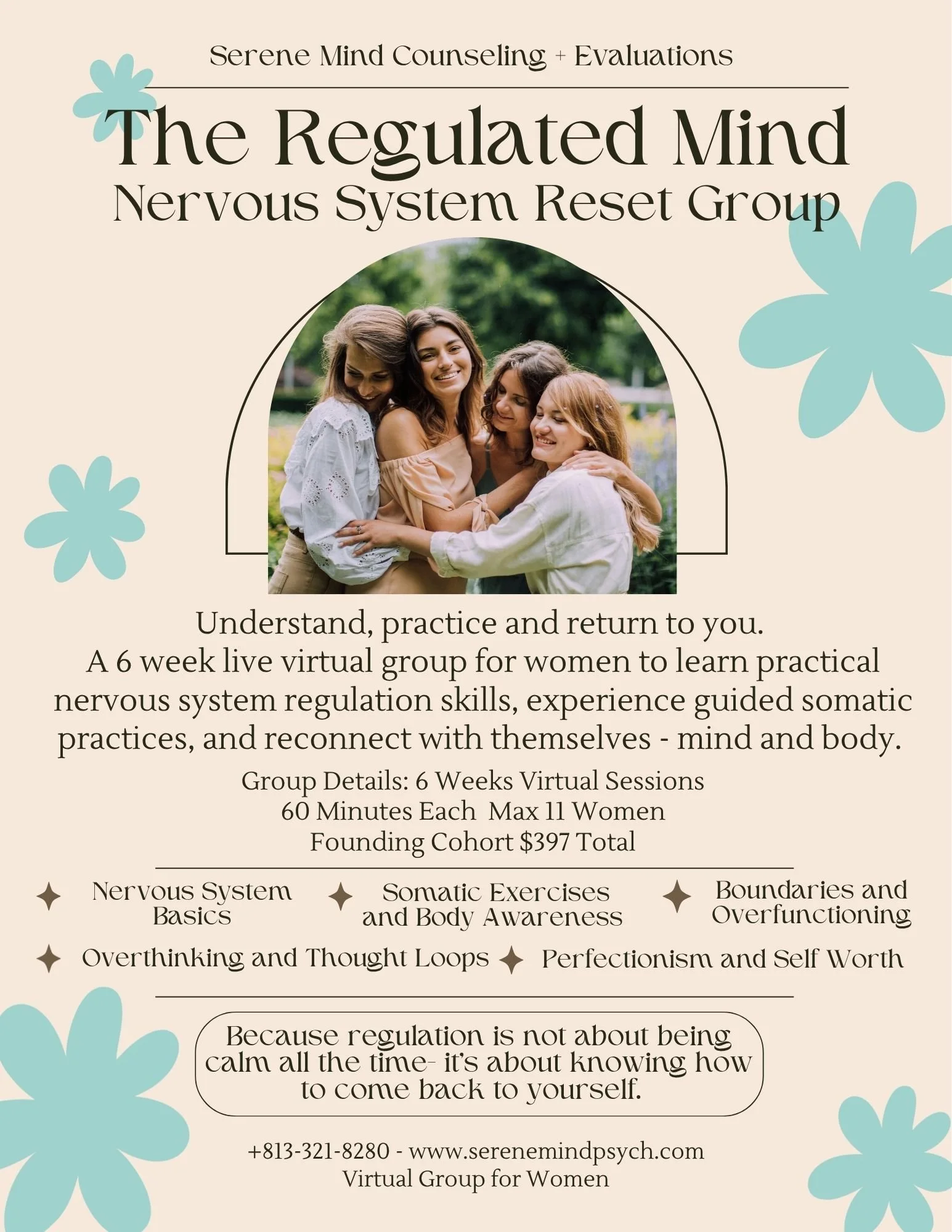
Our upcoming Nervous System Reset Group is rooted in this philosophy.
Rather than promising a quick fix or asking you to become perfectly regulated, the intention is to create a space for learning, practicing, reflecting, and developing a deeper relationship with your own nervous system.
Because sometimes the reset we need isn't another thing to accomplish.
Sometimes it's permission to pause long enough to hear ourselves again.
To notice what we've been carrying.
To understand why certain situations feel so activating.
To practice responding differently.
And to remember that underneath all the coping, protecting, performing, and surviving...
you are still there.
Maybe the work isn't about becoming a new version of yourself.
Maybe it's about finding your way back to the one who was there all along.
That is the heart of RETURN Within.