
What If You Don’t Need to Fix Yourself? Learning to Return to Within

Have you ever wondered why you can understand something logically and still feel completely overwhelmed by it?

You know you need to slow down, but you can't seem to stop.

You know you should set the boundary, but you feel guilty.

You tell yourself you're safe, yet your body still feels anxious.

You finally get a moment to rest, but instead of feeling peaceful, you feel restless, uncomfortable, or like you should be doing something.

Maybe you've tried mindfulness, breathing exercises, therapy, journaling, meditation, or other nervous system regulation techniques. Some things help—at least temporarily—but you still find yourself returning to the same patterns.

If this sounds familiar, there may be something important to understand:

You may not need to fix yourself. You may need to learn how to return to yourself.

When Your Nervous System Is Always "On"

Our nervous systems are constantly taking in information from our bodies, our environments, our relationships, and our experiences.

When we experience ongoing stress, trauma, uncertainty, burnout, conflict, major life changes, or simply too much for too long, our bodies can begin responding as though they are continually preparing for something.

This can show up in many different ways.

You might feel anxious or restless. You might become easily irritated or overwhelmed. You may find yourself overthinking everything, having difficulty sleeping, struggling to concentrate, or feeling like your brain never really shuts off.

For someone else, nervous system dysregulation might look completely different.

It might look like exhaustion.

Numbness.

Disconnection.

Difficulty making decisions.

Feeling emotionally "flat."

Wanting to withdraw from everyone.

Neither response means you are broken.

Your nervous system is designed to protect you.

The challenge is that sometimes our protective patterns continue long after the original stressor has passed.

The Problem With Trying to "Fix" Yourself

When we're struggling, it's incredibly easy to turn inward with criticism.

"Why am I still like this?"

"Why can't I just calm down?"

"Other people seem to handle this better."

"I should be further along by now."

For many people, this becomes another layer of stress on an already overwhelmed nervous system.

We try harder.

We become more disciplined.

We add another wellness routine.

Another supplement.

Another meditation.

Another productivity system.

Another thing we're supposed to do correctly.

But nervous system regulation isn't about becoming perfectly calm all the time.

Regulation is about developing a different relationship with what is happening inside of you.

It's learning to notice.

To become curious.

To listen.

To respond.

And, over time, to recognize what helps you feel more connected to yourself.

This Is Where "Returning Within" Begins

The idea behind the RETURN Within Method™ is simple:

Sometimes healing isn't about becoming someone different.

It's about reconnecting with the person who is already there underneath the survival patterns, expectations, fear, perfectionism, people-pleasing, and constant pressure to hold everything together.

Returning within means learning to recognize what your body is communicating rather than immediately judging it.

It means becoming curious about your patterns instead of criticizing them.

It means asking:

What is happening inside me right now?

What might my nervous system be responding to?

What do I actually need?

What would help me feel a little safer, more supported, or more connected?

These questions can begin creating space between the experience you're having and the automatic response that follows.

And that space matters.

Who Might Benefit From Nervous System Work?

Nervous system education can be especially meaningful for people who feel like they are constantly operating in survival mode.

You might relate if you:

  • Feel overwhelmed by everyday responsibilities

  • Experience chronic stress or burnout

  • Struggle with anxiety or racing thoughts

  • Find yourself constantly people-pleasing

  • Have difficulty setting boundaries without guilt

  • Feel responsible for everyone else's emotions

  • Are a perfectionist who has difficulty slowing down

  • Feel disconnected from your body or emotions

  • Notice that stress affects your sleep, energy, mood, or relationships

  • Understand your patterns intellectually but still struggle to change them

  • Feel exhausted from constantly "holding it all together"

You don't have to identify with every one of these experiences.

And nervous system work isn't about finding another label for yourself.

It's about developing a deeper understanding of your own patterns.

From Awareness to Practice

Understanding your nervous system is one piece of the process.

The next piece is learning what to do with that awareness.

This is where somatic approaches can be helpful.

Somatic work brings attention to the relationship between the mind and body. Rather than focusing only on what you're thinking, you begin noticing sensations, impulses, emotions, breathing, movement, tension, and other signals your body may be communicating.

There isn't one magical nervous system regulation technique that works for everyone.

For one person, grounding may help.

For another, gentle movement.

For someone else, connection with a trusted person.

Sometimes the most regulating thing you can do is recognize that you're overwhelmed and give yourself permission to stop pushing.

The goal isn't to control every nervous system response.

It's to develop a growing toolbox—and, more importantly, to learn how to listen to yourself.

Introducing the RETURN Within Method™

The RETURN Within Method™ was created around this idea of coming back to yourself.

It provides a framework for exploring nervous system patterns with curiosity and compassion:

Recognize what is happening.

Explore the patterns underneath it.

Tend to yourself with compassion.

Understand your unique nervous system.

Regulate through personalized practices.

Navigate real-life situations with greater awareness.

And then...

Return Within.

Not because life will suddenly become stress-free.

Not because you'll never become overwhelmed again.

But because you can begin developing the skills to notice when you've moved away from yourself—and find your way back.

A Different Kind of Nervous System Reset

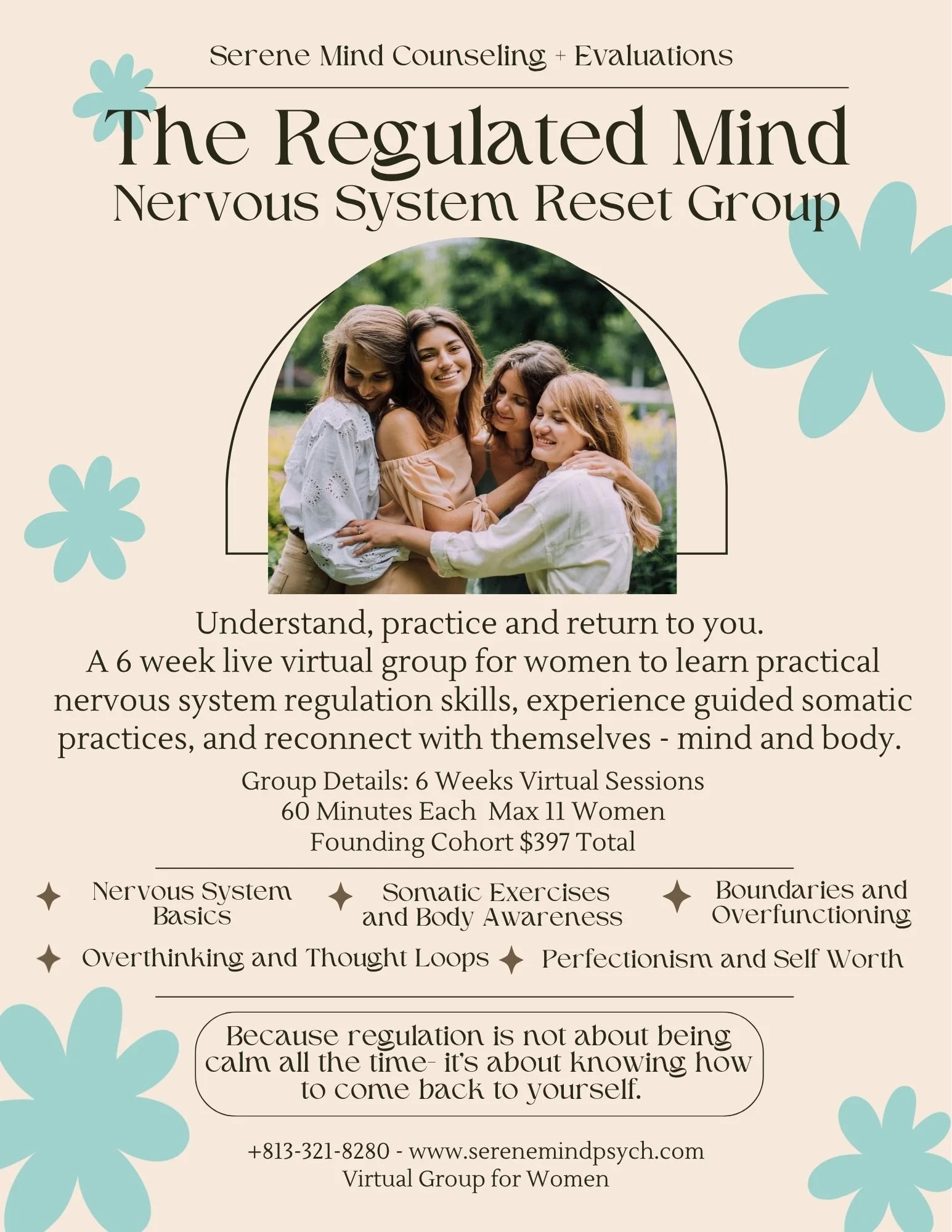
Our upcoming Nervous System Reset Group is rooted in this philosophy.

Rather than promising a quick fix or asking you to become perfectly regulated, the intention is to create a space for learning, practicing, reflecting, and developing a deeper relationship with your own nervous system.

Because sometimes the reset we need isn't another thing to accomplish.

Sometimes it's permission to pause long enough to hear ourselves again.

To notice what we've been carrying.

To understand why certain situations feel so activating.

To practice responding differently.

And to remember that underneath all the coping, protecting, performing, and surviving...

you are still there.

Maybe the work isn't about becoming a new version of yourself.

Maybe it's about finding your way back to the one who was there all along.

That is the heart of RETURN Within.
What If You Don’t Need to Fix Yourself? Learning to Return to Within

Human by Nature: Understanding the Nervous System and the Wisdom of the Body

Have you ever had a moment where your mind knew you were safe, but your body felt anything but safe?

Maybe your heart raced during a simple conversation. Maybe you felt overwhelmed by something that seemed small. Maybe you found yourself exhausted, disconnected, anxious, or stuck in patterns you couldn’t explain.

These experiences are not signs that something is wrong with you. They are signs that your body is communicating.

At the core of our human experience is a powerful system designed to protect us: the nervous system.

Your Nervous System Is Always Listening

Your nervous system is constantly scanning your environment and your experiences, asking one important question:

“Am I safe?”

Long before we consciously think through a situation, our nervous system is gathering information. It notices facial expressions, tone of voice, body language, memories, sensations, and changes in our environment.

This process helps us respond quickly when we need protection. It allows us to move away from danger, connect with others, focus on important tasks, and adapt to life’s challenges.

The nervous system is not designed to make life difficult—it is designed to help us survive.

However, when we experience ongoing stress, trauma, illness, uncertainty, or overwhelming circumstances, our nervous system can become stuck in patterns of protection.

When Protection Becomes Exhausting

Many people live with a nervous system that has been working overtime.

This may look like:

  • Feeling constantly “on edge”

  • Difficulty relaxing even when things are calm

  • Feeling overwhelmed by everyday demands

  • Trouble sleeping or feeling rested

  • Increased sensitivity to stress, emotions, or physical sensations

  • Feeling disconnected from yourself or others

  • Experiencing anxiety, shutdown, or emotional exhaustion

Often, people judge themselves for these experiences.

They may think:
“Why can’t I just calm down?”
“Why am I reacting this way?”
“Why can’t I get back to who I used to be?”

But the body is not betraying you. It is trying to protect you using the information it has collected over time.

Healing Begins With Understanding

One of the most powerful shifts we can make is moving from judgment to curiosity.

Instead of asking:
“What is wrong with me?”

We can begin asking:
“What is my nervous system trying to tell me?”

This simple change creates space for compassion.

Healing is not about forcing yourself to “get over” your experiences or ignoring what your body is communicating. It is about learning how to listen, regulate, and build a deeper relationship with yourself.

The nervous system can learn new patterns. Through supportive relationships, therapeutic work, mindfulness, body-based approaches, and intentional practices, we can help our bodies experience more safety and flexibility.

Human by Nature

Being human means having a nervous system.

It means having emotions, memories, instincts, needs, and protective responses. It means that our bodies carry wisdom from everything we have experienced.

Our nervous system is not separate from who we are—it is a fundamental part of our story.

At Serene Mind Counseling, we believe healing begins when we understand ourselves more deeply. When we recognize the connection between our thoughts, emotions, bodies, and experiences, we can begin creating meaningful change from the inside out.

Human by Nature is an invitation to explore what makes us human: our capacity to adapt, connect, heal, and grow.

Your body has been communicating with you all along.

The question is: are we ready to listen?

Human by Nature: Understanding the Nervous System and the Wisdom of the Body

Breathwork for Mental Health

Breathwork is now a commonly used modality in mental health counseling, therapy, and other healing practices. Popularized by its sister practices yoga and meditation, breathwork is a natural way to reduce anxiety, stress, depression, panic, and even grief. More and more individuals are giving daily breathwork practices a try before attempting to manage these symptoms with medication therapies.

What is breathwork?

Breathwork is not just simple breathing- breathwork is a focused, intentional breath that is repeated several times depending on the targeted goal. Although you are physically using your body while participating in breathwork, this is also a mental exercise.

How does breathwork improve emotional symptoms I may be experiencing?

Breathwork gently pushes you toward tapping into your parasympathetic nervous system, or the “rest and digest” function of the body. In our modern world, we are constantly on the go, stimulated, and on guard. Living in this state keeps us in “fight, flight, or freeze” mode, disconnecting from our bodies and focusing on survival. Living in a constant vigilant or hypervigilant state can create havoc on the body, leading to burnout. Breathwork brings us back to our bodies, helping us get in touch with what we are truly feeling, mentally, emotionally, and even physically.

How do I know if breathwork would be helpful for me?

Before participating in a breathwork session, talk to your primary care doctor. Certain breathwork practices are contraindicated for specific physical ailments such as COPD, individuals with pacemakers, or individuals who are being treated for serious cardiac diseases. The effects of breathwork on mental health have the green light from your doctor, connect with a breathwork practitioner to explore which types of breathwork may be a good fit for you.

Are you interested in exploring breathwork as a part of your therapy journey? We are here to help. We have therapists that are trained in breathwork practices that can incorporate breathwork into your talk therapy sessions. Email us at hello@serenemindpsych.com or give us a call at 813.321.8280 to set up an intake appointment to see if one of our therapists can aid you in your healing journey.

Serene Mind Blog breath work for mental health  holistic mental health

Our Mindful Therapist Contributes: How Can Yoga and Mindfulness Help My Child

Yoga and mindfulness have become increasingly popular in enhancing not only health and wellness in adults, but also children. Many people are unaware that yoga is not just an exercise: It is a five- thousand-year-old system of living that has evolved over time. In our western world, the primary focus of the yoga lifestyle is on the physical exercise practice, or what is traditionally called “asana”. The benefits of asana extend to children as well as adults.

The physical practice of yoga is incredibly therapeutic for children in many areas, such as:

 Helping children learn about the connection between their mind and body

 Increasing physical awareness

 Increasing hand eye coordination

 Increase muscle strength, flexibility, & balance

 Teaches discipline & reduces impulsivity

 Enhances concentration, focus, attention span, & memory

 Encourages self-control

 Regulates breathing

The practice of mindfulness derives from the practice of meditation, which is a branch of the traditional yoga lifestyle. Often times meditation and mindfulness are coupled as the same thing, but they are in fact different. Meditation is a practice, while mindfulness is a skill. When mindfulness is incorporated into a child’s daily life, they grow to be able to meditate, or take time for themselves to reflect on their thoughts and feelings.

Teaching children techniques or mindfulness can:

 Reduce symptoms of depression & anxiety

 Improved self-awareness

 Improved academic performance

 Enhances problem-solving abilities

 Improves management of stress

 Encourages calmness & relieves emotional pressure

 Can help develop positive outlooks & perspectives

 Enhances cognitive skills

 Increases compassion & empathy

Yoga and meditation are powerful tools in enhancing your child’s physical and mental health. Pairing these healing modalities into your child’s daily life can spark peace, wellness, and good health into not only their live, but also everyone in your home.

How can I teach my child yoga for mindfulness?

There are endless resources for children’s yoga. Research local yoga studios in your area that have child or teen yoga classes. (If you are in Tampa or Jacksonville, we can offer studio recommendations!) You can also find private children’s yoga teachers through these studios, or even through parenting and local activities Facebook groups. Some schools also offer yoga as an elective class or as an added enhancement through their physical education or guidance programs. Inquire about these options to your child’s school counselor. If an in-person yoga class option is not accessible or affordable to you, there are many free yoga classes on online platforms such as YouTube that offer a fantastic variety of classes ranging in categories such as age, style of yoga, class length, etc.

How can I teach my child mindfulness and focus?

Through in-person yoga classes, mindfulness techniques are typically weaved throughout the class and are curated to the class size and age group. You can also find fantastic resources on Google or YouTube. For younger children, using feeling charts are incredibly helpful. For older children, feeling wheels are very useful. A great start to instilling mindfulness into your child’s daily routine would be asking them self-reflecting questions depending on their age.

A few self-reflecting mindfulness questions we recommend are:

 How does your body feel today?

 If you could describe how you feel using weather words, what would you say? (sunny, rainy, cloudy, cold, etc.)

 How can you tackle any challenges that you may face today?

 How can you spread love/positivity/kindness today?

 What are the pros & cons in this situation?

 When you have a feeling in your mind, can you also feel it in your body?

At Serene Mind, we offer yoga therapy for children and adults. Yoga in combination with talk therapy on a consistent basis creates an intense focus on the beneficial areas of yoga and mindfulness and how it can create a life of balance and peace.

If you are interested in yoga therapy for your child (or yourself!), email us at hello@serenemindpsych.com or give us a call at 813.321.8280

tampa Jacksonville oregon florida mindfulness therapy for kids and teens yoga therapy

Mindfulness for Everybody - A Therapy Approach

Participating in “Mindfulness” is probably something the internet has told you to do a thousand times.

But, it is often hard to participate when we either don’t understand or don’t know how. So, what exactly is it?

The answer to that question can come in many forms. Being mindful about a situation is the process of entering the state of consciousness or awareness of something. Learning to be mindful means we can first focus on that awareness and direct it toward our present moment and simultaneously acknowledge and accept one’s own thoughts and feelings in a therapeutic way. 

Mindfulness comes in many forms the most common one being meditation.

The misconception of meditation is that it has to be something you do alone, in a quiet place, where you have to be still and have zero thoughts. I don't know about you but that just may not be an option.

The good news is, there are so many other options for us to utilize being mindful without the absence of all internal thought. 

Movement meditation is the first idea that may come to mind. Understanding our bodies' physical limitations can help us determine our mental limitations as well. This can look like yoga, running, mindful walking, or even dancing. Anything that allows us to be in the present moment, giving our bodies’ the love, appreciation, and attention it needs, can be a form of meditation. 

Mindfulness meditation is the form of meditation mentioned above. You can use this by finding a place where you can remain sitting, alone, in a quiet place, listening to your breath and pushing away intrusive thoughts. Mindfulness meditation will take hours of practice and you may not be able to do this on your first try. Being forgiving toward your thoughts and being patient with yourself are going to be common themes while practicing this type of meditation. 

Guided meditation may be a better fit for you if mindful meditation sounds too difficult or daunting. This type of meditation takes some of the pressure off of you, allowing you to relax and find peace and calm within someone else’s words or guidance. These practices can be short or long, they can aid in sleep, self-esteem, or even alertness for the day ahead. 

Visualization is the process of picturing your thoughts and intentions under a positive light in your mind's eye. Visualization can help you project the things you want to accomplish into the universe, similar to an affirmation. Sometimes, taking the time to visualize a phrase, goal, or intention can help you identify the goals you are truly working towards more clearly. 

Mantra meditation works to occupy your mind with repetition of sounds and phrases, often an affirmation or intention, clearing your mind of its typical internal dialogue. This works by picking a daily mantra, short or long, and either silently or aloud repeating it to yourself for a set period of time. An example of a mantra could be “I am present.” 

Building positive mindfulness skills can increase our situational awareness, help regulate our emotions, and learn to accept our thoughts and feelings more accurately. 

Mindfulness for Everybody