When You’re Doing Everything but Still Feel Overwhelmed: Understanding Your Nervous System
/You’re getting things done.
You’re answering the texts. Getting the kids where they need to go. Showing up for work. Making the appointments. Taking care of everyone else. Somehow, you’re keeping everything moving.
But inside, you’re exhausted.
You may feel like you’re constantly “on.” Your mind keeps running even when you finally sit down. Small things bother you more than they used to. You’re more irritable, anxious, emotional, or easily overwhelmed. Maybe you have trouble relaxing because there is always something else to think about.
And when someone asks, “What’s wrong?” you may not even know what to say.
You’re functioning. But you don’t feel okay.
This is something many parents and adults experience, particularly during seasons of high stress, major life changes, postpartum, caregiving, or simply after spending a long time putting everyone else first.
Sometimes the problem isn't that you need to become better at managing your life.
Sometimes your nervous system is tired.
What does your nervous system have to do with it?
Your nervous system is constantly taking in information and deciding whether you are safe, threatened, overwhelmed, or able to relax.
When you've been under stress for a long time, your body can become accustomed to being on alert.
You might notice:
Racing thoughts
Trouble sleeping
Feeling restless or “wired”
Irritability or a shorter fuse
Feeling overwhelmed by normal tasks
Difficulty slowing down
Feeling disconnected or numb
Constantly anticipating what could go wrong
Feeling exhausted but unable to relax
This doesn't mean something is wrong with you.
It may mean your body has gotten very good at protecting you.
The goal isn't to force yourself to “calm down” or tell yourself that everything is fine.
The goal is to help your brain and body learn that they don't have to stay in survival mode all the time.
Sometimes you need more than coping skills
Breathing exercises and mindfulness can be helpful, but sometimes there is more underneath the overwhelm.
Past experiences, trauma, chronic stress, difficult relationships, major transitions, parenting stress, postpartum changes, or years of putting your own needs last can all contribute to patterns that are difficult to change on your own.
This is where a nervous-system-informed approach to therapy can be helpful.
Therapy may incorporate somatic-informed techniques, grounding and regulation skills, trauma-informed approaches, and Accelerated Resolution Therapy (ART) when appropriate.
ART, for example, can help people process difficult experiences and emotional responses without requiring them to repeatedly talk through every detail of what happened.
The goal isn't to erase your experiences.
It's to help you feel less controlled by them.
And importantly, therapy doesn't have to be reserved for a crisis.
You can seek support because you're tired.
Because you're overwhelmed.
Because you don't recognize yourself lately.
Because you want to respond differently to your children.
Because you're ready to stop living in constant “go mode.”
Signs you may benefit from this kind of support
You might consider nervous-system-informed therapy if:
1. You can't seem to turn your brain off.
Even when nothing is happening, you're thinking, planning, worrying, or preparing for the next thing.
2. Small things feel BIG.
You find yourself becoming frustrated, angry, tearful, or overwhelmed by things that normally wouldn't affect you as much.
3. You're always taking care of everyone else.
You know how to show up for other people, but you're not sure how to make space for yourself.
4. You feel disconnected from yourself.
You may feel like you're going through the motions rather than actually enjoying your life.
5. Your body feels like it's constantly “on.”
You may notice tension, restlessness, difficulty sleeping, or a constant sense that something needs your attention.
6. You understand your patterns but can't seem to change them.
You know where some of your reactions come from, but knowing isn't always enough to make your body respond differently.
Four things you can try on your own
1. Slow down before you solve.
When something stressful happens, give yourself 30 seconds before immediately jumping into problem-solving.
Take a slow breath. Feel your feet on the floor. Look around the room.
Tell yourself:
“I can respond to this. I don't have to solve everything right now.”
2. Notice what your body is telling you.
Instead of asking only, “What's wrong with me?” try asking:
“What is my body experiencing right now?”
Are your shoulders tight? Is your jaw clenched? Is your heart racing? Are you holding your breath?
Simply noticing can be the beginning of changing the pattern.
3. Create tiny moments of safety.
You don't need an hour of meditation.
Try sitting outside for five minutes, listening to calming music, taking a warm shower, stretching, drinking something slowly, or stepping away from your phone.
Think small and consistent, not perfect.
4. Practice repair instead of perfection.
You will lose your patience.
You will have hard days.
You may yell at your child, cancel plans, or realize you have been running on empty.
Instead of deciding you've failed, practice repair.
“I was overwhelmed. I'm sorry. I'm going to try that differently next time.”
Repair teaches your nervous system—and the people around you—that a difficult moment doesn't have to become a permanent pattern.
You don't have to do this perfectly
Learning to regulate your nervous system isn't about becoming calm all the time.
It's about noticing when you're overwhelmed, understanding what your body is communicating, and having more choices in how you respond.
Sometimes you can do that with simple tools at home.
Sometimes you need someone to walk alongside you.
And sometimes having a compassionate therapist who understands both the emotional and physical experience can make the process feel much less overwhelming.
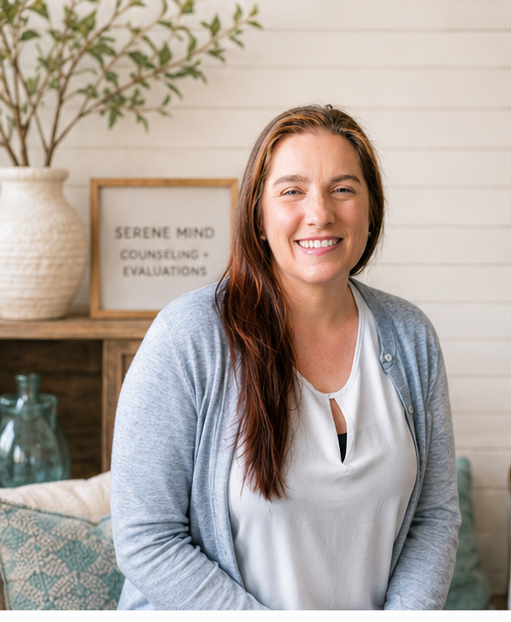
If you're in Jacksonville, Nikki Tucker, LMHC offers a warm, nervous-system-informed approach that may incorporate somatic techniques, regulation strategies, trauma-informed therapy, and ART when appropriate. She works with adults, parents, teens, and children and offers daytime appointments in Jacksonville as well as virtual therapy throughout Florida.
You don't have to wait until you're falling apart to ask for support.
Sometimes you just need a place to exhale. 🤍