When Your Child Struggles With Focus: Understanding Attention, Stress, and Emotional Overwhelm

If your child struggles to focus, becomes overwhelmed easily, has difficulty transitioning between activities, or seems to have big reactions to everyday situations, you may have found yourself wondering what is going on beneath the surface.

Perhaps you've tried different routines, reminders, reward systems, or strategies to make the day feel a little easier.

Some things may help temporarily. Other things may seem to make no difference at all.

And sometimes, despite your best efforts, you may still feel unsure about what your child needs.

At Serene Mind Counseling + Evaluations, we believe it is important to look at the whole child—not just the behavior that is bringing a family to counseling.

Attention, emotions, stress, sleep, development, learning, relationships, and the environment can all be relevant when trying to understand a child's experience.

There isn't one explanation for every child, but approaching concerns with curiosity can be a helpful place to start.

Why Does My Child Have Trouble Focusing?

Children can have difficulty focusing for many reasons.

Sometimes attention difficulties are related to ADHD. In other cases, sleep problems, anxiety, learning differences, stress, developmental factors, environmental distractions, or other health concerns may contribute.

Children can also have more difficulty concentrating when they are tired, worried, overstimulated, or trying to manage something that feels challenging.

For example, a child who has spent the day working hard to keep up with school demands may have little patience left for homework in the evening.

Another child may become restless when an assignment feels confusing or overwhelming.

A child who seems distracted during a stressful period may be responding to worries that are difficult to explain.

These possibilities don't mean every focus problem is caused by stress. They mean that understanding the context matters.

When attention difficulties persist or affect school, relationships, or daily functioning, it can be helpful to speak with your child's pediatrician, teacher, or a qualified mental health professional.

What Can Emotional Overwhelm Look Like in Children?

Children don't always have the words to describe what they're experiencing.

Instead, their feelings may show up through behavior.

You might notice:

  • Becoming frustrated quickly

  • Difficulty transitioning between activities

  • Frequent emotional outbursts

  • Withdrawing or avoiding difficult tasks

  • Restlessness or difficulty sitting still

  • Trouble completing homework

  • Becoming upset by changes in routine

  • Difficulty settling after an exciting or stressful day

  • Increased sensitivity to noise or busy environments

  • Difficulty explaining what is wrong

These behaviors can have many explanations, and no single behavior proves that a child has anxiety, ADHD, or a nervous system problem.

Instead of immediately asking how to stop a behavior, it may be useful to consider what happened before it, what demands your child was facing, and what support might help.

That shift doesn't mean removing all expectations or ignoring difficult behavior. It means combining appropriate boundaries with an effort to understand the child behind the behavior.

How Are Attention and Stress Connected?

Attention and emotional responses can influence each other.

When a child feels worried, frustrated, or overwhelmed, it may be harder to concentrate on a task. When a child repeatedly struggles with an activity, frustration and worry can increase.

This can create a difficult cycle.

Imagine a child who finds reading challenging. Homework takes longer than expected. The child becomes frustrated, the parent tries to encourage them to keep going, and both begin to feel overwhelmed.

By the end of the evening, the problem may appear to be about cooperation or behavior.

But the bigger picture may also involve a learning difficulty, fatigue, anxiety about making mistakes, or a task that requires more support than the child currently has.

Understanding the underlying difficulty can help families respond more effectively.

This is why persistent attention concerns deserve thoughtful evaluation rather than assumptions about motivation or effort.

Does My Child Have ADHD, Anxiety, or Something Else?

It can be difficult to tell the difference based on behavior alone.

ADHD can involve ongoing patterns of inattention, hyperactivity, and/or impulsivity that interfere with functioning. Anxiety can affect concentration when a child is worried, anticipating something difficult, or feeling overwhelmed.

Both can occur together, and other factors can contribute to similar difficulties.

A comprehensive assessment may consider your child's developmental history, behavior across settings, school experiences, sleep, emotional wellbeing, and input from caregivers and teachers.

When appropriate, a healthcare professional may also consider medical or learning-related factors.

The goal is not to assign a label as quickly as possible. It is to better understand your child's needs and identify support that fits.

If you're concerned about your child's focus, emotional regulation, or behavior, a qualified child therapist or pediatric healthcare professional can help you determine appropriate next steps.

How Can Counseling Help Children and Families?

Counseling can provide a space for children and parents to understand difficult experiences and develop practical ways of responding.

Depending on the child's age, needs, and circumstances, therapy may involve:

Emotional awareness. Helping children recognize and communicate feelings in developmentally appropriate ways.

Coping skills. Practicing ways to respond to frustration, worry, transitions, and difficult situations.

Parent support. Helping caregivers understand patterns, adjust expectations when appropriate, and respond consistently.

Problem-solving. Exploring what makes particular activities or situations challenging and identifying realistic changes.

Confidence and self-understanding. Helping children understand that struggling with something does not mean there is something wrong with who they are.

Family communication. Creating opportunities for family members to understand each other's experiences and work together.

The approach should be tailored to the child. Younger children may benefit from play-based approaches, while older children and teens may be able to participate more directly in conversations and skill-building.

What About Neurofeedback for Children?

Some parents researching attention or emotional overwhelm come across neurofeedback and wonder whether it might be worth exploring.

Neurofeedback uses information about brain activity as part of a feedback process. There are different types of neurofeedback, and research findings for one system or protocol should not automatically be applied to another.

Our sister company, Serene Mind Neuro + Wellness, offers LENS Neurofeedback in South Tampa. LENS is a passive, technology-based approach to brain wellness.

Parents who are curious about LENS can learn about the process, ask questions about what is known and not known, and consider whether it aligns with their family's goals.

It is important to keep expectations realistic. Research on neurofeedback for ADHD has produced mixed findings, and current evidence does not establish LENS Neurofeedback as a proven treatment for ADHD, anxiety, learning differences, or emotional regulation difficulties in children.

Neurofeedback should not replace a needed evaluation, evidence-based treatment, school support, or medical care.

You can learn more about the approach here: LENS Neurofeedback in Tampa, FL.

Families can also explore brain wellness resources and nervous system wellness to learn more about the broader brain-body perspective offered by Serene Mind Neuro + Wellness.

What Can Parents Try at Home?

You don't need to solve everything at once. A few thoughtful adjustments may help you understand what supports your child.

Notice patterns rather than focusing only on difficult moments

When does your child seem to have the hardest time? Is it after school, during transitions, when tasks are difficult, or in busy environments?

Patterns can offer useful information to discuss with teachers, therapists, or healthcare professionals.

Make expectations clear and manageable

Some children benefit from breaking a large task into smaller steps, using visual reminders, or allowing brief breaks between activities.

These strategies aren't a substitute for addressing an underlying learning, developmental, or emotional concern, but they may make daily routines more manageable.

Consider the environment

Noise, distractions, fatigue, time pressure, and competing demands can affect how a child manages a task.

If a particular environment consistently makes things harder, consider whether an adjustment might help.

Make room for connection

A child who is struggling may already feel frustrated or embarrassed.

A calm conversation, curiosity about what feels difficult, and reassurance that you want to understand can help create an opportunity to work through the problem together.

You can maintain appropriate boundaries while also communicating that your child is not a problem to be fixed.

Seek help when concerns persist

If attention difficulties, emotional overwhelm, or behavior concerns are affecting school, friendships, family life, or your child's wellbeing, professional support may help clarify what is happening.

You do not have to wait until things become unmanageable.

Child and Teen Counseling in Tampa and Jacksonville

Parenting can be difficult when you're trying to understand what your child needs and the strategies that used to work no longer seem helpful.

At Serene Mind Counseling + Evaluations, we provide support for children, teens, and families, with services in Tampa and Jacksonville and telehealth options where available.

We approach children as individuals with their own strengths, experiences, and needs.

If you're looking for help understanding your child's emotions, behavior, anxiety, or attention concerns, we invite you to learn more about our counseling services.

And if you're also curious about brain wellness approaches beyond traditional counseling, our sister company, Serene Mind Neuro + Wellness, offers educational information about LENS Neurofeedback and nervous system wellness in South Tampa.

These are distinct services with different purposes. Our goal is to help families understand their options so they can make informed decisions about appropriate support.

Frequently Asked Questions

Does difficulty focusing always mean a child has ADHD?

No. Attention difficulties can be associated with ADHD, but sleep problems, anxiety, learning differences, stress, developmental factors, and other concerns can also affect concentration. Persistent difficulties deserve individualized assessment.

Can anxiety make it harder for a child to concentrate?

Yes. Worry and distress can interfere with attention. However, concentration problems have multiple possible causes, so it's important not to assume anxiety is the only explanation.

How can I tell if my child is overwhelmed?

You may notice changes in behavior, frustration, withdrawal, restlessness, or difficulty managing everyday demands. These signs are not specific to one condition. Looking at patterns and context can help you decide whether additional support is needed.

Does neurofeedback help children with ADHD?

Research on neurofeedback for ADHD can show improvement, findings vary by method and outcome. Parents should discuss evidence-based options with qualified healthcare professionals.

Is counseling appropriate for children who struggle with emotions or behavior?

Counseling may help children develop emotional awareness, coping skills, communication, and problem-solving strategies. The most appropriate approach depends on the child's individual needs.

Where can I find child counseling in Tampa or Jacksonville?

Serene Mind Counseling + Evaluations offers counseling for children, teens, and families in Tampa and Jacksonville, with telehealth options where available. Visit our website to learn more about our services.

Your child doesn't have to navigate every challenge perfectly. And you don't have to figure everything out alone. Understanding what your child is experiencing can be a meaningful first step toward finding the right support.


LENS Neurofeedbakc for Children in Tampa

Why Anxiety Can Feel Physical: Understanding the Brain, Body, and Nervous System

Have you ever known logically that you were okay, but your body seemed to tell a different story?

Maybe your heart was racing before a difficult conversation. Maybe your shoulders stayed tense long after a stressful day. Perhaps you found yourself feeling restless, overwhelmed, exhausted, or unable to settle down even when nothing particularly stressful was happening.

You might have tried reminding yourself that everything was fine. You might have practiced deep breathing, distracted yourself, or told yourself to stop worrying.

And yet, the feelings remained.

If this sounds familiar, you're not alone.

At Serene Mind Counseling + Evaluations, we understand that anxiety isn't always experienced as a thought. Sometimes it shows up physically, emotionally, behaviorally, or in ways that are difficult to explain.

Understanding the relationship between your brain, body, and nervous system can be one helpful step toward understanding what you're experiencing.

Why Does Anxiety Affect the Body?

Anxiety involves more than worrying about something that might happen.

When your brain perceives a possible threat or challenge, your body can activate physiological responses designed to help you respond. Your heart rate may increase, your breathing may change, your muscles may tense, and your attention may become more focused on potential danger.

These responses can be useful in situations that require quick action. However, they can also feel uncomfortable when they occur frequently or when it's difficult to settle afterward.

Anxiety can affect people differently. Some people notice racing thoughts, while others primarily experience physical sensations or a persistent sense of uneasiness.

Common experiences can include:

  • Muscle tension or jaw clenching

  • A racing heart or feeling keyed up

  • Restlessness or difficulty sitting still

  • Stomach discomfort

  • Difficulty concentrating

  • Trouble falling asleep

  • Irritability or feeling easily overwhelmed

  • Feeling exhausted after periods of stress

  • Difficulty transitioning from work or responsibilities into rest

These symptoms can have many possible causes. Physical symptoms shouldn't automatically be attributed to anxiety, particularly when they're new, persistent, severe, or unexplained. A healthcare professional can help determine whether medical evaluation is needed.

What Is the Connection Between the Brain and Nervous System?

Your brain and nervous system help you interpret information, respond to your surroundings, and coordinate many of your body's functions.

Stressful experiences, uncertainty, conflict, demanding schedules, and difficult life transitions can all influence how you feel and respond.

For example, imagine that you have spent the entire day managing work responsibilities, caring for your family, and making decisions.

When the day finally ends, you might expect to feel relieved.

Instead, you may find yourself replaying conversations, anticipating tomorrow's responsibilities, or feeling too restless to enjoy your evening.

This doesn't necessarily mean something is wrong with you.

It may reflect a combination of ongoing demands, learned patterns of responding to stress, difficulty transitioning between responsibilities, sleep disruption, and other factors.

The brain-body connection offers a way to become curious about these experiences rather than judging yourself for having them.

Why Can't I Just Relax?

This is a question many people ask themselves.

You might know that taking a break would be helpful. You may understand that a situation is manageable. You might even recognize that your worries aren't entirely realistic.

But knowing something intellectually doesn't always change how you feel emotionally or physically.

Stress responses can be influenced by previous experiences, current circumstances, habits, physical health, and the environment around you.

For some people, anxiety also becomes a cycle. A physical sensation feels frightening, the sensation increases worry, and the additional worry makes the sensation more noticeable.

Counseling can help you explore these patterns, understand what contributes to them, and develop strategies that fit your circumstances.

The goal isn't to blame your nervous system or force yourself to feel calm. It's to better understand your experience and learn different ways of responding.

How Can Counseling Help With Anxiety?

Anxiety counseling can provide space to explore both the thoughts and experiences contributing to distress.

Depending on your needs, therapy may involve:

Understanding anxiety patterns. Recognizing situations, thoughts, emotions, and behaviors that contribute to anxiety.

Learning practical coping skills. Developing approaches for responding to worry, uncertainty, and overwhelming emotions.

Exploring past experiences. Understanding how earlier experiences may influence current reactions when that connection is relevant.

Building awareness of body sensations. Learning to notice physical signs of stress without automatically interpreting them as danger.

Practicing new responses. Developing ways to approach situations that anxiety has made difficult.

Different therapeutic approaches may be helpful for different people. Cognitive behavioral therapy (CBT), for example, is an established treatment for many anxiety disorders. Your therapist can help you understand available approaches and consider what may fit your goals.

At Serene Mind Counseling + Evaluations, we take a compassionate, individualized approach. You don't have to arrive with a clear explanation of what you're feeling. Sometimes the first step is simply having space to talk about it.

What About Nervous System Wellness and Neurofeedback?

Some people exploring anxiety also become curious about the relationship between brain activity, stress, and nervous system wellness.

This interest may lead them to explore educational resources, body-awareness practices, or technology-based approaches such as neurofeedback.

Neurofeedback uses information about brain activity as part of a feedback process. Different neurofeedback systems use different protocols, and the evidence for one approach should not automatically be applied to another.

LENS Neurofeedback, offered by our sister company, Serene Mind Neuro + Wellness in South Tampa, is a passive, technology-based approach to brain wellness.

It is distinct from psychotherapy. It should not be presented as a proven treatment for anxiety, and the evidence does not establish that LENS treats anxiety disorders.

For individuals who are curious about this approach, learning how it works, understanding the available research, and asking questions about its limitations can help inform their decisions.

You can explore the service here: LENS Neurofeedback in Tampa, FL.

Serene Mind Neuro + Wellness also offers information about nervous system wellness, with a focus on understanding stress, recovery, body awareness, and everyday experiences.

These wellness services are not substitutes for appropriate medical or mental health care. If anxiety is affecting your daily life, counseling or a conversation with a healthcare professional may be an appropriate place to begin.

What Can You Do When You Feel Overwhelmed?

There is no single strategy that works for everyone, but a few small steps may help you become more aware of what you need.

  • Notice your patterns. Consider when anxiety tends to show up and what is happening around you.

  • Reduce unnecessary demands where possible. You may not be able to remove every stressor, but you may be able to adjust expectations or create more space between responsibilities.

  • Pay attention to basic needs. Sleep, nourishment, hydration, movement, and connection can influence how you feel.

  • Experiment with gentle grounding. Some people find it helpful to notice their surroundings, feel their feet on the floor, or take a comfortable pause. Stop if a practice makes you feel worse.

  • Seek support when you need it. You don't have to wait until anxiety becomes unmanageable before talking with someone.

These suggestions are not a replacement for individualized care. They are simply possible starting points for understanding yourself with more curiosity and less self-criticism.

Anxiety Counseling in Tampa and Jacksonville

If anxiety is making it difficult to sleep, concentrate, enjoy relationships, or move through daily life, you deserve support that takes your experience seriously.

Serene Mind Counseling + Evaluations offers compassionate counseling for children, teens, adults, couples, and families, with services in Tampa and Jacksonville and telehealth options where available.

You don't need to know exactly why you're feeling the way you do before reaching out.

You can start with what you've noticed, what feels difficult, and what you'd like to change.

Explore anxiety counseling at Serene Mind Counseling + Evaluations to learn more about our approach and available services.

Frequently Asked Questions

Can anxiety cause physical symptoms?

Yes. Anxiety can be associated with physical responses such as muscle tension, restlessness, changes in heart rate, and stomach discomfort. However, physical symptoms can have other causes, so persistent or concerning symptoms should be evaluated by a healthcare professional.

Why do I feel anxious even when nothing is wrong?

Anxiety can be influenced by accumulated stress, uncertainty, learned responses, sleep difficulties, and other factors. Sometimes the reason isn't immediately obvious. Exploring your experiences with a qualified professional may help you better understand your patterns.

Is nervous system regulation the same as anxiety treatment?

No. Nervous system wellness may involve learning about stress responses, body awareness, and recovery. Anxiety treatment is individualized and may involve psychotherapy, medication management when appropriate, or other evidence-based care.

Can LENS Neurofeedback treat anxiety?

LENS Neurofeedback is a passive neurofeedback approach offered as part of brain wellness services. Current evidence does not establish it as a proven treatment for anxiety disorders. Anyone considering it should understand its limitations and continue appropriate mental health care.

When should I seek counseling for anxiety?

Consider seeking support when anxiety is persistent, distressing, interfering with daily activities, or making relationships, sleep, work, or parenting more difficult. You don't need to wait until you're in crisis.

Where can I find anxiety counseling in Tampa or Jacksonville?

Serene Mind Counseling + Evaluations offers counseling services in Tampa and Jacksonville, as well as telehealth options where available. Visit our website to learn more about our services and how to get started.

A final reminder: You don't have to understand every part of your experience before you deserve support. Sometimes the first step is simply having a place to begin.

LENS Neurofeedback Tampa FL

What If You Don’t Need to Fix Yourself? Learning to Return to Within

Have you ever wondered why you can understand something logically and still feel completely overwhelmed by it?

You know you need to slow down, but you can't seem to stop.

You know you should set the boundary, but you feel guilty.

You tell yourself you're safe, yet your body still feels anxious.

You finally get a moment to rest, but instead of feeling peaceful, you feel restless, uncomfortable, or like you should be doing something.

Maybe you've tried mindfulness, breathing exercises, therapy, journaling, meditation, or other nervous system regulation techniques. Some things help—at least temporarily—but you still find yourself returning to the same patterns.

If this sounds familiar, there may be something important to understand:

You may not need to fix yourself. You may need to learn how to return to yourself.

When Your Nervous System Is Always "On"

Our nervous systems are constantly taking in information from our bodies, our environments, our relationships, and our experiences.

When we experience ongoing stress, trauma, uncertainty, burnout, conflict, major life changes, or simply too much for too long, our bodies can begin responding as though they are continually preparing for something.

This can show up in many different ways.

You might feel anxious or restless. You might become easily irritated or overwhelmed. You may find yourself overthinking everything, having difficulty sleeping, struggling to concentrate, or feeling like your brain never really shuts off.

For someone else, nervous system dysregulation might look completely different.

It might look like exhaustion.

Numbness.

Disconnection.

Difficulty making decisions.

Feeling emotionally "flat."

Wanting to withdraw from everyone.

Neither response means you are broken.

Your nervous system is designed to protect you.

The challenge is that sometimes our protective patterns continue long after the original stressor has passed.

The Problem With Trying to "Fix" Yourself

When we're struggling, it's incredibly easy to turn inward with criticism.

"Why am I still like this?"

"Why can't I just calm down?"

"Other people seem to handle this better."

"I should be further along by now."

For many people, this becomes another layer of stress on an already overwhelmed nervous system.

We try harder.

We become more disciplined.

We add another wellness routine.

Another supplement.

Another meditation.

Another productivity system.

Another thing we're supposed to do correctly.

But nervous system regulation isn't about becoming perfectly calm all the time.

Regulation is about developing a different relationship with what is happening inside of you.

It's learning to notice.

To become curious.

To listen.

To respond.

And, over time, to recognize what helps you feel more connected to yourself.

This Is Where "Returning Within" Begins

The idea behind the RETURN Within Method™ is simple:

Sometimes healing isn't about becoming someone different.

It's about reconnecting with the person who is already there underneath the survival patterns, expectations, fear, perfectionism, people-pleasing, and constant pressure to hold everything together.

Returning within means learning to recognize what your body is communicating rather than immediately judging it.

It means becoming curious about your patterns instead of criticizing them.

It means asking:

What is happening inside me right now?

What might my nervous system be responding to?

What do I actually need?

What would help me feel a little safer, more supported, or more connected?

These questions can begin creating space between the experience you're having and the automatic response that follows.

And that space matters.

Who Might Benefit From Nervous System Work?

Nervous system education can be especially meaningful for people who feel like they are constantly operating in survival mode.

You might relate if you:

  • Feel overwhelmed by everyday responsibilities

  • Experience chronic stress or burnout

  • Struggle with anxiety or racing thoughts

  • Find yourself constantly people-pleasing

  • Have difficulty setting boundaries without guilt

  • Feel responsible for everyone else's emotions

  • Are a perfectionist who has difficulty slowing down

  • Feel disconnected from your body or emotions

  • Notice that stress affects your sleep, energy, mood, or relationships

  • Understand your patterns intellectually but still struggle to change them

  • Feel exhausted from constantly "holding it all together"

You don't have to identify with every one of these experiences.

And nervous system work isn't about finding another label for yourself.

It's about developing a deeper understanding of your own patterns.

From Awareness to Practice

Understanding your nervous system is one piece of the process.

The next piece is learning what to do with that awareness.

This is where somatic approaches can be helpful.

Somatic work brings attention to the relationship between the mind and body. Rather than focusing only on what you're thinking, you begin noticing sensations, impulses, emotions, breathing, movement, tension, and other signals your body may be communicating.

There isn't one magical nervous system regulation technique that works for everyone.

For one person, grounding may help.

For another, gentle movement.

For someone else, connection with a trusted person.

Sometimes the most regulating thing you can do is recognize that you're overwhelmed and give yourself permission to stop pushing.

The goal isn't to control every nervous system response.

It's to develop a growing toolbox—and, more importantly, to learn how to listen to yourself.

Introducing the RETURN Within Method™

The RETURN Within Method™ was created around this idea of coming back to yourself.

It provides a framework for exploring nervous system patterns with curiosity and compassion:

Recognize what is happening.

Explore the patterns underneath it.

Tend to yourself with compassion.

Understand your unique nervous system.

Regulate through personalized practices.

Navigate real-life situations with greater awareness.

And then...

Return Within.

Not because life will suddenly become stress-free.

Not because you'll never become overwhelmed again.

But because you can begin developing the skills to notice when you've moved away from yourself—and find your way back.

A Different Kind of Nervous System Reset

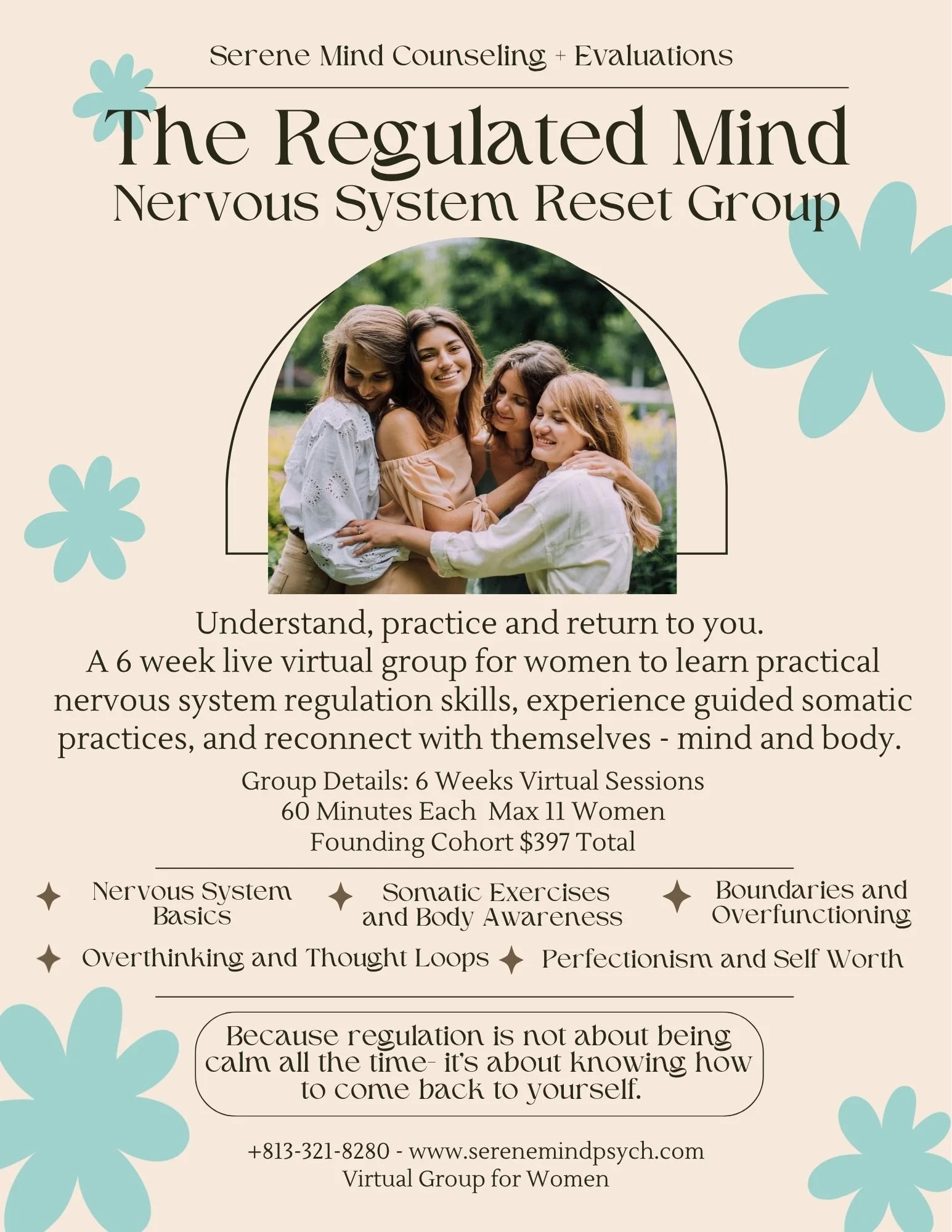
Our upcoming Nervous System Reset Group is rooted in this philosophy.

Rather than promising a quick fix or asking you to become perfectly regulated, the intention is to create a space for learning, practicing, reflecting, and developing a deeper relationship with your own nervous system.

Because sometimes the reset we need isn't another thing to accomplish.

Sometimes it's permission to pause long enough to hear ourselves again.

To notice what we've been carrying.

To understand why certain situations feel so activating.

To practice responding differently.

And to remember that underneath all the coping, protecting, performing, and surviving...

you are still there.

Maybe the work isn't about becoming a new version of yourself.

Maybe it's about finding your way back to the one who was there all along.

That is the heart of RETURN Within.

What If You Don’t Need to Fix Yourself? Learning to Return to Within

When You’re Doing Everything but Still Feel Overwhelmed: Understanding Your Nervous System

You’re getting things done.

You’re answering the texts. Getting the kids where they need to go. Showing up for work. Making the appointments. Taking care of everyone else. Somehow, you’re keeping everything moving.

But inside, you’re exhausted.

You may feel like you’re constantly “on.” Your mind keeps running even when you finally sit down. Small things bother you more than they used to. You’re more irritable, anxious, emotional, or easily overwhelmed. Maybe you have trouble relaxing because there is always something else to think about.

And when someone asks, “What’s wrong?” you may not even know what to say.

You’re functioning. But you don’t feel okay.

This is something many parents and adults experience, particularly during seasons of high stress, major life changes, postpartum, caregiving, or simply after spending a long time putting everyone else first.

Sometimes the problem isn't that you need to become better at managing your life.

Sometimes your nervous system is tired.

What does your nervous system have to do with it?

Your nervous system is constantly taking in information and deciding whether you are safe, threatened, overwhelmed, or able to relax.

When you've been under stress for a long time, your body can become accustomed to being on alert.

You might notice:

  • Racing thoughts

  • Trouble sleeping

  • Feeling restless or “wired”

  • Irritability or a shorter fuse

  • Feeling overwhelmed by normal tasks

  • Difficulty slowing down

  • Feeling disconnected or numb

  • Constantly anticipating what could go wrong

  • Feeling exhausted but unable to relax

This doesn't mean something is wrong with you.

It may mean your body has gotten very good at protecting you.

The goal isn't to force yourself to “calm down” or tell yourself that everything is fine.

The goal is to help your brain and body learn that they don't have to stay in survival mode all the time.

Sometimes you need more than coping skills

Breathing exercises and mindfulness can be helpful, but sometimes there is more underneath the overwhelm.

Past experiences, trauma, chronic stress, difficult relationships, major transitions, parenting stress, postpartum changes, or years of putting your own needs last can all contribute to patterns that are difficult to change on your own.

This is where a nervous-system-informed approach to therapy can be helpful.

Therapy may incorporate somatic-informed techniques, grounding and regulation skills, trauma-informed approaches, and Accelerated Resolution Therapy (ART) when appropriate.

ART, for example, can help people process difficult experiences and emotional responses without requiring them to repeatedly talk through every detail of what happened.

The goal isn't to erase your experiences.

It's to help you feel less controlled by them.

And importantly, therapy doesn't have to be reserved for a crisis.

You can seek support because you're tired.

Because you're overwhelmed.

Because you don't recognize yourself lately.

Because you want to respond differently to your children.

Because you're ready to stop living in constant “go mode.”

Signs you may benefit from this kind of support

You might consider nervous-system-informed therapy if:

1. You can't seem to turn your brain off.
Even when nothing is happening, you're thinking, planning, worrying, or preparing for the next thing.

2. Small things feel BIG.
You find yourself becoming frustrated, angry, tearful, or overwhelmed by things that normally wouldn't affect you as much.

3. You're always taking care of everyone else.
You know how to show up for other people, but you're not sure how to make space for yourself.

4. You feel disconnected from yourself.
You may feel like you're going through the motions rather than actually enjoying your life.

5. Your body feels like it's constantly “on.”
You may notice tension, restlessness, difficulty sleeping, or a constant sense that something needs your attention.

6. You understand your patterns but can't seem to change them.
You know where some of your reactions come from, but knowing isn't always enough to make your body respond differently.

Four things you can try on your own

1. Slow down before you solve.

When something stressful happens, give yourself 30 seconds before immediately jumping into problem-solving.

Take a slow breath. Feel your feet on the floor. Look around the room.

Tell yourself:

“I can respond to this. I don't have to solve everything right now.”

2. Notice what your body is telling you.

Instead of asking only, “What's wrong with me?” try asking:

“What is my body experiencing right now?”

Are your shoulders tight? Is your jaw clenched? Is your heart racing? Are you holding your breath?

Simply noticing can be the beginning of changing the pattern.

3. Create tiny moments of safety.

You don't need an hour of meditation.

Try sitting outside for five minutes, listening to calming music, taking a warm shower, stretching, drinking something slowly, or stepping away from your phone.

Think small and consistent, not perfect.

4. Practice repair instead of perfection.

You will lose your patience.

You will have hard days.

You may yell at your child, cancel plans, or realize you have been running on empty.

Instead of deciding you've failed, practice repair.

“I was overwhelmed. I'm sorry. I'm going to try that differently next time.”

Repair teaches your nervous system—and the people around you—that a difficult moment doesn't have to become a permanent pattern.

You don't have to do this perfectly

Learning to regulate your nervous system isn't about becoming calm all the time.

It's about noticing when you're overwhelmed, understanding what your body is communicating, and having more choices in how you respond.

Sometimes you can do that with simple tools at home.

Sometimes you need someone to walk alongside you.

And sometimes having a compassionate therapist who understands both the emotional and physical experience can make the process feel much less overwhelming.

If you're in Jacksonville, Nikki Tucker, LMHC offers a warm, nervous-system-informed approach that may incorporate somatic techniques, regulation strategies, trauma-informed therapy, and ART when appropriate. She works with adults, parents, teens, and children and offers daytime appointments in Jacksonville as well as virtual therapy throughout Florida.

You don't have to wait until you're falling apart to ask for support.

Sometimes you just need a place to exhale. 🤍

When You’re Doing Everything but Still Feel Overwhelmed: Understanding Your Nervous System

Human by Nature: Understanding the Nervous System and the Wisdom of the Body

Have you ever had a moment where your mind knew you were safe, but your body felt anything but safe?

Maybe your heart raced during a simple conversation. Maybe you felt overwhelmed by something that seemed small. Maybe you found yourself exhausted, disconnected, anxious, or stuck in patterns you couldn’t explain.

These experiences are not signs that something is wrong with you. They are signs that your body is communicating.

At the core of our human experience is a powerful system designed to protect us: the nervous system.

Your Nervous System Is Always Listening

Your nervous system is constantly scanning your environment and your experiences, asking one important question:

“Am I safe?”

Long before we consciously think through a situation, our nervous system is gathering information. It notices facial expressions, tone of voice, body language, memories, sensations, and changes in our environment.

This process helps us respond quickly when we need protection. It allows us to move away from danger, connect with others, focus on important tasks, and adapt to life’s challenges.

The nervous system is not designed to make life difficult—it is designed to help us survive.

However, when we experience ongoing stress, trauma, illness, uncertainty, or overwhelming circumstances, our nervous system can become stuck in patterns of protection.

When Protection Becomes Exhausting

Many people live with a nervous system that has been working overtime.

This may look like:

  • Feeling constantly “on edge”

  • Difficulty relaxing even when things are calm

  • Feeling overwhelmed by everyday demands

  • Trouble sleeping or feeling rested

  • Increased sensitivity to stress, emotions, or physical sensations

  • Feeling disconnected from yourself or others

  • Experiencing anxiety, shutdown, or emotional exhaustion

Often, people judge themselves for these experiences.

They may think:
“Why can’t I just calm down?”
“Why am I reacting this way?”
“Why can’t I get back to who I used to be?”

But the body is not betraying you. It is trying to protect you using the information it has collected over time.

Healing Begins With Understanding

One of the most powerful shifts we can make is moving from judgment to curiosity.

Instead of asking:
“What is wrong with me?”

We can begin asking:
“What is my nervous system trying to tell me?”

This simple change creates space for compassion.

Healing is not about forcing yourself to “get over” your experiences or ignoring what your body is communicating. It is about learning how to listen, regulate, and build a deeper relationship with yourself.

The nervous system can learn new patterns. Through supportive relationships, therapeutic work, mindfulness, body-based approaches, and intentional practices, we can help our bodies experience more safety and flexibility.

Human by Nature

Being human means having a nervous system.

It means having emotions, memories, instincts, needs, and protective responses. It means that our bodies carry wisdom from everything we have experienced.

Our nervous system is not separate from who we are—it is a fundamental part of our story.

At Serene Mind Counseling, we believe healing begins when we understand ourselves more deeply. When we recognize the connection between our thoughts, emotions, bodies, and experiences, we can begin creating meaningful change from the inside out.

Human by Nature is an invitation to explore what makes us human: our capacity to adapt, connect, heal, and grow.

Your body has been communicating with you all along.

The question is: are we ready to listen?

Human by Nature: Understanding the Nervous System and the Wisdom of the Body

The Power of Self-Compassion: How to Be Kinder to Yourself

We often show kindness and compassion to our friends and loved ones, offering them support when they are struggling. But how often do we extend that same kindness to ourselves? Self-compassion is the practice of treating yourself with the same care and understanding that you would offer to someone else. It is a crucial element of mental well-being, helping to reduce stress, increase resilience, and improve overall happiness. If you struggle with self-criticism or feel like you are never doing enough, learning to practice self-compassion can transform the way you experience life.

What is Self-Compassion?

Self-compassion, a concept popularized by Dr. Kristin Neff, involves three key elements:

  1. Self-Kindness – Being gentle with yourself rather than harshly critical.

  2. Common Humanity – Recognizing that everyone experiences struggles and imperfections.

  3. Mindfulness – Acknowledging your emotions without suppressing or exaggerating them.

Practicing self-compassion doesn’t mean ignoring your mistakes or avoiding personal growth. Instead, it means treating yourself with patience and understanding as you navigate life’s challenges.

Why Self-Compassion Matters

Many people believe that being self-critical will motivate them to work harder and do better. However, research suggests the opposite—self-compassion leads to greater motivation, emotional resilience, and well-being. Here’s why:

  • Reduces Stress & Anxiety: When you respond to failure with self-kindness instead of harsh criticism, your body remains calmer, reducing stress-related hormones like cortisol.

  • Increases Emotional Resilience: Self-compassion helps you bounce back from setbacks more quickly and prevents negative self-talk from becoming overwhelming.

  • Enhances Motivation: Instead of fearing failure, self-compassion encourages a growth mindset, making it easier to learn from mistakes and keep moving forward.

  • Improves Relationships: Being kind to yourself allows you to be more patient and understanding with others, strengthening your connections.

How to Practice Self-Compassion

If you are used to being hard on yourself, shifting toward self-compassion may feel unnatural at first. Here are some practical ways to develop this important skill:

1. Speak to Yourself Like a Friend

Imagine how you would comfort a close friend going through a difficult time. You wouldn’t tell them they are a failure or that they should just “get over it.” Instead, you would offer kind and encouraging words. Try doing the same for yourself. When you notice negative self-talk, pause and reframe your thoughts as if you were speaking to someone you care about.

2. Embrace Imperfection

Perfectionism can be a major obstacle to self-compassion. Remind yourself that making mistakes is a natural part of being human. Instead of seeing failure as a reflection of your worth, view it as an opportunity to grow. Accepting your imperfections doesn’t mean settling for mediocrity—it means understanding that you are enough just as you are.

3. Practice Mindfulness

Mindfulness allows you to acknowledge your thoughts and feelings without judgment. When you feel overwhelmed by self-criticism, take a deep breath and observe your emotions as if you were an outside observer. Recognizing that thoughts are just thoughts—not facts—can help you break free from negative self-judgment.

4. Write Yourself a Compassionate Letter

A powerful exercise in self-compassion is writing a letter to yourself from the perspective of a supportive friend. Acknowledge your struggles, express understanding, and offer words of encouragement. Re-reading this letter during difficult times can serve as a reminder to treat yourself with kindness.

5. Set Realistic Expectations

Unrealistic expectations often lead to self-criticism. While setting goals is important, ensure that they are realistic and achievable. Instead of striving for perfection, aim for progress. Celebrate small achievements along the way, and remind yourself that growth takes time.

6. Take Care of Your Well-Being

Self-compassion involves prioritizing your physical and emotional needs. Make time for activities that bring you joy, whether it’s reading, exercising, or spending time with loved ones. Listen to your body, rest when needed, and practice self-care without guilt.

Overcoming Barriers to Self-Compassion

If you struggle with self-compassion, you are not alone. Many people find it difficult due to long-standing habits of self-criticism. Here are some common barriers and how to address them:

  • Fear of Being Self-Indulgent: Some worry that self-compassion will make them lazy or complacent. However, self-compassion is not about making excuses—it’s about fostering a healthy mindset that leads to growth.

  • Belief That Self-Criticism is Necessary: While self-reflection is important, constant self-judgment can be damaging. Constructive self-awareness is different from harsh criticism.

  • Difficulty Accepting Kindness: If you are used to being hard on yourself, receiving kindness (even from yourself) may feel uncomfortable. Start small—acknowledge your efforts and practice gratitude for your strengths.

Being kinder to yourself is not a luxury—it is essential for mental well-being. Self-compassion allows you to navigate challenges with greater ease, build resilience, and foster a healthier relationship with yourself. By practicing self-kindness, mindfulness, and embracing imperfection, you can transform the way you view yourself and the world around you.

Next time you catch yourself being overly critical, pause and ask: “How would I speak to a friend in this situation?” The answer can be the first step toward a more compassionate and fulfilling life.

The Power of Self-Compassion: How to Be Kinder to Yourself

Empowering Teens with Social Skills for the New School Year

As the new school year approaches, many teens feel a mix of excitement and anxiety. The promise of new beginnings is often accompanied by the pressure to fit in, make friends, and navigate the ever-evolving social landscape. As a counselor, I’ve seen firsthand how challenging these transitions can be, especially for those who struggle with social skills. That’s why I’m passionate about supporting teens in developing the skills they need to thrive socially, not just survive.

The Importance of Social Skills

Social skills are the foundation of meaningful relationships and effective communication. For teens, mastering these skills is crucial as they build their identities and navigate the complex world of peer interactions. From understanding social cues to managing conflict and developing empathy, these abilities are essential for healthy, fulfilling connections with others.

Unfortunately, many teens find social situations overwhelming. The rise of digital communication has added layers of complexity, making face-to-face interactions even more daunting for some. This can lead to feelings of isolation, anxiety, and low self-esteem, which can impact both academic performance and overall well-being.

Addressing the Challenges

The good news is that social skills can be learned and strengthened with practice and support. In our upcoming social skills group starting this September in Tampa, we’re creating a safe and nurturing environment where teens can build confidence and develop the tools they need to succeed in social settings.

Our group is designed to help teens:

  • Understand Social Cues: We’ll work on recognizing and interpreting verbal and non-verbal signals, helping teens navigate conversations with greater ease.

  • Improve Communication Skills: Through role-playing and guided discussions, participants will practice effective communication, including active listening, clear expression, and respectful dialogue.

  • Develop Empathy and Emotional Intelligence: Teens will learn to understand and manage their own emotions, as well as recognize and respond to the feelings of others.

  • Build Healthy Relationships: We’ll explore the dynamics of healthy friendships, including setting boundaries, resolving conflicts, and fostering trust.

Why Join Our Group?

Starting the school year with enhanced social skills can make a world of difference for teens. It can lead to stronger friendships, increased confidence, and a more positive school experience overall. Our group is open to teens who want to improve their social skills in a supportive, non-judgmental space.

If you’re a parent or guardian of a teen who might benefit from this group, or if you’re a teen reading this and recognize the value of improving your social skills, I encourage you to join us. Together, we can make this school year one of growth, connection, and success.

For more information or to register, please contact us. Let’s empower our teens to shine socially this school year!

Empowering Teens with Social Skills for the New School Year Tampa Social Skills Group

Nurturing Independence: A Guide to Supporting Teens on Their Journey

Adolescence is a time of transition, as teens navigate the delicate balance between childhood and adulthood. It's a period marked by newfound freedoms, responsibilities, and the quest for independence. As parents, caregivers, and mentors, it's crucial to recognize the importance of fostering independence in teens while providing the necessary support and guidance along the way.

Here are some strategies to empower and nurture independence in teenagers:

1. Encourage Decision-Making

Allowing teens to make decisions, both big and small, is essential for fostering independence. Encourage them to weigh the pros and cons of different options and support them in making informed choices. Whether it's selecting extracurricular activities, managing their schedule, or choosing their own clothes, giving teens autonomy over their decisions helps build confidence and self-reliance.

2. Provide Opportunities for Responsibility

Assigning age-appropriate responsibilities at home, school, or within the community is another effective way to support teen independence. Whether it's chores, volunteer work, or part-time jobs, these responsibilities teach teens valuable life skills such as time management, accountability, and teamwork. By entrusting them with tasks and responsibilities, you demonstrate confidence in their abilities and empower them to take ownership of their actions.

3. Foster Open Communication

Open and honest communication lays the foundation for a healthy parent-teen relationship. Create a safe and non-judgmental space where teens feel comfortable expressing their thoughts, feelings, and concerns. Listen actively, validate their experiences, and offer guidance without imposing your own agenda. By fostering open communication, you strengthen your bond with your teen and empower them to voice their opinions and make decisions autonomously.

4. Support Their Passions and Interests

Encourage teens to explore their interests and pursue their passions wholeheartedly. Whether it's sports, music, art, or academics, support them in discovering what brings them joy and fulfillment. Provide opportunities for them to develop their talents, whether through classes, workshops, or extracurricular activities. By nurturing their passions, you help teens cultivate a sense of identity and purpose, fostering independence along the way.

5. Foster Problem-Solving Skills

Teach teens how to navigate challenges and setbacks by fostering problem-solving skills. Encourage them to approach obstacles with a growth mindset, viewing them as opportunities for learning and growth. Guide them through the process of identifying solutions, brainstorming alternatives, and taking action to address the issue at hand. By equipping teens with problem-solving skills, you empower them to tackle challenges independently and build resilience in the face of adversity.

6. Respect Their Boundaries

Respecting teens' boundaries is essential for fostering independence and building trust. Recognize that they are individuals with their own thoughts, feelings, and boundaries. Avoid micromanaging or hovering over their every move, and instead, give them the space they need to explore their independence. Respect their privacy, autonomy, and need for independence while remaining available for guidance and support when they seek it.

7. Lead by Example

Lastly, lead by example and demonstrate the values of independence, responsibility, and resilience in your own life. Show teens what it means to take initiative, make decisions, and navigate challenges with grace and determination. By modeling these behaviors, you provide teens with a roadmap for building independence and succeeding in the journey to adulthood.

In conclusion, supporting teens' independence is a delicate balance of providing guidance and autonomy. By empowering them to make decisions, take on responsibilities, and pursue their passions, you help teens develop the skills and confidence they need to thrive in the world. With your support and guidance, teens can embark on their journey towards independence with courage, resilience, and a sense of purpose.

Empowering Young Adults: Boosting Self-Esteem and Embracing Independence

In the journey of life, young adulthood is a pivotal phase where individuals navigate through various challenges and transitions. It's a time marked by self-discovery, forging new paths, and laying the foundation for the future. Amidst this whirlwind of change, two crucial elements stand out: self-esteem and independence. Cultivating these traits can significantly enhance the quality of life for young adults, equipping them with the confidence and resilience needed to thrive.

Let's delve into how enhancing self-esteem and embracing independence can benefit young adults.

1. Self-Confidence Opens Doors

Self-esteem forms the cornerstone of self-confidence. When young adults believe in their abilities and worth, they're more likely to pursue their goals with vigor and determination. Whether it's applying for a dream job, speaking up in a meeting, or embarking on a new relationship, a healthy level of self-esteem empowers individuals to step out of their comfort zones and embrace opportunities.

Moreover, high self-esteem serves as a buffer against the inevitable setbacks and rejections that life throws their way. Rather than being deterred by failure, individuals with robust self-esteem view it as a learning experience, resiliently bouncing back and adapting their strategies for future success.

2. Independence Fosters Growth

Independence is the hallmark of adulthood, signifying the ability to make decisions and take responsibility for one's actions. As young adults gradually emancipate from the guidance of parents and mentors, they embark on a journey of self-reliance and autonomy. This process of individuation not only fosters personal growth but also cultivates a sense of empowerment and agency.

Embracing independence allows young adults to explore their interests, pursue their passions, and chart their own course in life. Whether it's living away from home, managing finances, or making important life choices, each step towards independence builds resilience and fortitude, laying the groundwork for a fulfilling and purposeful existence.

3. Strengthening Mental Health

The relationship between self-esteem, independence, and mental health is profound. Studies have shown that individuals with low self-esteem are more susceptible to anxiety, depression, and other mental health issues. Conversely, fostering a positive self-image and a sense of autonomy can serve as protective factors against such challenges.

By nurturing self-esteem and independence, young adults develop coping mechanisms to navigate stressors and challenges more effectively. They become adept at setting boundaries, seeking support when needed, and prioritizing self-care. Ultimately, a strong foundation of self-esteem and independence bolsters mental well-being, enabling young adults to lead more balanced and fulfilling lives.

4. Building Resilience for the Future

In a rapidly changing world, resilience is a invaluable asset. By enhancing self-esteem and embracing independence, young adults cultivate the resilience needed to weather life's storms and adapt to unforeseen circumstances. They develop a sense of self-efficacy, knowing that they have the strength and resourcefulness to overcome obstacles and persevere in the face of adversity.

Moreover, a resilient mindset fosters a sense of optimism and possibility, fueling creativity, innovation, and growth. Rather than being daunted by challenges, resilient individuals view them as opportunities for learning and personal development. Thus, by investing in self-esteem and independence, young adults equip themselves with the tools to thrive in an ever-changing world.

In conclusion, the journey to adulthood is a transformative period characterized by self-discovery, growth, and empowerment. By prioritizing the cultivation of self-esteem and embracing independence, young adults can unlock their full potential and embark on a path of fulfillment and purpose. As they navigate the twists and turns of life, they'll find that their newfound confidence and autonomy serve as guiding beacons, illuminating the way forward towards a brighter, more resilient future.

Making Time for You: Self-Care Tips for Busy Women

In the hustle and bustle of daily life, it's easy for women to prioritize the needs of others over their own. However, practicing self-care is essential for maintaining physical, emotional, and mental well-being.

In this blog post, we'll explore practical tips on how busy women can make time for self-care amidst their demanding schedules.

  1. Schedule Self-Care Like Any Other Appointment:

    • Treat self-care activities as non-negotiable appointments in your calendar.

    • Block out dedicated time each day or week for self-care rituals, whether it's a morning meditation, an evening walk, or a relaxing bath.

  2. Set Boundaries:

    • Learn to say no to activities or commitments that drain your energy or don't align with your priorities.

    • Delegate tasks and responsibilities to others when possible, whether it's at work, home, or in your social life.

  3. Practice Mindful Time Management:

    • Identify time-wasting activities or habits and minimize or eliminate them.

    • Prioritize tasks based on their importance and urgency, and tackle them one at a time to avoid feeling overwhelmed.

  4. Embrace Short Moments of Self-Care:

    • Incorporate mini self-care practices into your daily routine, such as taking deep breaths, stretching, or savoring a cup of tea.

    • Find opportunities throughout the day to pause, reset, and check in with yourself.

  5. Combine Self-Care with Other Activities:

    • Multi-task by incorporating self-care activities into other tasks or responsibilities. For example, listen to an inspiring podcast while commuting or practice mindfulness while doing household chores.

  6. Involve Others in Your Self-Care Routine:

    • Arrange self-care activities with friends, family members, or colleagues, such as going for a walk together, attending a yoga class, or cooking a healthy meal as a group.

    • Prioritize quality time with loved ones as a form of self-care, nurturing your relationships and social support network.

  7. Utilize Technology to Support Self-Care:

    • Explore apps or online resources that offer guided meditation, relaxation exercises, or self-care tips tailored to your needs and preferences.

    • Set reminders or alarms on your phone to prompt you to take breaks and engage in self-care throughout the day.

  8. Practice Self-Compassion:

    • Be gentle with yourself and recognize that self-care is not selfish—it's necessary for your well-being.

    • Let go of perfectionism and embrace self-compassion, accepting yourself as you are and treating yourself with kindness and understanding.

  9. Reflect and Adjust Regularly:

    • Regularly assess your self-care routine to determine what's working well and what needs adjustment.

    • Be flexible and open to trying new self-care practices or modifying existing ones based on your changing needs and circumstances.

Making time for self-care is not always easy, but it's essential for maintaining balance, resilience, and overall well-being, especially for busy women juggling multiple responsibilities. By prioritizing self-care, setting boundaries, and incorporating mindful practices into your daily life, you can cultivate a healthier, happier, and more fulfilling lifestyle. Remember, investing in your own self-care is not only beneficial for you but also enables you to show up as your best self for those you care about and the world around you.

Embracing Self-Love: A Valentine's Day Journey through Mental Health

As the world celebrates love on Valentine's Day, it's crucial to recognize that love isn't solely about romantic relationships. It encompasses the most vital relationship of all: the one we have with ourselves. In a society often fixated on external validation, it's easy to overlook the significance of self-love, especially concerning mental health.

This Valentine's Day, let's embark on a journey of self-discovery, embracing the power of self-love and its profound impact on mental well-being.

Understanding Mental Health: Before delving into the depths of self-love, it's essential to grasp the complexities of mental health. Mental health encompasses our emotional, psychological, and social well-being, influencing how we think, feel, and act. It's a spectrum, ranging from flourishing to struggling, and requires nurturing and care, just like physical health.

Challenges of Self-Love: In a world inundated with unrealistic standards and relentless comparisons, cultivating self-love can be arduous. Many individuals grapple with feelings of inadequacy, self-doubt, and criticism, exacerbating mental health issues such as anxiety and depression. Moreover, societal stigma surrounding mental health often hinders individuals from seeking help or acknowledging their struggles.

Embracing Self-Love: Despite the challenges, practicing self-love is not only attainable but transformative. It involves fostering a compassionate and accepting relationship with oneself, recognizing one's worth beyond external achievements or validations.

Here are some strategies to embark on this journey:

  1. Self-Compassion:

    Treat yourself with the same kindness and understanding you would offer to a loved one facing difficulties. Embrace your flaws and imperfections with empathy, acknowledging that they're part of what makes you human.

  2. Prioritize Self-Care:

    Dedicate time to activities that nourish your mind, body, and soul. Whether it's meditation, exercise, or pursuing hobbies, prioritize self-care as an essential component of your routine.

  3. Set Boundaries:

    Learn to say no to commitments or relationships that drain your energy or compromise your well-being. Establishing boundaries is crucial for protecting your mental health and honoring your needs.

  4. Practice Gratitude:

    Cultivate a mindset of gratitude by acknowledging and appreciating the blessings in your life, no matter how small. Gratitude shifts your focus from what's lacking to what's abundant, fostering a sense of fulfillment and contentment.

  5. Seek Support:

    Don't hesitate to reach out for support from trusted friends, family members, or mental health professionals. Seeking help is a sign of strength, not weakness, and can provide invaluable guidance on your journey towards self-love.

Celebrating Love in All Forms: As we celebrate Valentine's Day, let's broaden our definition of love to encompass all forms of affection and connection. Whether it's romantic love, platonic love, or self-love, each holds immense significance in enriching our lives and nurturing our mental health. By embracing self-love, we not only enhance our well-being but also cultivate deeper, more authentic relationships with others.

This Valentine's Day, let's embark on a journey of self-love and mental well-being. By prioritizing self-compassion, self-care, and gratitude, we can overcome challenges and embrace our true selves wholeheartedly. Remember, love begins within, and by nurturing our relationship with ourselves, we pave the way for a brighter, more fulfilling future. Happy Valentine's Day, from me to you – may your heart be filled with love, today and always.

Nurturing Connections: The Crucial Role of Social Skills for Teens in Today's World of Mental Health

In the fast-paced and interconnected world of today, social skills for teenagers are more important than ever. Beyond the surface level of communication, these skills play a vital role in shaping mental health and overall well-being.

This blog explores the significance of social skills for teens, delving into the reasons they matter in the contemporary landscape and their impact on mental health.

  1. Building Support Networks:

    Social skills empower teens to build and maintain meaningful relationships. In times of stress or challenges, having a reliable support network can make a significant difference. Whether it's friends, family, or mentors, strong social connections act as a buffer against mental health issues by providing emotional support and understanding.

  2. Emotional Regulation:

    Developing social skills involves understanding and expressing emotions effectively. Teens who possess these skills are better equipped to regulate their emotions, navigate conflicts, and cope with stress. Emotional intelligence, a key component of social skills, contributes to mental resilience, allowing teenagers to face challenges with greater composure.

  3. Reducing Social Isolation:

    In the digital age, social media has become a dominant force in teen lives. However, online interactions can sometimes substitute for genuine face-to-face connections, leading to feelings of isolation. Strong social skills enable teens to engage in meaningful offline interactions, reducing the risk of social isolation and the mental health implications associated with it.

  4. Bullying Prevention:

    Social skills are a powerful tool in preventing and addressing bullying. Teens with well-developed social skills are more likely to establish positive relationships, fostering a supportive environment that discourages bullying behavior. Being able to navigate social situations with empathy and respect contributes to a safer and healthier social atmosphere.

  5. Academic Success:

    Effective communication and collaboration are crucial in academic settings. Teens with strong social skills can work well with peers, teachers, and other members of the school community. Positive social interactions contribute to a supportive learning environment, reducing stress and anxiety associated with academic challenges.

  6. Transition to Adulthood:

    As teens prepare to enter adulthood, social skills become indispensable in various aspects of life, including higher education, the workplace, and personal relationships. Developing these skills during adolescence sets the foundation for a successful transition to adulthood, contributing to long-term mental well-being.

  7. Digital Communication Challenges:

    While technology provides new avenues for social interaction, it also brings challenges. Teens need to navigate the complexities of digital communication, such as online etiquette, cyberbullying, and the impact of social media on self-esteem. Strong social skills help teens navigate these challenges, ensuring healthy online and offline interactions.

  8. Self-Expression and Identity:

    Social skills enable teens to express themselves authentically while respecting the perspectives of others. This balance is crucial in the formation of a healthy identity. The ability to communicate effectively fosters self-confidence, reducing the risk of mental health issues related to self-esteem and self-worth.

In the contemporary landscape, social skills for teens are not merely about polite conversation; they are a fundamental aspect of mental health and overall well-being. By fostering strong social skills, we empower the next generation to navigate the complexities of the modern world with resilience, empathy, and a foundation for lasting mental health.

Nurturing Connections: The Crucial Role of Social Skills for Teens in Today's World of Mental Health Teen Tampa Social Skills Group therapy

Unveiling Empowerment: The Profound Benefits of Women's Therapy Groups

In the heart of community support and mental health advocacy, women's therapy groups emerge as transformative spaces where individuals can navigate the intricate tapestry of their lives. Nestled within the embrace of shared experiences, these groups offer a myriad of benefits that extend beyond the therapy room.

In this exploration, we delve into the profound advantages of participating in women's therapy groups, understanding how they empower and uplift women in a multifaceted manner.

1. Camaraderie and Shared Understanding: Fostering Connection in Shared Experiences

Women's therapy groups provide a unique setting for individuals to share their experiences, realizing that their struggles, triumphs, and aspirations are not isolated. This sense of camaraderie cultivates a shared understanding, offering solace and comfort in knowing that one is not alone in navigating life's challenges.

2. Empowerment Through Shared Wisdom: Harnessing Collective Knowledge

Within the diverse fabric of a women's therapy group, participants bring a wealth of experiences and perspectives. The exchange of personal stories, insights, and coping strategies becomes a wellspring of collective wisdom. This shared knowledge empowers each participant with a broader perspective, fostering personal growth and resilience.

3. Safe and Supportive Environment: A Sanctuary for Vulnerability

In the supportive cocoon of a women's therapy group, vulnerability is not a weakness but a strength. Creating a safe and non-judgmental space, these groups encourage open and honest communication. Participants feel liberated to share their thoughts and feelings, fostering an environment where healing can flourish.

4. Enhanced Self-Expression: Finding Voice and Agency

Women often face unique challenges in expressing themselves authentically in various aspects of life. Therapy groups provide a platform for enhanced self-expression, allowing participants to explore and articulate their thoughts, emotions, and desires. This newfound ability to communicate contributes to increased self-awareness and personal empowerment.

5. Building Confidence and Self-Esteem: A Journey to Self-Acceptance

Women's therapy groups serve as incubators for building confidence and self-esteem. The positive reinforcement and support received from peers and facilitators become catalysts for self-acceptance. As women recognize their inherent worth, they embark on a transformative journey toward heightened confidence and self-assuredness.

6. Healthy Coping Mechanisms: Equipping Women for Life's Challenges

Life is replete with challenges, and women's therapy groups provide a space to explore and develop healthy coping mechanisms. Participants learn to navigate stress, anxiety, and adversity through shared experiences and coping strategies. This newfound resilience becomes a valuable asset in facing life's complexities.

7. Navigating Relationships: Developing Interpersonal Skills

Women often play diverse roles in their relationships, be it as partners, mothers, friends, or colleagues. Therapy groups offer a platform for exploring and refining interpersonal skills. Participants gain insights into effective communication, conflict resolution, and boundary setting, contributing to healthier and more fulfilling relationships.

8. Identity Exploration: Embracing Personal Growth

The journey to self-discovery is a lifelong process, and women's therapy groups provide a dedicated space for identity exploration. Participants have the opportunity to delve into their values, aspirations, and personal narratives. This introspection fosters personal growth and a deeper understanding of oneself.

9. Validation and Affirmation: Acknowledging Personal Narratives

In the validating environment of a women's therapy group, participants receive affirmation for their experiences and emotions. This acknowledgment plays a pivotal role in diminishing feelings of isolation and self-doubt. As women share and receive validation, a collective strength emerges, fostering a sense of empowerment.

10. Reducing Stigma and Fostering Mental Health Advocacy: Breaking Barriers

Participating in a women's therapy group contributes to reducing the stigma surrounding mental health. As women openly discuss their mental health journeys, they become advocates for mental health awareness within their communities. This ripple effect helps break down societal barriers and fosters a culture of understanding and support.

11. Mind-Body Connection: Holistic Well-Being

Women's therapy groups often incorporate holistic approaches, recognizing the interconnectedness of mental and physical well-being. Mindfulness practices, yoga, and other therapeutic techniques contribute to a holistic approach that addresses the mind-body connection, promoting overall well-being.

12. Peer Support: Strength in Numbers

The power of peer support within women's therapy groups cannot be overstated. Through shared experiences, participants become a source of strength for each other. Whether navigating a challenging moment or celebrating achievements, the camaraderie forged within the group serves as a bedrock of support.

13. Embracing Diversity: Learning from Varied Perspectives

Women's therapy groups are melting pots of diversity, encompassing individuals from various backgrounds, cultures, and walks of life. This diversity enriches the collective experience, offering participants the opportunity to learn from varied perspectives and broaden their understanding of the world.

14. Goal Setting and Accountability: Nurturing Ambitions

Therapy groups provide a structured environment for setting personal goals and aspirations. Through collaborative goal-setting, participants receive support and accountability from their peers. This collective encouragement becomes a driving force for women to pursue and achieve their dreams.

15. Life Transition Support: Navigating Change Together

Life is a series of transitions, and women's therapy groups offer invaluable support during times of change. Whether navigating career shifts, relationship changes, or other significant life events, participants find solace in the shared experiences and guidance offered within the group.

In the heart of Tampa, Florida, women's therapy groups stand as beacons of empowerment and resilience. These transformative spaces go beyond traditional therapy, offering a holistic approach to well-being that encompasses connection, empowerment, and personal growth. As women come together to share, learn, and uplift each other, the profound benefits of these therapy groups resonate far beyond the therapy room, shaping empowered and resilient individuals who carry the torch of support into their communities and beyond.

Unveiling Empowerment: The Profound Benefits of Women's Therapy Groups Tampa St. Petersburg 33606 33629 33611 33609 Women Counseling Group Depression Anxiety

Embracing the Season: A Comprehensive Guide to Holiday Self-Care

As the holiday season approaches, the festive cheer often comes hand-in-hand with increased stress and overwhelming demands. Amidst the hustle and bustle, it's crucial to prioritize self-care to ensure a joyful and rejuvenating holiday experience.

In this blog post, we'll explore practical tips and strategies to nurture your well-being during the holidays, allowing you to truly savor the magic of the season.

  1. Set Realistic Expectations:

    • The pressure to create the perfect holiday can be overwhelming. Begin by setting realistic expectations for yourself and your celebrations. Understand that imperfections are a natural part of the season and that the most important aspect is the quality time spent with loved ones.

  2. Create Boundaries:

    • Establishing boundaries is key to maintaining balance during the holidays. Learn to say no to commitments that may contribute to excessive stress. Communicate your limits to friends and family, ensuring that you have the time and energy to engage in activities that bring you joy.

  3. Prioritize Self-Reflection:

    • Take moments for self-reflection amidst the holiday chaos. Consider the significance of the season for you personally and what aspects bring you the most fulfillment. This introspection can guide your choices and help you align your activities with your values.

  4. Mindful Holiday Planning:

    • Plan your holiday activities mindfully, focusing on what truly matters to you. Prioritize events and traditions that bring joy, and consider scaling back on those that feel more like obligations. Quality over quantity is the mantra for a fulfilling holiday experience.

  5. Self-Care Rituals:

    • Integrate self-care rituals into your daily routine. Whether it's a warm bath, a few moments of meditation, or a brisk winter walk, carve out time for activities that replenish your energy and promote relaxation. These small rituals can be a source of calm amidst the holiday frenzy.

  6. Healthy Eating Habits:

    • While indulging in holiday treats is part of the fun, be mindful of your overall eating habits. Ensure a balance between festive delights and nourishing meals to support your physical well-being. Staying hydrated is equally crucial, especially in colder climates.

  7. Connect with Loved Ones:

    • Prioritize meaningful connections with loved ones. Engage in activities that foster a sense of togetherness, whether it's a family game night, a cozy movie marathon, or a heartfelt conversation over a cup of cocoa. These moments contribute significantly to the joy of the season.

  8. Embrace the Power of "No":

    • Recognize that it's okay to decline invitations or opt-out of certain activities. Saying "no" when necessary is an act of self-care that allows you to preserve your energy for the things that truly matter.

In the midst of holiday celebrations, it's easy to overlook personal well-being. However, by incorporating these self-care strategies into your holiday routine, you can navigate the season with grace and mindfulness, ensuring that the festivities are not only joyful but also rejuvenating for your mind, body, and spirit. Embrace the spirit of the season by prioritizing yourself and creating a holiday experience that aligns with your well-being goals.

Embracing the Season: A Comprehensive Guide to Holiday Self-Care Tampa Jacksonville Therapist 33606 33629 33611 33609

Embracing Authenticity: Nurturing Positive Body Image in Teens

In today's fast-paced world, teenagers face immense pressure to conform to unrealistic beauty standards perpetuated by social media and popular culture. As they navigate the challenging terrain of adolescence, their self-esteem and mental health are significantly impacted by how they perceive their bodies. It's crucial to foster a healthy body image among teenagers, encouraging them to embrace authenticity and self-love.

In this blog post, we will explore the importance of positive body image and provide practical tips to help teenagers cultivate a healthy relationship with their bodies.

Understanding the Impact of Body Image on Mental Health

A positive body image is essential for mental well-being. Teenagers struggling with body dissatisfaction are more prone to developing anxiety, depression, and eating disorders. It's essential to acknowledge that body image concerns are common among adolescents and that addressing these issues can significantly enhance their mental health and overall quality of life.

Media Literacy and Its Role

One of the primary sources of unrealistic beauty standards is the media. Encouraging teenagers to develop media literacy skills can empower them to critically analyze media messages. Teach them to question the authenticity of images they see online, emphasizing that these images are often heavily edited and filtered. By understanding the manipulative nature of media, teenagers can begin to separate fact from fiction, reducing the impact of media on their body image.

Promoting Self-Compassion

Teens need to learn the art of self-compassion. Encourage them to treat themselves with kindness and understanding, especially during times of self-doubt. Practicing mindfulness and self-reflection can help teenagers develop a deeper connection with their bodies, allowing them to appreciate the incredible things their bodies can do, rather than focusing solely on appearance.

Encouraging Healthy Habits

Emphasize the importance of healthy habits over appearance. Encouraging regular physical activity, balanced nutrition, and sufficient sleep not only promotes physical health but also positively impacts mental well-being. When teenagers focus on feeling strong and energetic, rather than achieving a specific body shape, they are more likely to develop a positive body image.

Building a Supportive Environment

Create a supportive environment at home and in schools where teenagers feel comfortable discussing their body image concerns. Encourage open communication, active listening, and validation of their feelings. When teenagers know they have a safe space to express their insecurities, they are more likely to develop a positive body image.

Setting Realistic Expectations

Help teenagers set realistic expectations about their bodies. Bodies come in various shapes and sizes, and these differences should be celebrated, not criticized. Encourage them to focus on their unique qualities, talents, and achievements rather than comparing themselves to others. Remind them that true beauty is not skin deep but radiates from within.

In the journey toward nurturing positive body image, teenagers need guidance, support, and understanding. By fostering media literacy, promoting self-compassion, encouraging healthy habits, building supportive environments, and setting realistic expectations, we can empower teenagers to embrace their authentic selves. Let us work together to create a world where every teenager feels confident, valued, and beautiful just as they are. Together, we can make a difference in the lives of young individuals, promoting mental health and well-being for generations to come.

Embracing Authenticity: Nurturing Positive Body Image in Teens DBT Group Teen Self Esteem Group Body Image Group

Empowering Teens: Boosting Self-Esteem for a Brighter Tomorrow

In today’s fast-paced world, teenagers face an array of challenges that can significantly impact their self-esteem. From academic pressures to social media comparison and self-doubt, the teenage years can be emotionally turbulent. As parents, teachers, and caregivers, it is crucial to provide support and encouragement to boost their self-esteem.

In this blog post, we’ll explore effective ways to empower your teen, nurturing their self-worth and confidence, thus paving the way for a positive therapy experience.

1. Foster Open Communication:

Encourage your teen to express their thoughts and emotions freely. Be an active listener, showing genuine interest in their concerns. Validate their feelings, ensuring they know that their emotions are acknowledged and respected. By fostering open communication, you create a safe space for them to explore their inner world.

2. Encourage Self-Discovery:

Teens often struggle with identity and self-discovery. Encourage their interests and hobbies, allowing them to explore various activities. Whether it's art, sports, music, or writing, supporting their passions can provide a sense of purpose and accomplishment, boosting their confidence.

3. Set Realistic Goals:

Help your teen set achievable goals, both academically and personally. Break down larger goals into smaller, manageable tasks. Celebrate their achievements, no matter how small, reinforcing the idea that effort leads to success. This sense of accomplishment can significantly enhance their self-esteem.

4. Promote Positive Self-Talk:

Teach your teen the power of positive affirmations. Encourage them to challenge negative self-talk and replace it with self-affirming and empowering statements. Remind them of their strengths and capabilities, emphasizing that mistakes are opportunities to learn and grow.

5. Cultivate Healthy Relationships:

Support your teen in forming positive friendships. Healthy relationships provide emotional support, reduce feelings of isolation, and boost self-esteem. Encourage them to surround themselves with people who uplift and respect them. Discuss the importance of boundaries and assertiveness in relationships.

6. Teach Coping Skills:

Life is filled with challenges, and learning how to cope with stress and setbacks is essential. Introduce your teen to mindfulness techniques, deep breathing exercises, or journaling. These coping skills can help them manage anxiety and build resilience, enhancing their self-confidence.

7. Promote Self-Care:

Encourage your teen to prioritize self-care activities. Adequate sleep, regular exercise, and a balanced diet significantly impact mental and physical well-being. When they take care of their bodies, they are more likely to feel good about themselves, boosting their self-esteem.

8. Be a Positive Role Model:

Demonstrate healthy self-esteem through your own actions and words. Show your teen that it's okay to make mistakes and that self-worth is not based on perfection. Your example can profoundly influence how they perceive themselves and their value.

9. Seek Professional Help When Needed:

If your teen is struggling significantly with self-esteem issues, consider seeking professional help. A therapist can provide expert guidance and support tailored to their specific needs, helping them navigate their emotions and build a positive self-image.

In conclusion, boosting your teen's self-esteem requires patience, understanding, and consistent support. By fostering open communication, encouraging self-discovery, setting realistic goals, promoting positive self-talk, cultivating healthy relationships, teaching coping skills, promoting self-care, being a positive role model, and seeking professional help when needed, you can empower your teen to develop a strong sense of self-worth. Remember, the journey to improved self-esteem is ongoing, and your unwavering support can make a significant difference in their lives, setting the stage for a brighter and more confident future.

Empowering Teens: Boosting Self-Esteem for a Brighter Tomorrow Depression Anxiety Trauma DBT Teen Group

Nurturing Positive Body Image in Teens: Empowering the Next Generation

In today’s digital age, where images of seemingly flawless individuals flood social media platforms, teenagers face immense pressure to conform to unrealistic beauty standards. The impact of body image on adolescents is profound, influencing their self-esteem, mental health, and overall well-being.

Understanding and addressing body image concerns in teenagers are crucial steps toward nurturing a generation of confident, self-assured individuals.

The Influence of Media and Peer Pressure:

The media, coupled with peer pressure, plays a pivotal role in shaping how teens perceive their bodies. Constant exposure to airbrushed celebrities and social media influencers can lead teenagers to develop negative body image. They may feel the need to compare themselves to these digitally altered images, fostering feelings of inadequacy and self-doubt.

The Role of Parents and Educators:

Parents and educators play a vital role in helping teenagers develop a healthy body image. Open communication is key; creating a safe space where teens can discuss their insecurities without fear of judgment can make a significant difference. Encouraging discussions about media literacy and the unrealistic portrayals of beauty can empower teenagers to critically analyze what they see.

Promoting Self-Love and Acceptance:

Teaching teens to love and accept their bodies is fundamental. Emphasizing the uniqueness and individuality of each person can shift their focus from comparison to self-appreciation. Encourage them to engage in activities that make them feel good about themselves, whether it's pursuing hobbies, sports, or creative endeavors. By focusing on their abilities and accomplishments, teens can build a strong sense of self-worth beyond physical appearance.

Addressing Peer Influences:

Peer pressure can be both positive and negative. Encourage teenagers to surround themselves with friends who uplift and support them for who they are. Discussing the importance of empathy, kindness, and acceptance can help them form healthier relationships, where they are appreciated for their personalities and character rather than their looks.

Mental Health Support:

It's crucial to recognize the signs of body image-related distress in teenagers. Withdrawal from social activities, sudden changes in eating habits, or expressions of self-hate are red flags. Seeking professional help from therapists, counselors, or support groups specialized in body image issues can provide teenagers with the necessary tools to cope with their insecurities and develop a positive self-image.

Educating About Diversity and Inclusivity:

Educational institutions can contribute significantly to fostering positive body image by promoting diversity and inclusivity. Curriculums that celebrate various body types, ethnicities, and cultures can help challenge stereotypes and promote acceptance. Moreover, involving teenagers in discussions about body positivity and organizing workshops on self-esteem can provide them with valuable insights and coping mechanisms.

Media Literacy and Critical Thinking:

Teaching media literacy is essential in empowering teenagers to critically analyze the media they consume. Schools and parents can collaborate to educate teens about digital manipulation techniques, the impact of filters, and the difference between real life and staged images. Equipping them with the skills to question media representations can bolster their self-confidence and resilience against harmful influences.

Nurturing positive body image in teenagers requires a collective effort from parents, educators, and society as a whole. By fostering open communication, promoting self-love, and providing the necessary tools to critically analyze media messages, we can empower teens to embrace their unique identities. Through these efforts, we can inspire a generation of confident individuals who appreciate themselves for who they are, paving the way for a future where body positivity prevails over unrealistic standards.

Nurturing Positive Body Image in Teens: Empowering the Next Generation Body Image Tampa Teen DBT Group

Guiding Your Child Through Stress: Effective Coping Strategies

Childhood is a time of growth and exploration, but it's not without its challenges. From school pressures to social interactions, children can experience stress just like adults. As a parent, you play a crucial role in helping your child develop healthy coping mechanisms to navigate stress.

Here are effective strategies to guide your child through stressful situations:

1. Open Communication:

Create an environment where your child feels comfortable discussing their feelings. Encourage them to express what's bothering them, and actively listen without judgment. Sometimes, sharing their stress with a trusted adult can offer immediate relief.

2. Teach Relaxation Techniques:

Introduce relaxation techniques that your child can use when they feel stressed. Deep breathing, mindfulness exercises, and progressive muscle relaxation can help calm their mind and body. Practice these techniques together to make them a natural part of their routine.

3. Promote Physical Activity:

Physical activity is a natural stress reliever. Encourage your child to engage in activities they enjoy, whether it's playing a sport, riding a bike, or dancing. Regular exercise boosts mood, reduces anxiety, and helps them blow off steam.

4. Establish a Routine:

A consistent routine provides a sense of stability and predictability. Structure their day with a balance of study time, playtime, and relaxation. Knowing what to expect can reduce uncertainty and ease stress.

5. Encourage Healthy Habits:

A balanced diet, adequate sleep, and proper hydration contribute to resilience against stress. Ensure your child gets the nutrition and rest they need to manage stress effectively.

6. Problem-Solving Skills:

Teach your child problem-solving skills by breaking down challenges into smaller, manageable steps. Brainstorm solutions together and help them weigh the pros and cons of each option. This empowers them to tackle stressors head-on.

7. Limit Over-Scheduling:

While extracurricular activities are beneficial, over-scheduling can overwhelm your child. Find a healthy balance that allows them time for relaxation, hobbies, and spending quality time with family.

8. Encourage Positive Self-Talk:

Help your child recognize and reframe negative thoughts. Teach them to replace self-critical statements with positive affirmations. Cultivating a positive self-image can enhance their ability to cope with stress.

9. Model Healthy Coping:

Children often learn by example. Demonstrate healthy coping mechanisms by managing your own stress effectively. Show them how you handle challenges in a calm and constructive manner.

10. Seek Professional Help if Needed:

If your child's stress seems persistent or overwhelming, consider seeking professional help. A school counselor or a child therapist (like the team at Serene Mind) can provide specialized support to help your child manage their stress.

Conclusion: Helping your child cope with stress equips them with essential life skills that will serve them well into adulthood. By fostering open communication, promoting healthy habits, and teaching effective coping strategies, you empower your child to handle challenges with resilience and confidence. Remember that your support and guidance play a vital role in shaping their ability to navigate stress and lead a balanced, fulfilling life. 🌟🌈 #ParentingTips #ChildhoodStress #CopingStrategies

Serene Mind Blog Title: Guiding Your Child Through Stress: Effective Coping Strategies Tampa Therapist 33606 33629 33611 33606

How + Why to Prioritize Your Self Care

In a culture and society that is all about the hustle and bustle, self-care often takes a backseat to things we find ”productive” like work, exercise, and chores around the house. What is important to learn is that self-care is productive, and very important for our health and wellbeing. Self-care helps us give our minds a break and to relax.

Unplugging from the constant stimulation of texts, busy work schedules, to-do lists and helps us feel more into our parasympathetic nervous system and release from the on-edge feelings of always being connected.

Taking the time for self-care will actually improve your productivity- helping you feel energized and refreshed.

  • Eat Well

  • With our fast-paced lifestyle, it is easy to swing by a drive-thru fast-food restaurant or pick up a grab-n-go meal from your local grocery store. Grant yourself just 30 minutes each week to create a meal plan for yourself. Meal prepping is helpful to create an easy and quick meal that can be stored in the fridge and heated up in minutes. By taking a small amount of time during the week to prep and plan meals, you are saving more time (and money!) in the long run- not to mention fueling yourself with higher quality ingredients and important nutrients that fast food and frozen/prepackaged meals can’t provide.

  • Take a Break from Social Media

  • Find yourself constantly scrolling? This is a hint that you may be overstimulated or bored. Let yourself rest by unplugging, even if it is just for an hour. Constantly staying connected keeps our brains on overdrive, taking away from the present moment.

  • Maintain your Sleep Schedule

  • Up late to meet that deadline? Staying up to cram for an exam? Indulging in a Netflix marathon until 2am? When these habits pile up, it starts to take a toll on your physical, and even mental health. Sleep is the body’s way of regenerating, and it should be treated as a non- negotiable self-care routine. Create a schedule that works best for you and try to stick with it. Go to bed around the same time each night so your body creates a natural rhythm. Waking up feeling rested and refreshed will help you feel even more productive in your day-to-day tasks and activates.

  • Social Time

  • Connect with you friends (in person!) Need we say more? Social time is so important for our health and wellbeing. Feeling connected and that we belong is crucial to our sense of self-esteem and emotional health. Call up a friend or family member and make plans, even if it is just for a quick coffee meet-up. Even short interactions can help foster and nourish the foundation of our relationships and help us feel supported and secure.

  • Get Bored; Embrace Leisure

  • It is easy to pick up your phone and scroll when you are feeling bored or uneasy. When you’re feeling bored, let the creativity take over. Pick up the paintbrushes and create something new! Or maybe grab your notebook and start those journaling prompts you’ve been piling up. Sign up for that last minute cycle class.

  • When you give yourself space to be bored and have free time, you’ll start to remember the things you enjoy and want to engage in more often. Sometimes the spur of the moment leisure activities can spark even more creativity and inspiration in other areas of your life!

Looking for a therapist or life coach to help you on your self-care journey? We are here to help. Email us at hello@serenemindpsych.com or give us a call at 813.321.8280 to set up an intake appointment to see if one of our therapists can aid you in your healing journey.

How + Why to Prioritize Your Self Care  Serene Mind Blog - Tampa 33606 33611 33629 33609 Women's Group

Our Therapists Share 3 Ways Social Media Impacts Mental Health

In our modern day and age, social media has dominated communication in many different areas. Connecting with friends and family through messages, sharing pictures of your life, shopping, dating, and even networking to further your career can be done all from a tiny screen that you can tote in your pocket. There are thousands of apps that can fit virtually any need, and most have a social component within the app. Although there can be many positives with the rise of social media, there are also some attributes to these apps that can negatively impact mental and emotional health.

1. Instant Gratification

Getting an immediate reward, or instant gratification is a common product of regular social media use. Being able to speak to someone immediately, purchase goods, or even scrolling constantly being introduced to different stimuli can create a sense of power and control.

A chemical in the body called dopamine is released when we partake in instant gratification behaviors, and when participated in often, can change an individual’s behavior completely. Needing to be constantly stimulated (example: scrolling, checking texts or emails, etc.) releases dopamine and when this is done frequently, the body becomes overstimulated. This can create feelings of anxiety and overwhelm when instant gratification is unavailable to an individual who is used to it. This is also a way to disconnect and disassociate from needing to problem solve or wait for stimuli to present itself.

The more we become accustomed to the instant gratification, the more we seek this pleasurable activity. This can lead us down a spiral and ultimately lead to great disappointment.

2. The Comparison Game

Seeing others on social media posting their achievements, purchases, and even daily life can create a “comparison game” within. This game can turn into a rabbit hole of feelings and thoughts such as, “Why can’t I have those things?”, “They are so much more attractive than me”, “They must be rich to afford that”. These comparisons are hurtful, lead to expectations that are unattainable and unrealistic.

Most people post the best of their worlds on their social media platforms. When seeing the best parts of someone’s life through pictures or word on a screen, it is easy to forget that they are humans too- people that have challenges, difficulties, and vulnerabilities.

The Comparison Game can also lead to FOMO, or “Fear of Missing Out”, where individuals feel like they don’t fit in or belong with their peers. Constant exposure to these platforms can create feelings of shame, guilt, not feeling worthy, and even missing out on things they think they may deserve or wish they could have. It is important to keep in check the realities of each post and person posting.

3. Cyberbullying

Within the last 10 years the popularity of social media platforms has increased, and so has cyberbullying. Cyberbullying can have tremendous effects on a person’s self-image, self-esteem, and social skills.

Many individuals find it easier to argue, make fun of, and even harass others through a digital format rather than in real life, face-to- face interactions. When prolonged and unreported, cyberbullying can take an extreme toll on a person’s mental and emotional health, and even start to affect their physical health. It is hard to escape bullies on social media, they are constantly there and you may feel as if it is out of control.

The world of social media is a new territory for many of us. We have no way of knowing what further studies or future generations will be impacted by the decisions we make on social media today. It is a scary and unfamiliar world for ourselves, our kids and teens. Always remember that you have the power to control the amount you use, the platforms you access and how accessible you are in the realm of social media.

Are you feeling that you are experiencing negative thoughts or feelings due to social media use? We are here to help. Email us at hello@serenemindpsych.com or give us a call at 813.321.8280 to set up an intake appointment to see if one of our therapists can aid you in your healing journey.

Serene Mind Counseling Blog: Our Therapists Share 3 Ways Social Media Impacts Mental Health 33606 33629 33611 33609